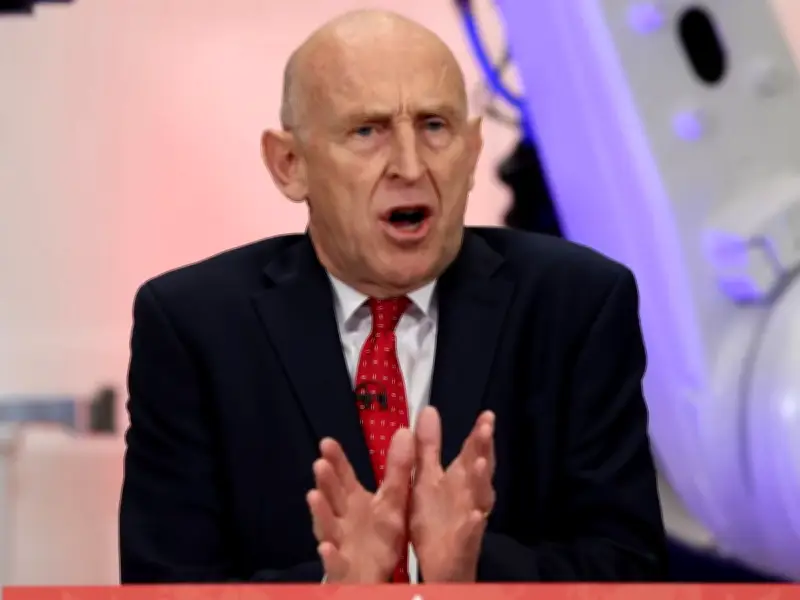
Chancellor John Healy will deliver his first Budget to Parliament next week as the Labour government contends with rising inflation and cost-of-living pressures. He has already dismissed calls from some ministers to hike Capital Gains Tax (CGT), stressing last month the "importance" of business owners being able to make profits.
"I want to see this country as a country of wealth creation," he said at the time. "I want our government decisions and policies to raise the levels of confidence, and investment, and profit in British business." He has also pledged to reduce the burden of business regulation by a quarter by the end of the current Parliament.
Business Predictions Ahead of the Budget
Neil Brackstone, head of tax for Thames Valley and South West at business advice firm BDO, believes UK companies "will be spared" another round of hefty revenue raising, with the possible exception of the banking and energy industries, after recent national insurance and minimum wage hikes.
"Addressing the cost of living is understandably a major focus for the Government but businesses will want to see practical and meaningful support to help with the cost of doing business," he said. "One area of focus should be reducing tax complexity. This creates unnecessary administrative burdens, absorbs time, adds compliance costs and undermines the certainty that businesses need."
Business Rates Relief and Local Spending
From 2027, business rates relief will be expanded to help reduce costs for small business, including a 20 per cent cut for hospitality businesses such as clubs, music venues, and pubs. Whether the Chancellor funds this by increasing rates paid by large warehouses now looks more uncertain. Some business groups have also demanded an increase in the small business rates relief threshold from its current level of £12,000.
Almost 90 per cent of businesses BDO surveyed believe devolving spending decisions to local mayors will benefit their growth. In September, the Chancellor announced that £150m of British Business Bank funding will be used to support "innovative and fast-growing firms" in the north of England, and further programmes may be announced at the Budget.
CGT, VAT, and Support for Young Workers
The Prime Minister has suggested the Government is looking at changes to tax rules to encourage entrepreneurs, and it is rumoured the Treasury is considering a new form of CGT relief for entrepreneurs who reinvest sale proceeds into a new UK business after an exit. This would be a welcome pro-growth move, but it might only appear alongside the Chancellor nudging up core CGT rates.
While a cut to the main rate of VAT is deemed unlikely, an increase in the VAT registration threshold from £90,000 to £100,000 might be included to help small businesses. The Government is also committed to tackling the large number of young people not in employment, education or training (NEETs), and might introduce measures such as cutting income tax or employee NIC for three years for those joining the workforce for the first time. The cost could be financed by imposing a new lower rate of NIC on those working beyond pension age.
Soft Targets for Revenue Raising
There is a strong chance that banks will face significant tax increases, or even some form of windfall tax. The current combined corporation tax rate for bank profits is 28 per cent, but a return to 31 per cent is quite possible. Oil companies, against the backdrop of high prices at the pumps, may also face a specific windfall tax on their profits for the current year.
The Government is already consulting on a wide range of administrative and policy changes, including HMRC's proposals to make the foreign permanent establishment exemption mandatory and to create an explicit 'duty to correct' errors in tax returns. These moves could increase tax revenues but also add to businesses' administrative burden, rather than cutting it as the Chancellor says he wants to.