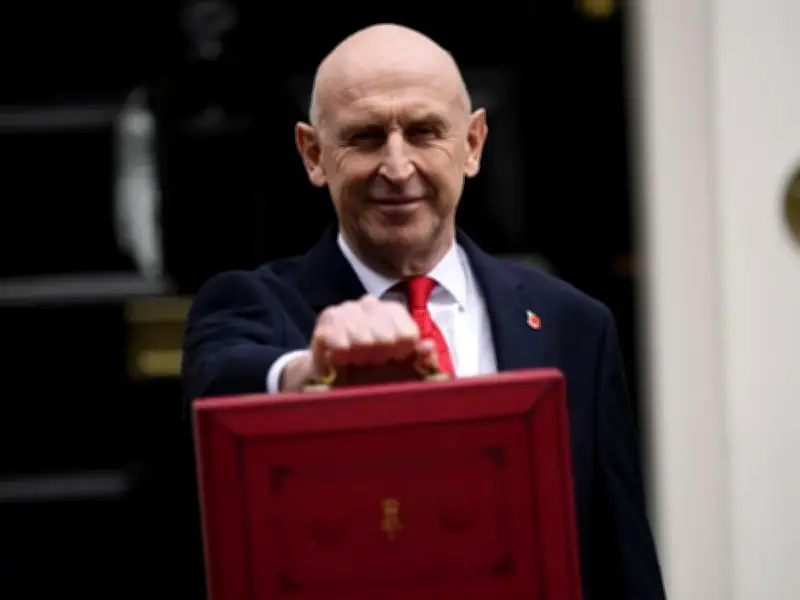
Chancellor John Healey has announced a £2.6bn support package that will give 20 million households in council tax bands A-D in England £100 towards their energy bills, paid directly into their bank accounts. The measure, funded by a temporary increase in a levy on bank profits, was set out in a Budget designed to provide “breathing space” for households facing rising costs.
Budget response to global pressures
Mr Healey framed the Budget as a response to “global economic storms,” blaming Donald Trump's Iran war for the state of the public finances, as well as higher prices at the pump, higher energy bills and higher mortgages. With energy bills predicted to surge to an average £2,200 a year in January, the Chancellor also extended a temporary scrapping of VAT on electricity bills from next March to July, saving the average customer around £50 a year, and stripped a green levy from bills.
He confirmed plans to axe standing charges on gas, a flat fee paid regardless of energy use, with similar plans for electricity bills. “We didn’t want this war,” the Chancellor told MPs. “Those are the storms we face. We can’t wish them away. We must choose the course we steer through them.”
Bank levy and other measures
To avoid raising taxes, Mr Healey slashed his fiscal headroom to £15bn and instead raised the levy on bank profits from 3 per cent to 6 per cent for 15 months from January. An ally of the Chancellor said: “Just as the public supported banks during the financial crisis, banks are now being asked to contribute towards giving families breathing space.”
The Budget also increased gambling taxes to pay for business rates relief for high street firms, taking 70,000 shops, restaurants and gyms out of paying rates altogether. The package was more low-key than Rachel Reeves's previous tax-hiking statements, but some critics accused the Chancellor of failing to do enough to mitigate pressures on living standards.
Living standards concerns
The Office for Budget Responsibility found that households will barely be better off in 2029 than before the pandemic, with real household disposable income showing “virtually no growth” since the Covid crisis. The OBR predicted that by 2029 it might have grown by just 1 per cent. “That is practically unheard of in the history of the UK,” said the OBR's Professor David Miles. “It has been a dismal period in British economic history.”
Analysis by the Joseph Rowntree Foundation found average annual household disposable incomes are projected to fall by £450 over the course of the current parliament after adjusting for inflation. Andy Burnham said the Budget contained “significant measures” to help with the cost-of-living squeeze, while the Prime Minister told reporters: “We can’t insulate people completely from all of those pressures, but within that, we are doing meaningful things to give people that breathing space.”
JRF Group chief executive Julian Hartley said: “People need to feel that paying the rent, heating their home and putting food on the table is becoming easier. Today’s Budget recognises that pressure but falls short of what’s needed.” The Resolution Foundation warned that using the council tax system to deliver energy bill support means around one in eight poorer households in higher band properties would miss out. Chief Executive Ruth Curtice said: “The Chancellor has missed the mark with badly targeted support that has left families facing a tough winter as energy bills rise.”
Some charities raised alarm at the failure to unfreeze housing benefit, which they claim has failed to keep up with soaring rents. Trussell's Helen Barnard said support for energy bills “will make a real difference as the colder months draw in,” but added: “The decision to keep housing support for private renters on low incomes frozen is a misstep that will continue to drive people towards homelessness and to the doors of food banks.” Decisions on defence spending and welfare reform have been deferred to next year, with details of how the UK will hit its target of spending 3% of GDP on defence by 2030 to come at the spending review.