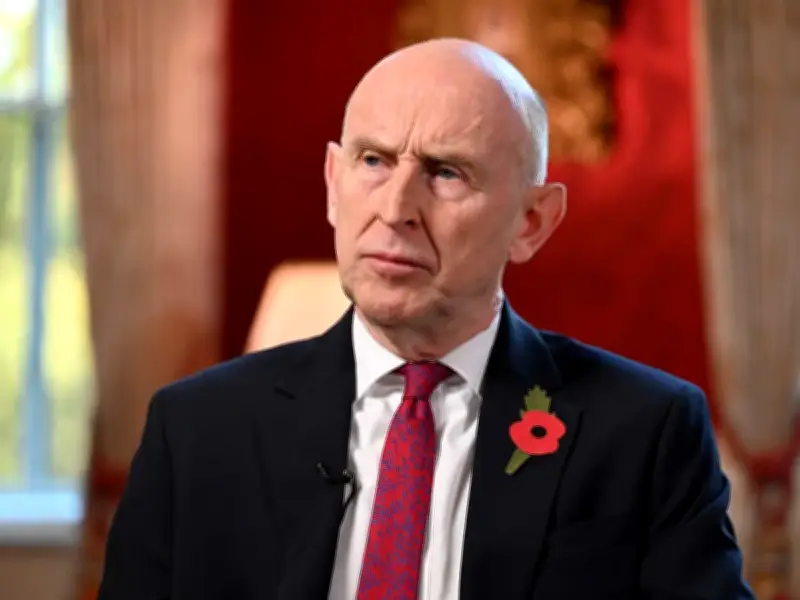
Chancellor of the Exchequer John Healey has pledged that the overall benefits bill "will come down under Labour," confirming that changes will begin next year and that further "hard decisions" on public spending cuts lie ahead.
Speaking on the BBC's Sunday With Laura Kuenssberg programme, Mr Healey said media reports suggesting he wanted the bill to begin falling before the next general election were "simply wrong" and that he "never set out the timetable for savings."
The remarks followed earlier comments from the Chancellor, which created uncertainty over whether the spiralling cost of welfare would be reduced before the next election. The Government subsequently declined to commit to a specific timeframe.
Welfare Reforms and Timetable
Mr Healey faced scrutiny after his debut Budget, with the Office for Budget Responsibility (OBR) warning that sickness and disability benefits could reach £100 billion a year before the end of the decade.
When pressed on whether he was pledging to reduce the overall bill or merely slow its growth, he said: "The overall bill will come down under Labour. We'll start the changes next year, and we'll bring that bill down."
He added: "Since the election, we've already slowed down the rate of increase in the benefits bill, which was – the numbers were booming under the Tories. This is a system which is not working. We have to make big changes. We will."
The Chancellor stated that a Government White Paper and subsequent legislation next year would follow two reviews due for publication this month. One review, led by social security minister Sir Stephen Timms, examines the personal independence payment (Pip) benefit, while another, conducted by former health secretary Alan Milburn, focuses on young people and employment.
He said: "We've set out the timetable for changes. We've never set out the timetable for savings, and some of the reporting earlier in the week was simply wrong."
Spending Cuts and Debt Concerns
Mr Healey indicated that additional difficult decisions on cutting public expenditure lie ahead, following the Institute for Fiscal Studies casting doubt on the Government's ability to deliver its planned departmental reductions.
He faced questions over proposals to reduce the UK's debt burden, which stands at more than 97% of the entire economy, and whether this could necessitate cuts of around 6% to certain government departments over several years.
"In this Budget, we've already demonstrated we are prepared to take hard decisions about the priorities in Government," he said. "We will carry that through into the 10-year plan and the spending review next year."
He highlighted devolution and the modernisation of public services as mechanisms for achieving efficiency savings and to "meet the challenge of the spending review."
Minimum Wage Commitment
Mr Healey declined to confirm whether Labour would honour its manifesto commitment to ensure younger workers on the minimum wage receive equal pay to their older counterparts before the next general election. He stated the Government would "take it one step at a time" and hinted that the pledge to end "discriminatory age bands" could face delays.
In 2024, Labour committed to narrowing the gap between the adult minimum wage and pay for 18 to 20-year-olds. When pressed on whether Labour might break its pledge, he said: "There's no question about whether or if. It's a question of when. It's a question of how fast. And I want to make sure that we can look hard at those trade-offs that inevitably are there between jobs and wages."
He added: "I want to take business, I want to take trade unions with me, and with the Government, because together we have to get into what at the moment is a moral shame on this nation, a million youngsters written off, without any prospect of being helped into work and making a contribution to this country for the future."
The across-the-board 3.9% rise announced at the Budget had raised fresh doubts over Labour's commitment to equalise minimum wage pay for younger workers, with unions having previously voiced concerns over a potential postponement.
Political Reactions
Tory leader Kemi Badenoch accused Labour of leaving a £49 billion "black hole" in the nation's finances, claiming it would necessitate significant tax hikes. The Conservatives have argued the Government would need to raise taxes by £1,700 "per household per year" by 2030-31 to fund unfulfilled spending commitments, including up to £17 billion for a National Care Service and £4 billion for council house-building, alongside a further £28 billion in "plausible spending pressures" identified by the Institute for Fiscal Studies.
Mrs Badenoch said in an article for the Sunday Telegraph: "The Prime Minister gave the game away on Friday when he said he would have written the 2024 manifesto differently. Let me translate that. He wishes he had more room to raise taxes even further."
A Treasury spokesperson responded: "This is fiction. The Budget meets our fiscal rules, fully funds our Defence Investment Plan and puts borrowing on a clear downward path. This Government has a consistent track record of meeting these targets, and it's through careful management of the public finances that we've been able to give Britain breathing space on the cost of living and cost of business."
Elsewhere, a former economic adviser to Andy Burnham dismissed the Budget as "small beer" that had done little to ease market anxieties. Ex-Bank of England chief economist Andy Haldane was reminded of his previous remark that the market "suspects that this is a traditional tax-and-spend socialist government with better TikTok videos."
He told the BBC's Sunday With Laura Kuenssberg show: "The markets still have those fears. We are in a public finance mess. This week's Budget did relatively little to appease those fears. A no score draw Budget for growth, a no score draw Budget for burnishing our fiscal credentials. More is needed of a radical nature. This week's Budget was not that radical budget."