Nigel Farage has claimed that Britain returning to freedom of movement with the EU could cost an eye-watering £5 billion a year. The Reform UK leader's warning comes after Prime Minister Andy Burnham called for an "honest discussion" about free movement with the bloc, a move that has sparked a backlash from Brexiteers.
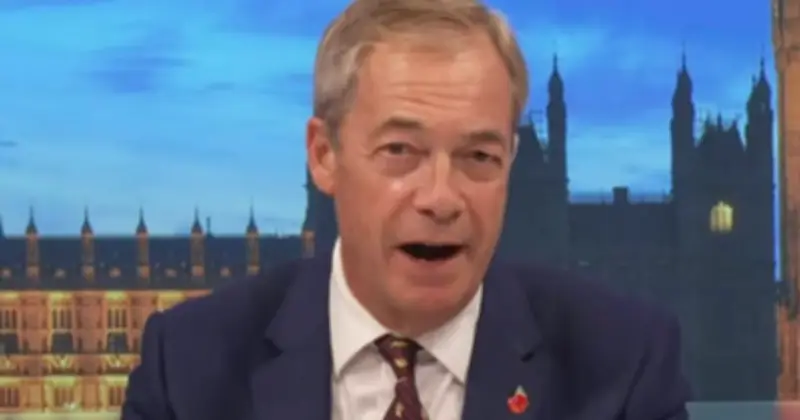
Speaking on his GB News show, the Brexiteer insisted that the move would not have a positive impact on the UK's economy. He claimed it could lead to an additional £3 billion cost on welfare and £2 billion on infrastructure a year.
Farage's Claims on Costs
Mr Farage said: "We had a Labour manifesto under Keir Starmer, a massive parliamentary majority, promising we would not rejoin the single market, the customs union, or re-enter into free movement."
"And five months ago as he presented himself to the people of Makerfield he said look, we're not going to reopen all those debates."
"And yet now we learn that despite having no mandate whatsoever from the British people, in absolute breach of his promise five months ago, and in total breach of trust with the manifesto upon which this government was originally elected, we now have British officials in Brussels negotiating possibly re-entering into free movement."
EU Settlement Scheme Figures
Mr Farage went on to cite figures from the EU Settlement Scheme, noting that about five million people from the European Union are settled in the UK. He said three-quarters of a million of them are on Universal Credit, costing £8 billion a year.
"And if the numbers coming into Britain returned to pre-Brexit levels, estimates that I've had done for me today suggest that increase in population would lead to a benefits bill increasing by £2bn a year and infrastructure costs for a growing population up to £3bn a year," he added.
Immigration Concerns
Mr Farage also raised concerns about EU citizenship being granted to migrants who entered the bloc illegally. He noted that countries like Spain and Germany have already granted fast-track citizenship to people who crossed the Mediterranean.
"There are three-quarters of a million people from those countries who've been granted EU citizenship or are waiting for it to come on stream shortly, which means they would all be able to come to Britain," he said. "They've entered the EU illegally, they would be able to come to Britain. And this is, for me, one of the major reasons that we voted Brexit."
The Prime Minister is set to set out proposals for the UK's long-term relationship with the EU at a summit next month. However, any change will have to come after the next general election, as he has pledged to stick to the red lines in Labour's 2024 manifesto on not returning to the single market, customs union or free movement.