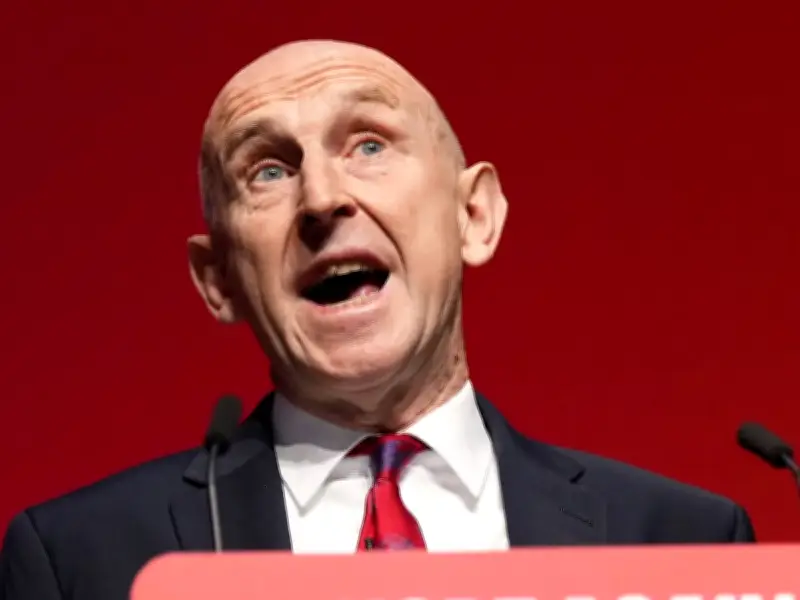
Chancellor John Healey is expected to confirm the April 2027 uprating for state pensions and benefits when he delivers the Budget in the House of Commons on Wednesday afternoon. The Budget, the first from Andy Burnham's government, will set out taxation and spending plans, including how much pensions and benefits will rise by next year.
The state pension and other benefits, including Universal Credit and Personal Independence Payment (PIP), are uprated annually in April when the new financial year begins. The triple lock determines the state pension increase, while inflation usually drives benefit rises. Last year's uprating added an extra £575 to the annual new full state pension and around £24 a month to the Universal Credit standard allowance for someone over 25.
State Pension increase under the triple lock
State Pension increases are determined by the triple lock guarantee, which ensures an annual rise in April in line with inflation, wages, or 2.5 per cent – whichever is higher. In April 2027, pensioners are on course for a 3.9 per cent state pension boost after the final piece of the triple lock puzzle was revealed earlier this month.
The Office for National Statistics (ONS) confirmed last week that the rate of Consumer Prices Index (CPI) inflation was 3.5 per cent in September, lower than the 3.9 per cent wage growth figure that had already been published. An increase of 3.9 per cent would put someone on the full new state pension on course to receive £250.70 per week from next April – up from £241.30 per week currently. Someone on a full basic state pension would receive £192.10 per week, increasing from £184.90, reaching around £9,989 per year.
With the personal tax allowance frozen at £12,570, some pensioners are heading towards being caught within the tax net – with the annual new state pension poised to be pushed up to around £13,036 next year. However, the government has said pensioners who are wholly dependent on the new state pension – with no private pension – will not have to pay tax on it. Mr Healey is going to explain how this will work at the Budget on Wednesday.
Other DWP and HMRC benefit rises
Benefit rates are also set to rise next spring. Traditionally, the September inflation figure is used to determine how much the majority of benefits will rise by in April. This year, that would mean an increase of 3.5 per cent. DWP benefits expected to be increased in line with inflation at 3.5 per cent include PIP, Disability Living Allowance, Attendance Allowance, Incapacity Benefit, Severe Disablement Allowance, Industrial Injuries Benefit, Carer's Allowance and Additional State Pension.
A 3.5 per cent increase would see the rate of PIP and Attendance Allowance go up by £2.70 a week for those on the standard rate and £4 a week for those on the higher rate. HMRC also increases certain benefits in line with inflation, including Child Benefit. A 3.5 per cent increase would see the benefit rise by 95p to £28 a week for the first child and by 65p a week to £18.55 for each additional child.
Universal Credit changes under new rules
The way Universal Credit is uprated has become slightly more complex after a law change brought in last year. Under the Universal Credit Act 2025, Universal Credit rates are being 'rebalanced' by increasing the basic standard allowance that all claimants receive, while reducing additional payments such as the health element. Under the new rules, the Universal Credit standard allowance must increase above inflation over the four financial years from 2026/27. By 2029/30, the standard allowance must be 4.8 per cent higher than it would have been under the normal practice of increasing the standard allowance in line with CPI inflation over the period.
This rise will be implemented in stages. Next year's rise must leave the rate 3.1 per cent above where it would have been based on inflation alone. The following year, it must be 4 per cent above, reaching 4.8 per cent above by 2029. According to the Resolution Foundation, this will mean that for April 2027 the standard allowance in Universal Credit for a single person over 25 will rise by 4.3 per cent (or £4.23) to £102.28 a week (and by £6.63 to £160.55 a week for couples). The higher rate of the UC health element is expected to rise, but the lower UC health element is frozen at £217.26 a month until 2029/30.