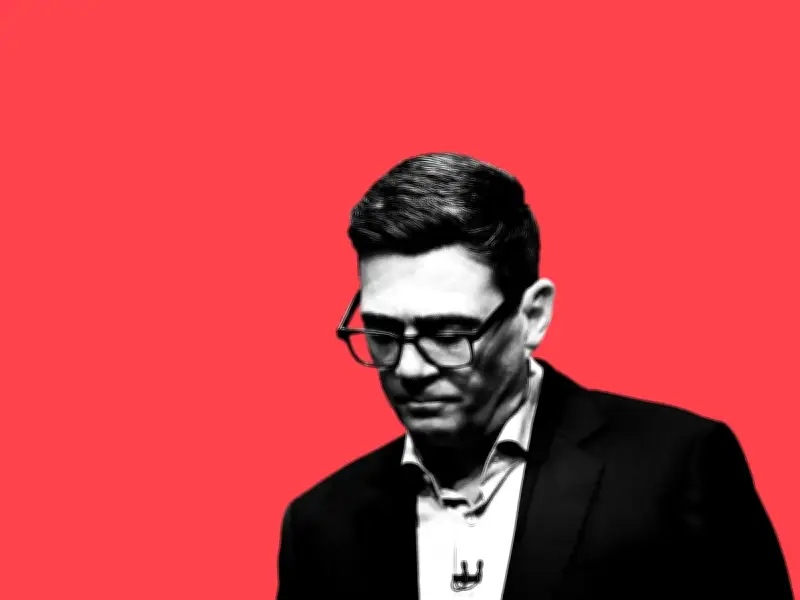
Andy Burnham has spent his first 100 days as prime minister making himself accessible, announcing practical measures and promising a different relationship between Westminster and the rest of the country. He has established a style. Whether he has established a governing philosophy is less clear for some, who are waiting to see 'the meat on the bones'.
A familiar touch in politics
When Mohammed returned from his Thursday outreach session in Ashton-in-Makerfield, he had a story to tell his colleague Sheilagh Linde. He had met a man called 'Andy'. He was, Mohammed reported, 'really nice'.
“Two weeks later he said, 'oh we've got a new MP'. I said 'yeah, you met him!' Sheilagh laughs. “He was surprised.” The new MP, as you may have guessed, was Andy Burnham.
It is a small anecdote, but one that gets to the heart of Mr Burnham's political appeal. Here was a man who could spend time talking to somebody doing outreach work with refugees without being recognised as a politician, let alone the man who would soon be prime minister.
Mr Burnham has spent much of his political career cultivating this familiarity. Unlike some politicians, he seems comfortable without a script. He is the type of person, as several have put it to me, that you might meet in a pub.
In order to launch a leadership challenge against prime minister Keir Starmer, the mayor of Greater Manchester first had to become an MP. And so Josh Simons stood down in Makerfield, paving the path for Mr Burnham.
Early measures and public reaction
Mr Burnham did not waste time in getting down to business. On his first day in Downing Street on July 20, he pledged to tackle rough sleeping. Then came a stream of announcements: the removal of VAT on domestic electricity bills, a £2 cap on single bus fares from 2027, business-rate relief for pubs, social clubs and live music venues, and measures intended to improve the high street.
Each day brought measure after measure, promising to make life a little easier, until it felt like the political version of the 12 days of Christmas song. An end to subscription traps. Scrapping misleading discounts. A crackdown on fake bargains. High-street control over betting shops. A package to tackle rough sleeping. Growth in every postcode. Hope in every heart. A Number 10 North in Manchester. All that was missing was a partridge in a pear tree.
Some of these policies – such as making it easier to cancel subscriptions and outlawing shops' use of 'fake' discounts – were actually announced by the previous Starmer government. Mr Burnham simply brought them forward.
Graham Stringer, the Labour MP for Blackley and Middleton South, believes the new prime minister has correctly identified the first test facing any new government. “There are two things people judge politicians on,” he says. “One is, are you on our side? I think he's won that. Second, is the money in my purse, wallet or house going to be safe with your economic policies. He's got to win that one next.”
Jay Swallow, who owns Jay's Haberdashery in Mr Burnham's constituency, is less impressed by the early flurry. “They're tiny gestures,” he says. “It's the big things that are screwing us over.” Removing VAT from household energy bills will save a typical household £45 a year, but the benefit risks being swallowed by rising energy costs. The return of the £2 bus fare cap is welcome, but it does not resolve the deeper problems facing household budgets. “Small things don't add up to much when so much is taken off us,” says Jay.
Conference speech and personal resonance
At Labour's conference in Liverpool, Mr Burnham gave an indication of the direction he wants to take the country. He appeared relaxed on stage, delivering a sober speech that promised to 'break with the direction of the past 40 years and put Britain on a new path'. It was a call to restore traditional Labour values, and it received almost a dozen standing ovations.
Mr Burnham's conference speech was also delivered just two weeks after the death of his father, Roy, who had been living with Alzheimer's and did not know his son had become prime minister. Mr Burnham was visibly emotional, pausing to compose himself. His recollection of his grandmother Kitty's experience in a care home gave the speech its most personal note. Her engagement ring was stolen, an incident that has stayed with him.
It certainly resonated with Sheilagh, who had to sell her cousin's home to pay for her care home fees. “She's paying £5,700 every week just to lie in a bed,” she says. “This is what Andy Burnham is talking about, [social care] needs overhauling. I'm pleased he's tackling that and spoken to [Lib Dem leader] Ed Davey. I think that parties do need to get together sometimes and have dialogue.”
Manchesterism and media style
His much-touted 'Manchesterism' is well evidenced in the creation of Number 10 North in Manchester city centre – headed by Louise Haigh, first Secretary of State, Duchy of Lancaster and head of the Cabinet Office. Then there was the cabinet reshuffle which brought more Greater Manchester figures into government. Communities secretary Angela Rayner, education secretary Lucy Powell, culture secretary Lisa Nandy and business secretary Jonathan Reynolds have made the city region well represented at cabinet level.
Mr Stringer welcomes the symbolism but warns that other parts of Britain must see themselves in it. “I'm pleased that he mentions Manchester, because I'm a Manchester MP,” he says. “But he risks irritating Leeds, Birmingham, Newcastle, Edinburgh, Cornwall and all the other places in the United Kingdom where they feel they are left out.” If Number 10 North is to work, he argues, it needs projects that demonstrate its value elsewhere – perhaps a tram for Leeds.
Mr Burnham has largely opted to appear on podcasts and YouTube channels, including speaking with young voters on LADbible. He's made a better use of TikTok. According to data from Knox Digital, Mr Burnham's TikTok following rose from just under 99,000 followers to more than 170,000 during his first week as prime minister.
Yet Mr Burnham's strength can also be a weakness. He has a habit of saying what he thinks before considering how it might sound. At the Makerfield byelection hustings event organised by the MEN, he said he would 'stick by the Waspi women because they deserve some recompense for the unfairness'. After it was splashed in the Financial Times, a spokesperson was forced to clarify his stance saying he was ruling out compensation. The parliamentary record, for example, had to be corrected this month after he told MPs that an individual was 'responsible for the murder' of Ann Widdecombe.
His comments about Manchester City's Abu Dhabi ownership attracted criticism, after he said he would be 'really concerned' if the club's owners decided to sell up. City were found guilty by an independent commission of most of the 115 charges they faced. His remarks were branded 'completely out of touch' and 'extraordinary' by the Tories, leading Number 10 to clarify the PM's position.
“That comes with a relaxed style,” says Mr Stringer. “I think the downside of that is he says immediately what he thinks, which is quite appealing in one sense. People don't like the slick prepared answers.”
Then there are his comments on the EU. During the Makerfield by-election campaign, Mr Burnham claimed that while Brexit had been 'damaging', he said he didn't want to 'rerun those arguments'. The constituency voted overwhelming to leave in the 2016 referendum. However, in a recent interview with the Sunday Times, he said he would welcome an 'honest discussion' about the prospect of returning to free movement between the UK and EU. Mr Burnham also said Brexit had damaged the UK's ability to control its borders, so he wanted to re-establish cooperation around immigration at next month's EU summit.
“Whether Brexit was right or wrong, people voted for it,” says Jay. “And he said he wouldn't [rerun the debate]. People voted for him on that basis. That one blatant lie has upset me.” But Mr Stringer believes it could be less of a policy commitment and more of a signal to Labour voters. “He is reaching out to Remainers and saying I'm one of you and you can safely vote for me,” he says.
Mr Burnham has a clear sense of the country he wants to lead, according to a policy source, but has yet to explain convincingly how his agenda will deliver economic growth. Small measures can certainly build confidence – but in the short term.
Jay Swallow remains unconvinced. He thinks Burnham is charismatic and likeable, but is waiting to see a clearer vision. “I like him as a person. To build his party and persona up, good for him. But he's not done anything for the country,” he says. “We need someone who is like the last prime minister who had a set of dangly things, and that was Margaret Thatcher. She did a lot of bad things but she wouldn't take s*** off anyone.” He pauses before delivering a blunt verdict. “Andy is just trying to be too pleasing at the moment when, right now, we need the strongest leader the world's ever known.”
The prime minister has already shown himself to be the man who makes people feel comfortable in his company. The challenge now is to demonstrate that he can also be the man who makes the hard decisions that are needed. “You've got pieces going out saying, 'I've got to be more radical',” says a Labour politician, referencing Mr Burnham's interview with the Sunday Times. “Well, what is the radical change that he's going to bring about? That's the bit we're all waiting for.”