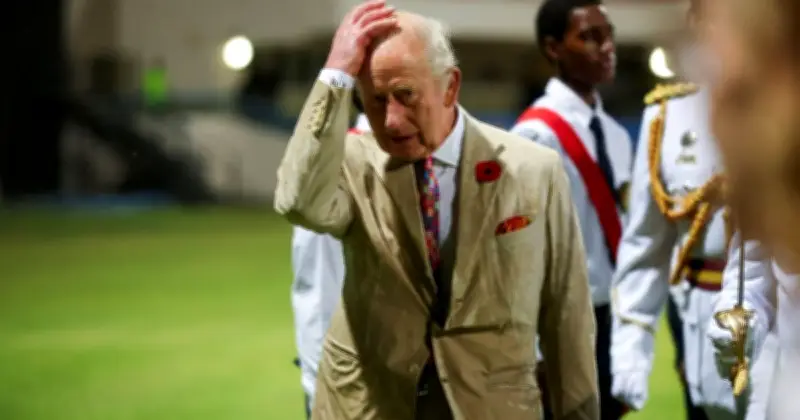
Prime Minister Andy Burnham has opened the door to a formal British apology for slavery, reigniting a sensitive debate at a moment when King Charles is seeking to demonstrate unity and leadership at Commonwealth gatherings in the Caribbean.
The announcement came on Saturday, while Charles, 77, was already undertaking his Caribbean tour, ahead of Tuesday's Commonwealth Heads of Government Meeting in Antigua and Barbuda. Burnham has ruled out financial reparations but signalled Britain was prepared to begin discussions over a formal apology for its historical involvement in slavery, marking a shift from previous government positions.
Diplomatic tightrope
King Charles has spent the past week walking a diplomatic tightrope in the Caribbean. He was already expected to acknowledge the painful history of slavery, without being drawn into decisions that belong to the elected government. Buckingham Palace has made clear that his Commonwealth role is about bringing nations together rather than making political decisions.
The monarch has repeatedly expressed personal sorrow over slavery and supported efforts to examine the monarchy's historical connections to the trade. However, as a constitutional monarch, he cannot independently determine government policy, make commitments on behalf of ministers, or promise financial compensation.
Awkward encounter
King Charles and Burnham came face to face at a Commonwealth business reception in Antigua on Monday evening. The Prime Minister denied making matters more difficult for the King, while Downing Street insisted Buckingham Palace had been informed of the announcement in advance.
Burnham insists his intention is to listen and strengthen relationships. The Commonwealth deserves serious, constructive discussions about slavery and its legacy, but those conversations should not leave the King carrying the public pressure for decisions that are ultimately the Government's responsibility.
The Prime Minister could have waited until the King returned home, since acknowledging Britain's past is essential, but throwing the King into the middle of a political storm is hardly the way to go about it.