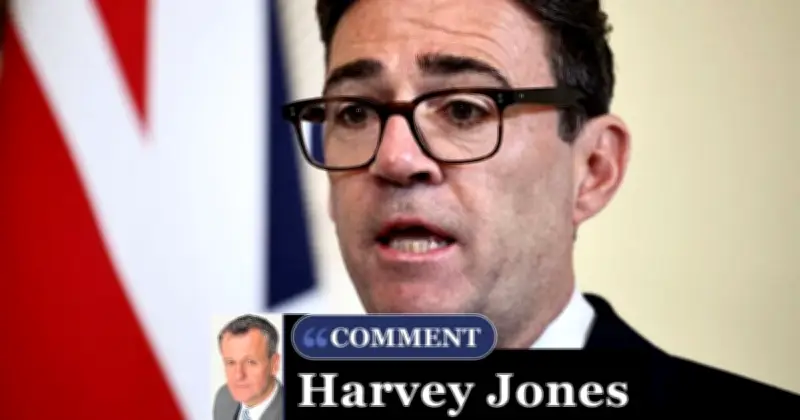
Former Bank of England chief economist Andy Haldane has issued an urgent warning that the UK is "living on borrowed time" as the Budget approaches, criticising Prime Minister Andy Burnham's plans to expand the state.
Writing in the Financial Times, Haldane, who was personally advising Burnham on the economy just weeks ago, said the Prime Minister's spending plans are ill-timed and risk reducing economic growth rather than increasing it. He described Chancellor John Healey's Budget as "shaping up to be a disaster."
Debt and borrowing at record levels
National debt has reached £3 trillion, with the government borrowing another £135 billion this year. Thirty-year gilt yields are at their highest level this millennium. Haldane had previously warned the nation to brace itself for a "traditional tax-and-spend socialist government."
Haldane said Labour and the Conservatives now have markedly different economic policies. "Andy Burnham's conference speech was a homage to 1950s-style state socialism. Kemi Badenoch's speech was a throwback to the smaller state and lower taxes of the 1980s," he wrote, asking which offered the likelier path to growth today.
Productivity gap and market risks
With borrowing costs rising after years of near-zero interest rates, Haldane argued the government desperately needs to balance the books and work down debt to calm bond markets and reduce debt-servicing costs. He warned that expanding the state risks crowding out the more productive private sector, potentially triggering a Liz Truss-style gilt and sterling crisis.
Public sector productivity has barely improved this century, while private sector productivity has increased by more than 40%, according to Haldane.
Political constraints on Burnham
The article suggests Burnham cannot listen to this advice because his own party won't let him. Labour did not elect Burnham to shrink the state, and his predecessor Keir Starmer came unstuck when he tried to cut £5 billion from the welfare bill. Burnham is also likely to look at riots in France and conclude this is no time to cut spending.
Next week's Budget is expected to deliver more money to the unproductive state, more taken from the productive private sector, and more pressure on households, according to the commentary.