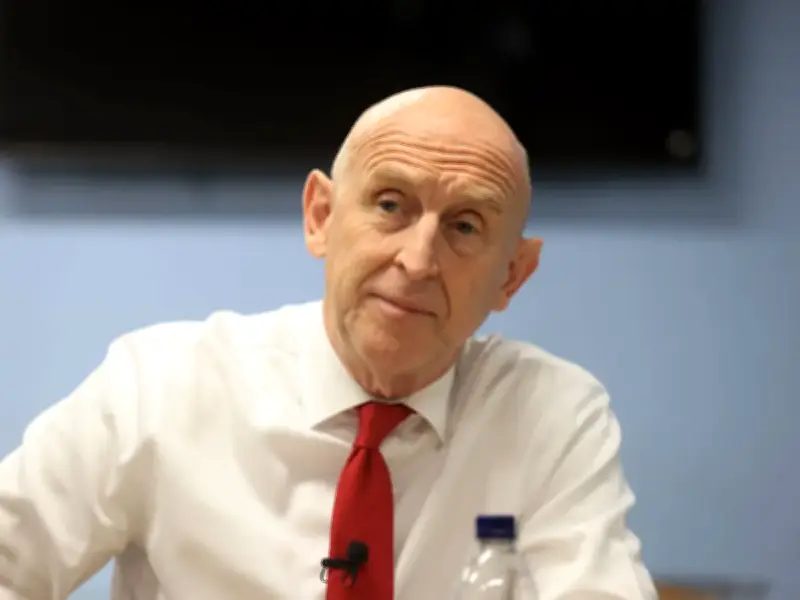
Chancellor John Healey will deliver the Labour Party's Budget in the House of Commons this afternoon, the first under Prime Minister Andy Burnham's leadership. The statement comes at a tough time for the UK economy and public finances.
Mr Healey, formerly defence secretary under Sir Keir Starmer, will set out the government's plans to raise and spend money over the coming year and beyond. In a video message before the autumn statement, he insisted the government would move to ease the cost of living "responsibly" by sticking to Labour's self-imposed fiscal rules.
"Breathing space for today and fresh hope for the future. That's what today's Budget will deliver," he said.
Cost-of-living measures and tax changes
Changes aimed at easing the cost of living are set to feature heavily. As part of a series of measures billed as "everyday fixes," ministers have announced plans to make a higher tax-free mileage allowance of 55p permanent, and to slash tariffs on a range of popular foods, including chocolate, beans and gherkins, to make them cheaper for shoppers.
Opposition critics have pressured the Chancellor to use the Budget to set out a clear path for defence spending to hit 3% of national income by 2030.
The speech will be delivered in the House of Commons at around 12.30pm today (Wednesday, October 28), immediately after Prime Minister's Questions, which starts at noon and usually lasts around half an hour.
Key announcements expected
Alongside relief for households and businesses, the chancellor is expected to announce a possible bank tax raise, investment into AI and more funding and power for local leaders.
Along with energy secretary Miatta Fahnbulleh, Mr Healey has been ordered by Mr Burnham to look into getting rid of standing charges from gas bills, which would bring down household energy bills. Mr Healey has also been under pressure to cancel January's planned increase in fuel duty as pump prices for petrol and diesel continue to soar.
According to reports, the chancellor is considering increasing the surcharge on bank profits from 3 per cent to 8 per cent, reversing a tax cut for the sector launched by former chancellor Jeremy Hunt. The hike on the 'bumper profits' of banks would raise £2.25 billion a year, the Trades Union Congress, a supporter of the move, said.
Defence, benefits and housing
Mr Healey has promised to fill a £4.7 billion black hole in Britain's defence investment plan (Dip). In one of Sir Keir Starmer's final major announcements as Prime Minister, the Dip promised an extra £15 billion of funding for the UK defence sector. With only £10.3 billion committed to it, Mr Healey has been tasked with finding the rest of the funding. Government spending on defence will rise to a 2.7pc share of the economy by 2027 with the extra cash.
Mr Healey will unveil details on how much benefits and pensions will rise by next year. The state pension and other benefits including Universal Credit and PIP are uprated annually in April, when the new financial year begins. The chancellor is also expected to outline how pensioners whose sole income is the state pension will be exempt from paying income tax when the annual state pension exceeds the personal allowance next year.
The Carers Allowance 'cliff edge' is to be abolished and replaced with a taper. Under the change, unpaid carers will no longer lose their entire allowance for earning anything over the Weekly Earnings Limit - which is equivalent to 16 hours of the National Living Wage. Instead, only £1 of support will be removed for every additional £1 earned.
Wages, AI and regional investment
Reports suggest Mr Healey is expected to increase the minimum wage by nearly 4 per cent, while slowing the rise of the minimum wage for young people. The Times reports that the national living wage for those 21 and over is set to rise from £12.71 to around £13.20. However, the national minimum wage - for those aged 18 to 21 - will not have the same big increases as the last two Autumn Budgets. Instead, it looks set to also rise by around 3.9 per cent, taking it from £10.85 to around £11.27.
Over £600 million will be committed to various projects on the development and safe use of artificial intelligence. This included £165 million for a national AI biosecurity initiative, an extra £120 million for the AI Security Institute and £60 million for a national cyber shield using AI to protect against hackers.
A £7 million fund will be used for a feasibility study into a possible future bid to hold the Olympics and Paralympics in northern England. The UK last hosted the Olympics in London back in 2012, with the goal to have the event return in the 2040s.
£285 million will be initially allocated as part of a plan to give mayors and regional leaders in England more money and power to invest in projects in their areas. With Mr Burnham the Mayor of Greater Manchester from 2017 to 2026, this is expected to be a big part of the Budget.
Over £1 billion will be allocated for social and affordable housing, taking funding for the government's 10-year homes programme past £40 billion. A further £432 million will be committed to the rough sleeping programme to get people off the streets in England. Shadow housing secretary Katie Lam said that rough sleeping had hit 'record highs under Labour'. She criticised Burnham for failing to end rough sleeping when he was the Mayor of Greater Manchester.