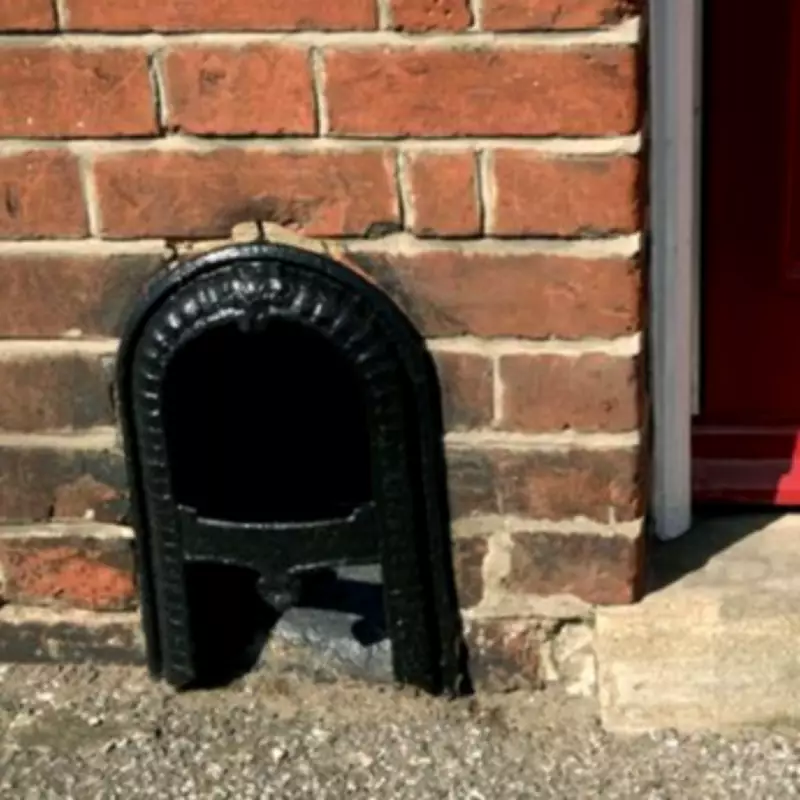
Brits have been left baffled after discovering the true purpose of small metal hatches commonly found outside homes and buildings across the UK. These unassuming fixtures, often overlooked, have a specific historical function that many are only now learning about.
Reddit User Sparks Curiosity
A Reddit user recently took to the 'DoesAnyoneKnow' forum, sharing a photo of a red metal hatch located by a front door. They asked: "Does anyone know what were these used for?" describing it as a 'small hatch seen on the outside of houses in the UK'. The post quickly garnered responses, with some offering whimsical theories such as a tiny door for elves and fairies or a passage for mice.
The Real Answer: Victorian Boot Scraper
However, several users were quick to provide the correct explanation. "Boot scraper," one person simply stated, while another elaborated: "Cleaning mud/dirt off your boots. You'll find them outside many older houses in the UK." A further comment added: "Correct. But no good on footwear with multiple gaps. It worked better on flat leather soles shoes where the surface could be scraped clean. Now we have the strange ritual of visitors divesting themselves of their cleated footwear on entering one's house and padding around in odd socks." Another user noted: "For when horses where the normal mode of travel. Horse s**t caked the streets." One admirer remarked: "I love that it's so over-engineered."

Historical Context
A Victorian iron door scraper, also known as a boot scraper, is a cast-iron device placed at entryways to clean mud and dirt from shoes. These scrapers first appeared at the end of the 18th century, coinciding with the rise of sidewalks, and became abundant in 19th-century big cities during the era of horse-drawn carriages and dirt roads. They typically feature a vertical metal blade for scraping soles and a flat mounting plate that can be screwed into a door frame, set in masonry, or pushed into the ground.
Design Variations
While the simplest shoe scrapers were rectangular sheets of metal, horizontal bars, or thick steel wire, many boasted more complex shapes made of cast iron or wrought iron. These often included a horizontal centre piece to scrape the sole, vertical scraping surfaces to clean the sides of the boot, and other contours to access the concave area by the heel.
Famous Examples
One of the most well-known boot scrapers still in existence can be found at 10 Downing Street in London. Two ornate cast-iron Victorian shoe scrapers are symmetrically placed on each side of the famous black front door, a testament to their enduring presence. Through the 20th century, many scrapers fell into disuse and were removed during roadworks or salvaged for ferrous metals. Yet, some remain to this day, often unrecognised by modern residents.
So next time you spot a small metal hatch outside a UK home, you'll know it's not a fairy door but a practical piece of history designed to keep homes clean in the days of horse-drawn transport and muddy streets.