Baroness Miller Warns of Nuclear Peril as Global Risk Escalates
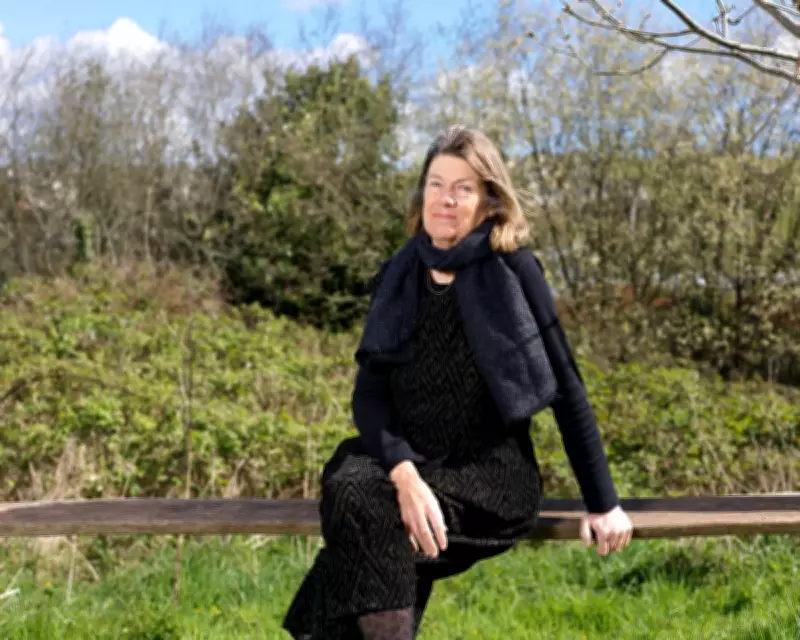
Liberal Democrat peer Sue Miller, a lifelong campaigner against nuclear weapons, has issued a stark warning about the escalating global threat. In an interview from her home in Totnes, Devon, the 72-year-old baroness expressed deep concern over the lack of public and political discourse on non-proliferation and disarmament, noting that the world is closer to catastrophe than ever before.
The Doomsday Clock and Modern Threats
The Doomsday Clock, maintained by the Bulletin of the Atomic Scientists, currently stands at 85 seconds to midnight, its closest point in history. This alarming setting predates recent conflicts, such as the war in Iran, and reflects heightened tensions. Russia's invasion of Ukraine has included thinly veiled threats of tactical nuclear use, while drone incursions into NATO nations have increased European threat perceptions without spurring de-escalation efforts. Meanwhile, non-nuclear European countries are discussing developing "nuclear latency," aiming to build rapid nuclear capacity.
Nuclear nations, totaling nine globally, are focused on modernisation rather than risk reduction. The P5 countries—China, the UK, Russia, the US, and France—are formally committed to non-proliferation but engage in what Miller describes as "doublespeak." She explains that reducing weapon numbers while increasing their power still counts as non-proliferation under outdated treaties, yet poses greater dangers. Emerging technologies like hypersonic weapons and space-based nuclear systems add to the stealth and detection challenges, making conflicts more likely due to misidentification.

Historical Context and Current Challenges
Miller recalls the 1980s, when figures like Reagan and Thatcher pushed for treaties to limit proliferation, a stark contrast to today's environment. Back then, nuclear anxiety permeated mainstream culture, with groups like the Campaign for Nuclear Disarmament (CND) advocating for complete abolition. However, Miller notes that disarmament is now "so far off the agenda" that the focus has shifted to risk reduction. She attributes this partly to political associations, such as Jeremy Corbyn's leadership, which made disarmament a "non-starter" for many parliamentarians.
The fall of the Berlin Wall in the 1990s brought temporary relief, but Miller laments the loss of collective memory about Hiroshima and Nagasaki. She points out that influential ex-military peers who supported disarmament have passed away, with younger generations not taking up the cause. This has allowed the narrative of nuclear deterrence as patriotic to dominate, despite military personnel often opposing it due to budget constraints—Trident modernisation could consume 30-40% of the UK's defence budget, depleting conventional forces.
UK's Role and Global Implications
The UK's nuclear stance involves the Trident system, hosted on submarines with intercontinental ballistic missiles, and close integration with American systems. Miller criticises the lack of transparency, such as the hosting of American nuclear weapons at RAF Lakenheath in Suffolk, which she says makes the UK more of a target. In 2024, the UK voted against a UN study on the humanitarian consequences of nuclear war, alongside France and Russia, a move Miller finds shocking. She questions, "Why did we want to bury our head in the sand about the humanitarian consequences?"
Miller is a patron of the new all-party parliamentary forum on global nuclear non-proliferation and arms control, which includes diverse voices like Conservative Julian Lewis and former shadow minister Fabian Hamilton. The group operates on realpolitik, acknowledging that unilateral UK disarmament wouldn't shift global dynamics. Instead, they advocate for de-escalation led by P5 nations. Upcoming non-proliferation treaty reviews in New York are crucial, as Miller warns that proliferation to 20 nuclear states could lead to war or accident, putting everyone in the "destruction zone."

Call to Action
Miller emphasises that opposition to nuclear buildup should transcend partisanship, as it is a universal safety issue. She urges citizen movements to counter governmental aggression, stating, "for most people, I think they would find being blown up very unacceptable. We need to get back to that way of thinking." With the world at a critical juncture, her message is clear: increased public awareness and pressure are essential to avert a nuclear catastrophe.