
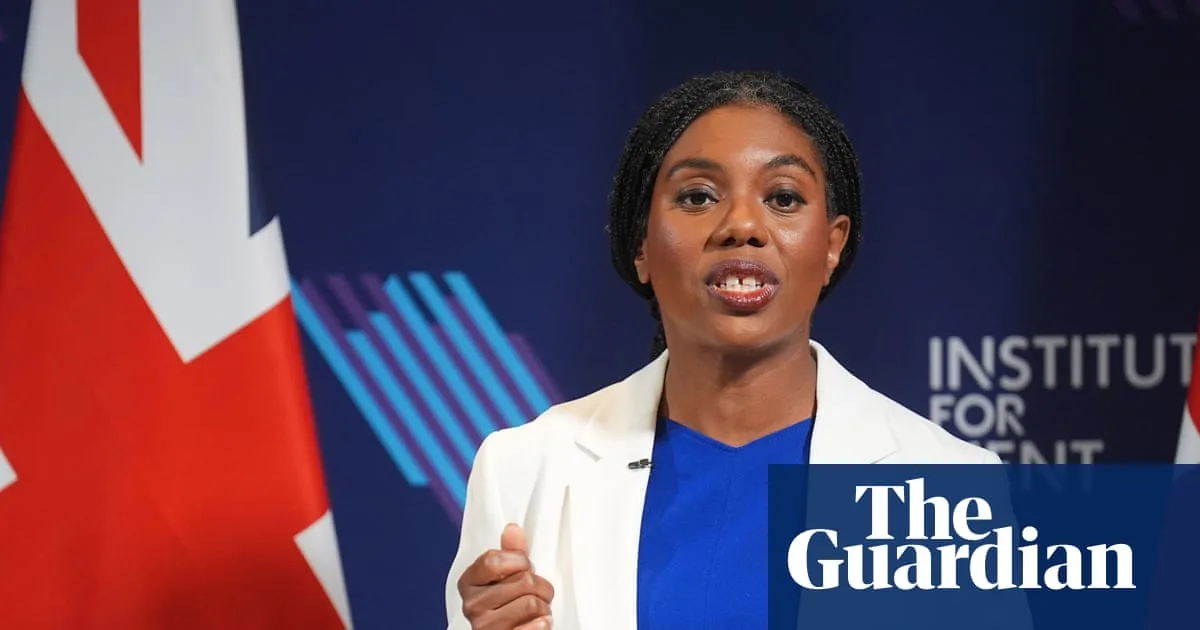
Conservative leader Kemi Badenoch has sparked controversy by pledging to abolish the public sector equality duty, warning that current policies risk creating 'apartheid-style' divisions in the UK. In a speech on Tuesday, Badenoch argued that the duty, introduced after the Stephen Lawrence inquiry, encourages public bodies to prioritise 'dangerous and divisive agendas' over common sense and effective decision-making.
Badenoch cited examples such as the Bank of England's decision to replace historical figures like Winston Churchill with wildlife on banknotes as evidence of misguided diversity policies. She called for a return to 'common sense', stating that public sector workers do not need a legal duty to take account of differences, as 'differences are often obvious'.
However, legal experts have strongly criticised the proposal. Karon Monaghan KC, a barrister specialising in equality law, emphasised that the duty requires public bodies to 'have due regard' to eliminating discrimination, advancing equality of opportunity, and fostering good relations—not to implement specific policies. Colm O'Cinneide, professor of constitutional law at University College London, warned that abolishing the duty would increase discrimination claims and create legal uncertainty.
The TUC's general secretary, Paul Nowak, accused Badenoch of wanting to 'legalise discrimination', arguing the proposal would harm women, gay, black, disabled, and working-class people. The Equality Act 2010 protects individuals from discrimination based on characteristics such as race, sex, disability, religion, age, and sexual orientation, and the public sector duty is a key part of this framework.
Experts argue that many criticisms of the duty are based on misunderstandings. O'Cinneide noted that decisions like the Bank of England's banknote redesign were not related to the duty but were responses to public consultations. The debate highlights growing tensions over equality policies in the UK's culture wars.




