
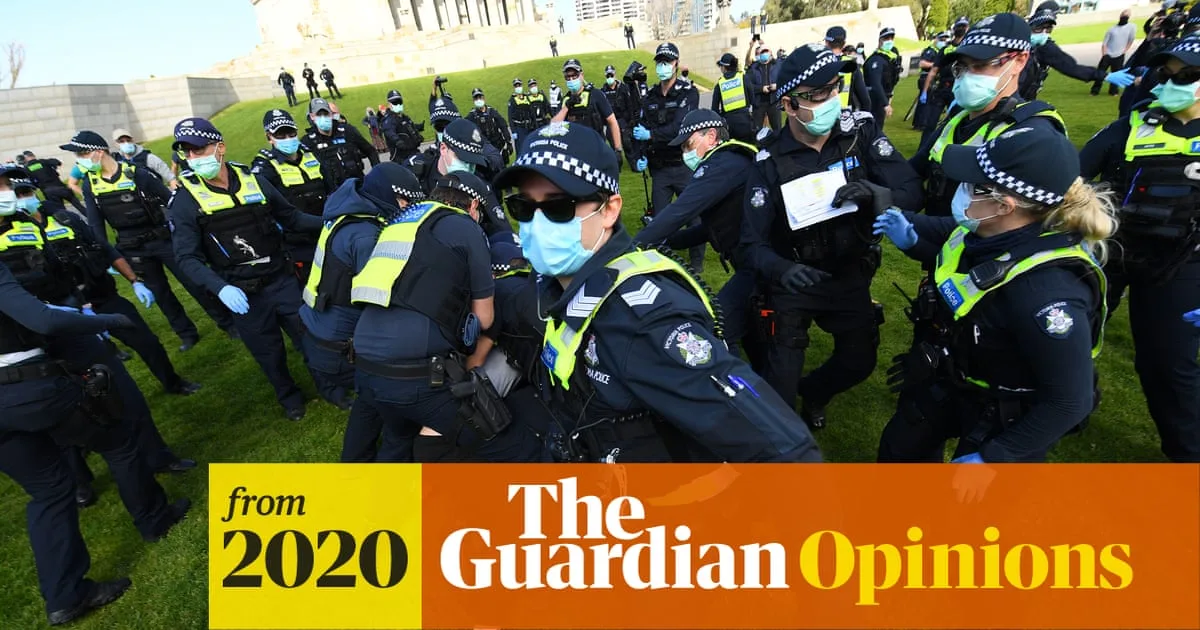
Saturday, 5 September was supposed to be 'Freedom Day' in Australia, a day when 'real' Aussies would take back control. Instead, the protests fizzled, with dozens arrested and fined for breaching Covid-19 restrictions. Yet the event highlighted a growing and increasingly energised community of conspiracy theorists, notably followers of QAnon.
QAnon is not a single coherent theory but thousands of semi-independent conspiracies revolving around a figure known as 'Q'. Originating in the US in 2017, QAnon alleges a deep state cabal of cannibal paedophiles run by elites, which Donald Trump aims to dismantle. Despite its American roots, the theory has global reach and often enters via parenting blogs and wellness influencers.
QAnon has absorbed other movements like anti-vax and anti-5G, linking them all to child sex trafficking—a real issue exploited for profit. The pandemic has fuelled its spread, with isolation and uncertainty driving people online. In Australia, prolonged lockdowns and economic woes create fertile ground for such theories.
Action against QAnon is necessary but tricky. Viral arrests and social media crackdowns can embolden followers, reinforcing their belief in a David vs. Goliath struggle. The social cost is high: it erodes trust, damages relationships, and could undermine vaccine uptake. Addressing this requires careful balance.




