US Supreme Court Faces Historic Voting Rights Test in Louisiana v Callais
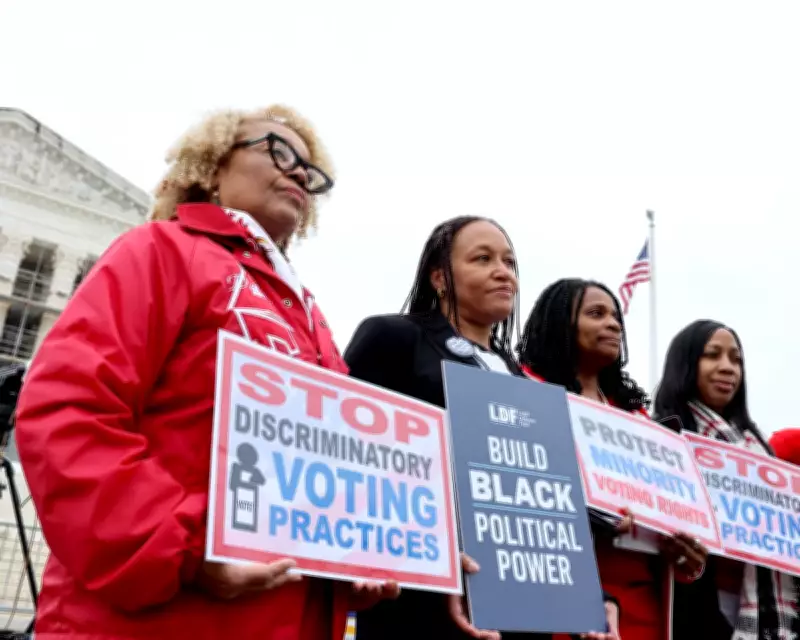
The forthcoming decision in Louisiana v Callais represents a pivotal moment for American democracy, as the Supreme Court prepares to rule on whether the Voting Rights Act (VRA) can still mandate states to draw electoral maps that provide Black voters with a meaningful opportunity to elect representatives. This case is not merely another legal proceeding; it is a critical juncture that could either uphold or further dismantle protections for minority communities in the electoral process.
The Historical Context of Voting Rights Erosion
Following the Civil War, Reconstruction briefly opened the door to a multiracial democracy, with Black Americans registering, voting, and holding office. However, this progress was met with terror, violence, and the implementation of Jim Crow laws, which suppressed Black political power for nearly a century through tactics like poll taxes and literacy tests. The modern civil rights movement led to the enactment of the Voting Rights Act of 1965, the most powerful civil rights law in history, which preemptively stopped discriminatory laws and boosted Black voter registration and representation.
Yet, this success made the VRA a target. In 2013, the Supreme Court's decision in Shelby County v Holder gutted key provisions of the Act, giving states with histories of discrimination a green light to enact restrictive measures. Since then, 11 such states have passed 29 restrictive voting laws, often based on false claims of election fraud. These laws have led to the closure of polling places in Black communities and the imposition of voter ID requirements that disproportionately affect African Americans.

The Coordinated Assault on Voting Rights
The pattern of voter suppression extends beyond state legislatures. National organizations like ALEC and the Heritage Foundation have helped convert election conspiracy theories into model legislation, replicated across the country. Additionally, there have been reports of intimidation tactics, such as ICE-related pressures and raids on local election offices, alongside efforts to centralize election control and purge voter rolls. The so-called Save Act, for example, is a voter purge bill disguised as security, which would create documentation hurdles for millions, including women who changed their names, seniors without formal birth records, and naturalized citizens.
When combined with the erosion of the VRA, the surge in restrictive state laws, congressional inaction, and intimidation tactics, a clear picture emerges: they are rebuilding Jim Crow in modern form. This is achieved through statutes, court opinions, and procedural barriers that disproportionately impact Black communities, starting once again in the South.
The Importance of State-Level Protections
In this context, state-level Voting Rights Acts have become more crucial than ever. They serve as firewalls, attempting to reconstruct at the state level the protections abandoned by the federal government. As federal guardrails disappear, states eager to restrict voting rights move swiftly, accelerating efforts to dilute Black political power. Jim Crow was a political project designed to preserve racial hierarchy through law, and today's coordinated efforts to purge voters, centralize election control, and dismantle the VRA should be recognized as its modern counterpart.
A Call to Action for Democracy
American history teaches that some walls are meant to be torn down. The South is once again the testing ground for whether we will take a stand for democracy. Sixty-one years ago, the march on the Edmund Pettus Bridge in Selma helped deliver the Voting Rights Act. Today, similar mobilization, organization, and energy are needed in communities to register voters, ensure turnout, and bend the moral and political arc toward justice. The stakes in Louisiana v Callais are unmistakable, and the outcome will shape the future of voting rights in America.