
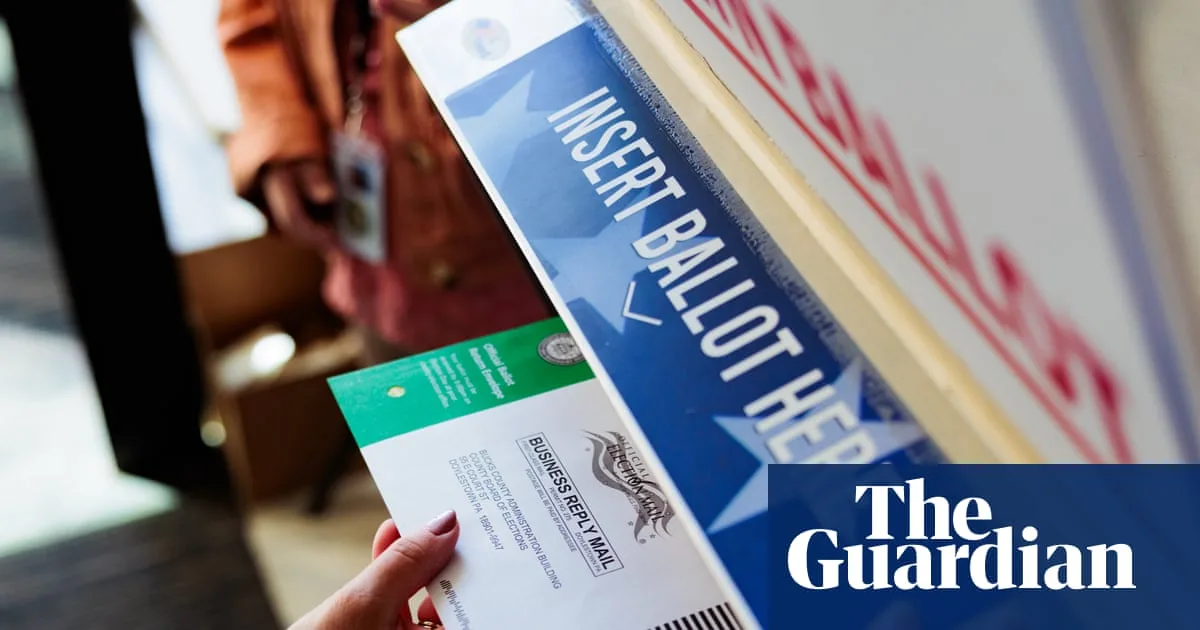
A coalition of civil rights organisations has filed a lawsuit against the Trump administration, arguing that a new executive order restricting mail-in voting is unconstitutional. The order, signed by President Trump on Tuesday, directs the federal government to compile a list of eligible voters in each state and instructs the US Postal Service to only deliver mail-in ballots to those on the list.
The lawsuit, filed in federal court in Massachusetts, claims the order exceeds presidential authority and violates the separation of powers. “The Constitution forbids this attempted usurpation of power,” the complaint states, noting that Article I, section 4 grants states control over elections and Congress the power to regulate federal contests, with no role for the president.
Davin Rosborough, deputy director of the ACLU’s Voting Rights Project and a lawyer for the plaintiffs, described the order as “an illegal and unconstitutional attempt by the President to seize control of processes that are basically run by the states.” He warned it would create “chaos and ultimately disenfranchisement.”
The lawsuit also argues that the order violates the Voting Rights Act, the Privacy Act, and laws requiring neutral treatment of mail. It comes amid broader efforts by the Trump administration to undermine confidence in the election system, including pressure on states to hand over voter rolls and raids on election offices based on debunked conspiracy theories.
This is the second time President Trump has attempted to unilaterally change voting laws. A previous executive order imposing proof-of-citizenship requirements was largely blocked by a federal judge, who wrote that “our Constitution does not allow the President to impose unilateral changes to federal election procedures.”
Plaintiffs include the League of Women Voters, OCA – Asian Pacific American Advocates, and Delta Sigma Theta Sorority, represented by the ACLU, NAACP Legal Defense and Education Fund, and other civil rights groups. “President Trump is attempting to rewrite the rules of our democracy through a blatant abuse of executive power,” said Sophia Lin Lakin of the ACLU.




