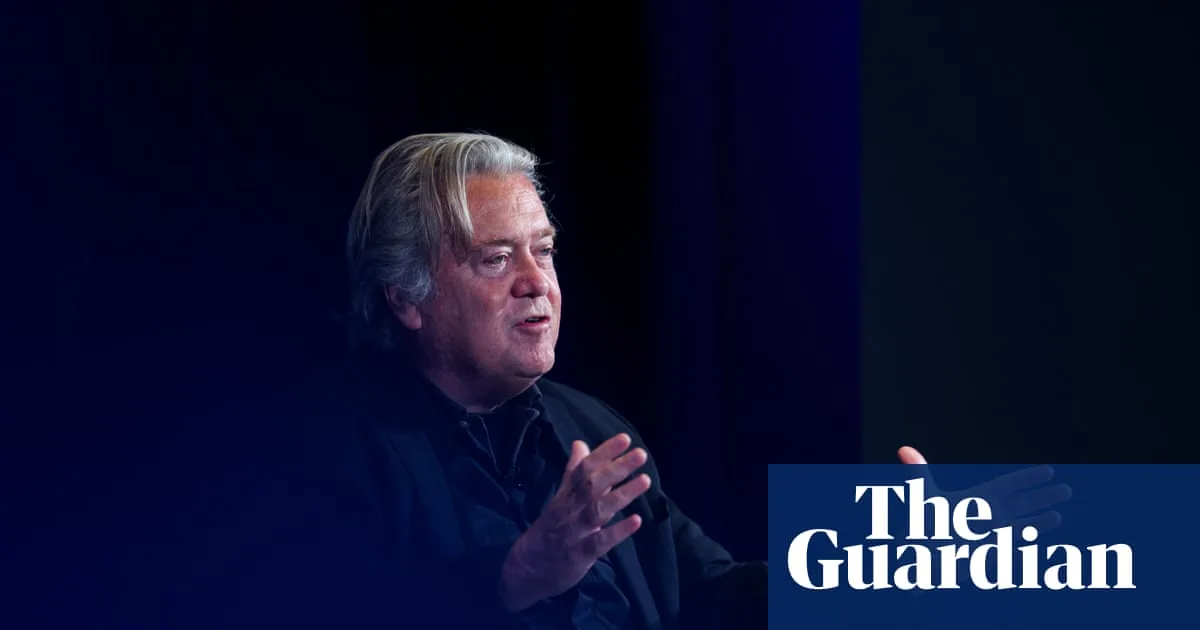
Steve Bannon Calls for ICE Agents at US Polling Stations in November Midterms
Bannon Wants ICE at Polls in US Midterm Elections

Steve Bannon, the former White House strategist and prominent right-wing podcast host, has made a controversial call for US Immigration and Customs Enforcement (ICE) agents to be deployed around polling stations during the upcoming November midterm elections. This proposal has intensified existing fears among election officials about potential interference in the democratic process.

Bannon's Provocative Statement on Election Security

During a recent episode of his War Room show, Bannon explicitly stated: "You're damn right we're gonna have ICE surround the polls come November." This declaration comes amid a broader context of unfounded claims about electoral integrity that have circulated in certain political circles. Bannon, who maintains significant influence on the far right despite holding no formal governmental position, has repeatedly echoed false assertions that undocumented immigrants participate in US elections in substantial numbers.

Growing Concerns Among Election Administrators

Election officials across the United States are expressing heightened anxiety about the possibility of federal intervention in this year's midterms. One specific worry is that immigration enforcement personnel might establish a noticeable presence near voting locations, particularly in areas with strong Democratic leanings. The presence of law enforcement at polling stations is generally viewed negatively by election professionals, as it can deter eligible voters from exercising their democratic rights.

Wide Pickt banner — collaborative shopping lists app for Telegram, phone mockup with grocery list

Historical evidence suggests that visible immigration agents can intimidate communities, causing even US citizens and legal residents to avoid voting due to fears of detention or racial profiling. This concern is not merely theoretical; it reflects practical challenges in ensuring free and fair access to the ballot box.

The Broader Political Context of Election Administration

Bannon's comments align with broader statements from former President Donald Trump, who has recently suggested that the federal government should assume control over voting processes. Trump has perpetuated baseless claims about electoral theft and incorrectly asserted that undocumented individuals are brought to the United States specifically to vote, contributing to Democratic victories. These narratives continue to influence discussions about election security and administration.

Legal and Legislative Developments

Previous attempts to federalize aspects of election management have faced significant legal hurdles. An executive order issued during Trump's presidency, which included provisions requiring proof of citizenship for voting, was largely blocked by courts that affirmed the traditional role of states in overseeing elections. Similarly, congressional efforts to mandate citizenship verification for voters have stalled, leaving the current system largely unchanged.

In Minnesota, where federal agents have recently increased their presence, state officials have resisted demands to surrender voter registration data to the federal government. The Department of Justice has pursued legal action to access voter rolls in several states, but election authorities have pushed back, citing legitimate concerns about voter privacy and data security.

Looking Ahead to Future Election Cycles

Bannon has extended his vision beyond the immediate midterms, warning that ICE will be present at polling locations during the 2026 elections as well. He framed this as a confrontation with what he described as the "credentialed class" of Democrats, whom he accused of maintaining social welfare programs without providing pathways to economic independence.

As the November elections approach, the debate over election integrity, voter access, and the appropriate role of federal agencies continues to evolve. Election officials remain vigilant in their efforts to protect the voting process from intimidation while ensuring that all eligible citizens can participate without fear or obstruction.

Pickt after-article banner — collaborative shopping lists app with family illustration




