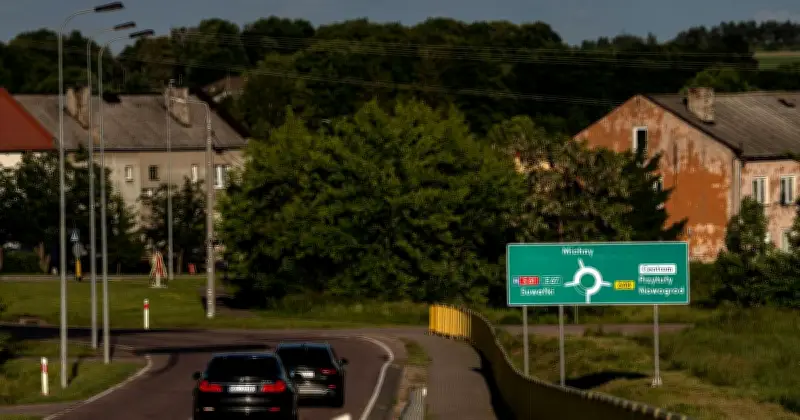
Poland and Lithuania are drawing up evacuation plans in case of an attack by Russia, with the Suwałki Gap at the centre of the proposals. The two countries are working on a bilateral agreement to provide a framework for the plans, Vilnius authorities said.
Suwałki Gap at the heart of plans
The 60-mile strip of land linking Poland and Lithuania has long been viewed as a weak point, dubbed NATO's 'Achilles heel'. It separates the Russian exclave of Kaliningrad from close Moscow ally Belarus, meaning the Baltic States would be cut off from allies if Russian forces entered the area.
US intelligence has warned Russia could launch a limited attack on NATO territory to probe the alliance's resolve within the next few years.
Evacuation routes and border controls
Evacuation routes through the Suwałki Gap are part of the discussions between the two countries. Vilmantas Vitkauskas, head of Lithuania's national crisis management centre, said: "Procedures, logistics, and infrastructure capabilities are being analysed together with colleagues from Poland, and the plan itself should be developed once an agreement is reached between the two countries."
The plans will also allow residents of Latvia and Estonia, as well as Lithuania, to flee across into Poland. Border controls could be introduced to ensure mobilisation and "prevent people in certain key roles from leaving the country", he added, reports The Telegraph.
Major drills underway
Evacuation preparations are being carried out as part of major drills in Lithuania. Vyčio Skliautas 2026 is the country's largest annual national mobilisation exercise, testing how it would react in a crisis. Around 3,000 officials and 1,000 volunteers are taking part in the drills, which run until Saturday. About 20 Polish officials are involved as part of border procedure tests.
Earlier this month, Polish Prime Minister Donald Tusk warned Russia could launch "hybrid" drone or missile strikes in the "next few months" against Ukraine's allies. He said Russia's aim is to "weaken NATO's integrity" and prove the alliance's cornerstone Article 5 is "more theoretical than practical". Officials in the three Baltic States have played down fears of such attacks.
However, Moscow is widely expected to intensify a campaign of sabotage and hybrid attacks to undermine European support for Ukraine. Officials from countries along NATO's eastern flank have warned of increased drone incursions, cyberattacks and sabotage as tensions continue to rise.