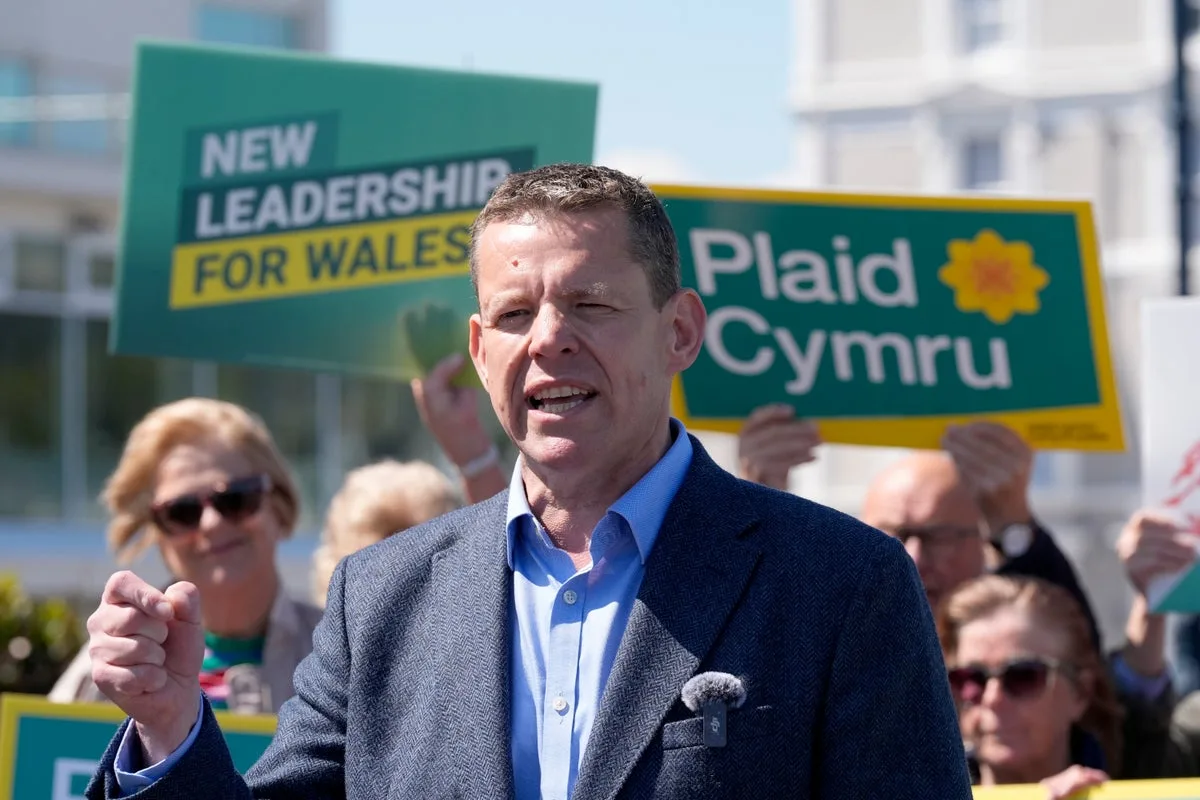
Does a Plaid Cymru win mean Welsh independence could be on the horizon? Only 32 per cent of the population of Wales support the prospect of an independence referendum, according to recent polls.
Plaid Cymru's Historic Win
As the National Party of Wales, the party's aims shall be: to secure independence for Wales in Europe. Since its founding in 1925, independence has remained a core principle of Plaid Cymru – the above quote even forms the second line of its constitution. For the first time, Plaid secured the most seats in the next Welsh Parliament as Labour lost control of the Senedd for the first time since devolution in 1999, with even first minister Eluned Morgan a casualty of Labour’s catastrophic losses.
A Shift in Tone
Yet in a change of tone from previous decades, Plaid’s leader, Rhun ap Iorwerth, has not led with an independence campaign. More talk of a referendum has come from their political rivals, who have tried to warn voters that the party will introduce it through the “back door” once in power. During its annual conference in Newport in February, the topic was not raised once during Mr ap Iorwerth’s speech, nor was it mentioned during the manifesto launch in Wrexham. At the last Senedd elections in 2021, the party promised to hold a referendum if it won a majority – a pledge that was quietly dropped from this year’s campaign.
Nationalist Parties Across Devolved Nations
For the first time in history, Westminster is faced with the prospects of having a nationalist party in each of the devolved nations, each pushing for greater powers – so what are Plaid Cymru’s plans for independence? Professor Laura McAllister, of the Wales Governance Centre, said: “Given that independence is the primary aim of Plaid Cymru, it is inconceivable that the party internally has not considered a longer term strategy for advancing that goal. Having said that, the party leader, Rhun ap Iorwerth, has been categorical that the first term of a Plaid led government would not be focused on independence.”
Priorities Beyond Independence
Instead, Mr ap Iorwerth has prioritised the cost of living crisis, the state of the NHS, which has failed to meet targets to cut waiting lists, housing, and a better deal for Wales under the current constitution. Their next steps do include a National Commission, which would cost half a million pounds of the annual £27bn Welsh budget, which it says would “lay the foundation” for any future independence plans.
Polling and Public Opinion
Recent polls have not shown much support for Welsh independence, with only 32 per cent in favour and 52 per cent against. While he remains a personal believer in the cause, Mr ap Iorwerth admitted during his campaign: "I do not think now is the time to have that referendum because the people of Wales are not telling us that it's that time."
Comparisons to Scotland
However, Prof McAllister noted that this tactic “is very much out of the SNP playbook from 2007”, and that polling support for independence is similar to the position in Scotland two years before the failed 2014 indyref referendum. With Labour suffering a humiliating defeat on Thursday, slipping to third place in its former red heartlands, Plaid Cymru had pinned the election as a “two-horse race” between themselves and Reform UK, who are staunchly against further devolved powers.
Political Realignment
Nigel Farage described Welsh people as 'foreign speakers'. Many have viewed it as an election between those who view themselves as more Welsh-aligned, and others who view themselves as more British – with Nigel Farage even describing the Welsh language as “foreign”. “In terms of voters motivated against independence, at present I think those will already be captured by Reform UK,” Prof McAllister said. “It's harder to predict in the future as we do not know what a Plaid led government might do and when. But were independence to become a defining issue in Welsh politics, as it is in Scottish politics, then I think we would see a fundamental realignment that cuts across left-right lines.”






