Gen Z's Battle to Reclaim the England Flag from Far-Right Symbolism
The St George's flag, once celebrated as a unifying emblem during football tournaments, now finds itself embroiled in a profound public relations crisis. This iconic red and white cross has become increasingly associated with far-right demonstrations and exclusionary nationalism, creating what many describe as a significant image problem for England's national symbol.
The Flag's Troubled Transformation
Historically, the St George's flag emerged as a more inclusive alternative to the Union Jack during the 1970s, particularly after the latter was adopted by the National Front. Its popularity surged in the 1990s thanks to football culture and the iconic "Three Lions" anthem. However, recent years have witnessed a dramatic shift in perception.
The flag has featured prominently in anti-asylum hotel protests, Tommy Robinson's Unite the Kingdom marches, and Britain First rallies led by Paul Golding. This association has created what fashion journalist Rachel Griffiths describes as an immediate "recoil" reaction among many young people. "My initial reaction when I see an England flag outside someone's house or along the road is to recoil," says the 26-year-old Liverpudlian, who views the flag as representing "oppression."
Commercial Controversy and Cultural Hesitation
Despite these associations, commercial interest in the flag persists. The St George store in Notting Hill, a sister shop to the controversial Brandy Melville clothing brand, has experienced bustling business selling England merchandise. This includes traditional flags and St George's pennants alongside collegiate-style clothing adaptations.
Brandy Melville's adaptation of Ralph Lauren's popular flag jumper design has created particular confusion among consumers. When the American retailer swapped the star-spangled banner for the St George's cross, it left many purchasers uncertain about appropriate contexts for wearing the garment. One academic researcher who found the jumper "cute" nervously asked Reddit whether it was "too 'controversial' to wear to work," receiving predominantly negative responses.
Artistic Reclamation Efforts
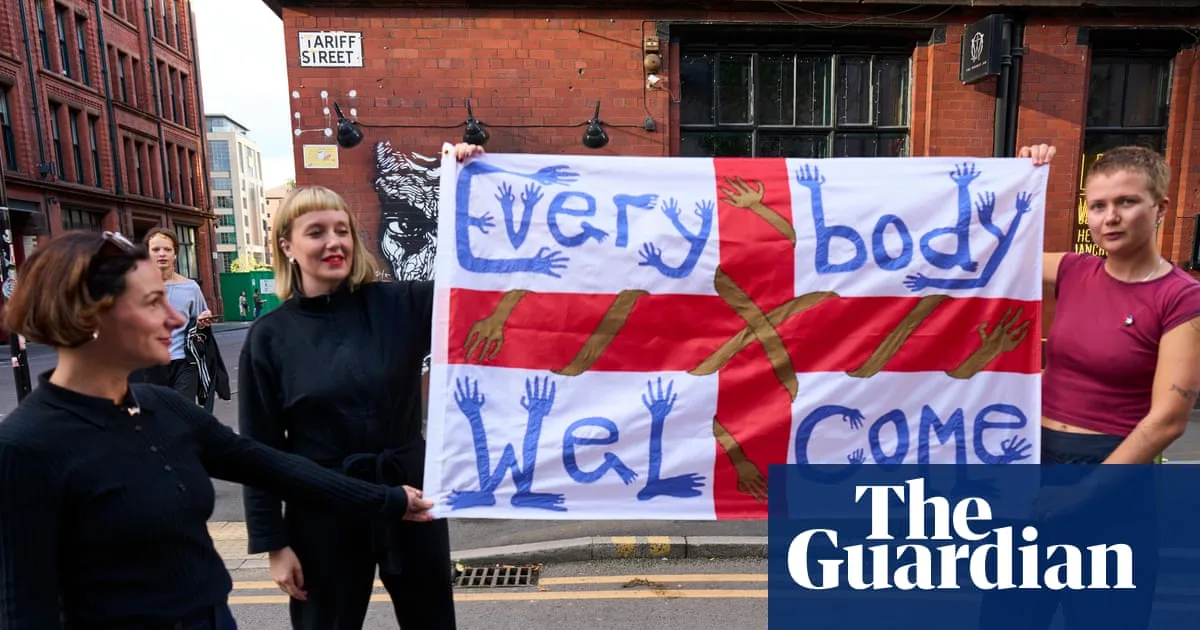
In response to the flag's increasingly negative associations, artists and activists have launched creative campaigns to reclaim its symbolism. Manchester-based artist Freya Wysocki joined the Everyone Welcome project, where local creatives used the England flag as a canvas for designs emphasizing unity rather than division.
"What I love about living in the UK is how kind people are around me – I wanted to represent that within the flag," Wysocki explains. Her design incorporates hands and arms wrapping around the red sections of the flag to symbolize welcoming gestures and community support. Despite her artistic engagement, Wysocki admits she still wouldn't display a traditional England flag outside her home, noting the irony that Saint George himself was born in modern-day Turkey and raised in Palestine, never actually visiting England.
Historical Precedents and Contemporary Resistance
The current reclamation movement follows historical patterns of symbolic transformation. During the 1970s, punk culture reclaimed the Union Jack by adding slogans, tearing the fabric, and wearing it provocatively. The Sex Pistols' 1977 release of "God Save the Queen" transformed the flag into a symbol of rebellion and anti-establishment anger.
Contemporary figures like RuPaul's Drag Race UK star Bimini Bon-Boulash have brought similar energy to anti-far-right protests. At a recent London march, Bimini appeared in a red and white bikini with a St George's cross painted across their face, graffitiing "No place for h8" on an England flag in Trafalgar Square.
"For too long, the flag has been weaponised by the far-right," Bimini declared. "It's been used to intimidate, to divide, and to push a narrow, exclusionary vision of what it means to be English. But we don't have to surrender our symbols to fascism." This stance, while celebrated by many, has also attracted death threats, highlighting the contentious nature of the debate.
Football's Role and Commercial Considerations
Football has historically served as a primary vehicle for rehabilitating the flag's image. During Euro 1996, the "Three Lions" anthem and team success created moments of inclusive celebration. More recently, Sheffield artist Corbin Shaw has used the England flag as his canvas for socially conscious messages.
For the 2024 Euros, Shaw created "God Save the Team" flags to encourage respectful treatment of players following discriminatory abuse directed at Bukayo Saka, Jadon Sancho, and Marcus Rashford. His 2022 World Cup collaboration with Women's Aid produced "He's Coming Home" flags highlighting increased domestic abuse during tournaments.
"I'm not ashamed of the flag. I'm not ashamed to be English," Shaw asserts. "England makes me proud and the flag is part of my visual language. But it is in a funny place right now."
Brand Engagement and Future Prospects
Commercial brands face complex decisions regarding the flag's use. Nike generated significant controversy during the 2024 Euros by altering the St George's cross to red, purple, and blue on their England strip. Despite then-manager Gareth Southgate admitting confusion about this "playful update," the kit became Nike's strongest-selling England strip of the past decade. Notably, this year's kit appears to omit the cross entirely.
Shaw emphasizes the importance of continued engagement with the symbol: "It has been co-opted by the far right; recently, it's a symbol favoured by the extreme nationalists more than ever in my lifetime. It's important, for people like me, and artists with a more biracial diaspora, to make work using it."
As the World Cup approaches, the flag remains at a cultural crossroads. Its transformation from football celebration symbol to far-right emblem and now potential symbol of inclusive reclamation reflects broader societal tensions about national identity, belonging, and the power of visual symbols in contemporary Britain.






