World's Largest Asbestos Factory 'Britain's Chernobyl' Poses Danger to Kids
World's Largest Asbestos Factory Poses Danger to Kids

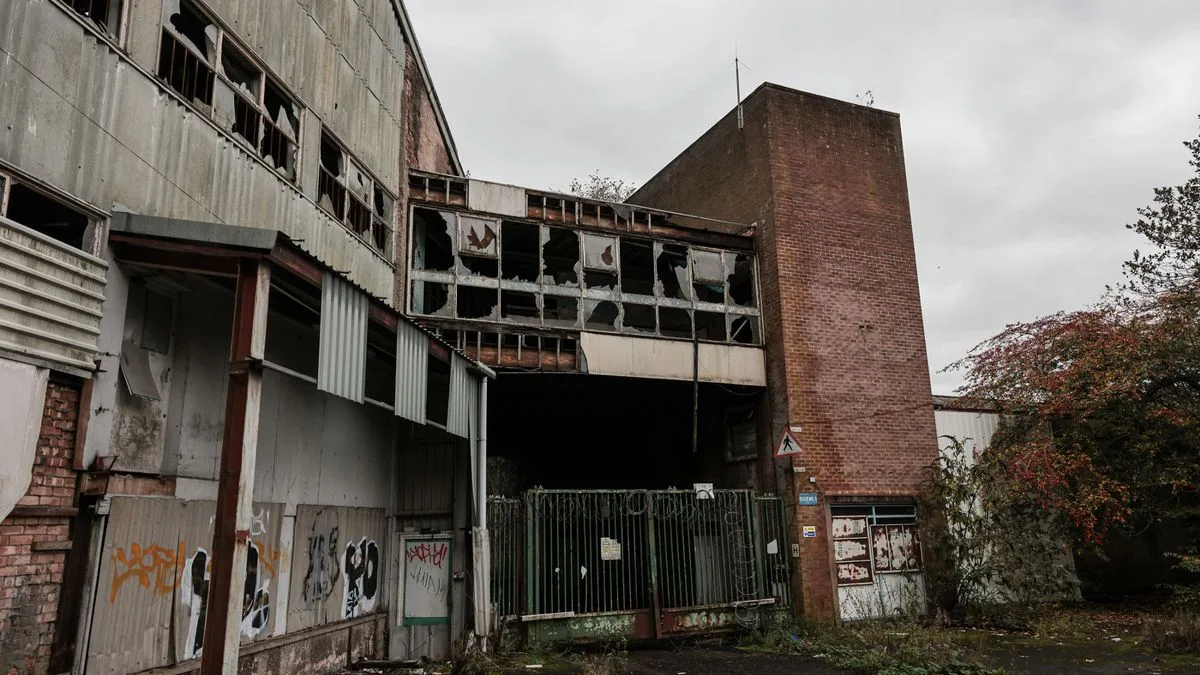
Residents living near the world's largest asbestos factory, dubbed 'Britain's Chernobyl', have expressed fears that the crumbling site has become a dangerous playground for children who swim in a potentially contaminated river nearby.

The Turner Brothers Asbestos Factory in Rochdale

The Turner Brothers Asbestos factory in Rochdale, the largest of its kind globally, is seen as a serious health risk. Locals call it a blight on the landscape. Despite numerous promises to mitigate harm, progress has been incredibly slow.

Next to the 72-acre site, a weir on the River Spodden has been nicknamed 'Paradise' by schoolchildren. However, there are fears that asbestos from the decrepit factory has contaminated both the area and the waters where kids swim.

Wide Pickt banner — collaborative shopping lists app for Telegram, phone mockup with grocery list

Health Risks and Community Concerns

Asbestos, once widely used in construction, is linked to serious health problems including cancer and mesothelioma. Diseases from inhaling fibres can take 20 to 60 years to appear. A council investigation ten years ago found no fibres above 0.01f/ml, but site owners urge the public to avoid entering due to potential asbestos exposure.

Mick Coats, 76, a retired health and safety expert living beside the factory for 32 years, campaigns for better safety measures. 'Kids are swimming in that River Spod. They are putting themselves at serious risk of harm,' he said. He suggests clearing the buildings and laying clay to pad any asbestos, then turning the area into a country park.

Andy Mason, 47, an IT consultant living next door with his partner and four children, said: 'Looking at the trees is beautiful, but this is the equivalent of a modern-day Chernobyl. We need to put it right—we can't pass on an environmental disaster generation to generation.'

Historical Impact and Ongoing Campaign

The Turner Brothers Asbestos site began production in the 1870s and ran until the late 1990s. Residents still feel the impacts, knowing people who struggle to breathe. Conor Hart, 30, said: 'Generations went into that factory as teenagers and came out crippled with diseases.' Graham Hobson, 73, added: 'Kids have no idea of the dangers—to them it's like a big adventure playground.'

A council spokesperson said: 'The wellbeing and safety of our residents is our most important priority.' The council cannot convert the site without approval from owners Spodden Park Ltd, but will work closely with them.

Spodden Park Ltd claims to have taken action to secure the perimeter and monitor breaches, calling it an 'ongoing battle' with trespassers. A spokesperson said: 'We want to remind everyone that asbestos is only dangerous if disturbed. By entering the site, trespassers risk disturbing the material.'

First Recorded Victim of Asbestosis

The plant was the site of the first recorded victim of occupational asbestosis, Nellie Kershaw. She died at 33 in March 1924 after working at Turner Brothers Asbestos, spinning raw asbestos fibres into yarn. She was diagnosed with asbestos poisoning but was not eligible for sickness benefits, and the company refused compensation. Her death prompted an inquiry into asbestos dust and worker protection.

Pickt after-article banner — collaborative shopping lists app with family illustration