

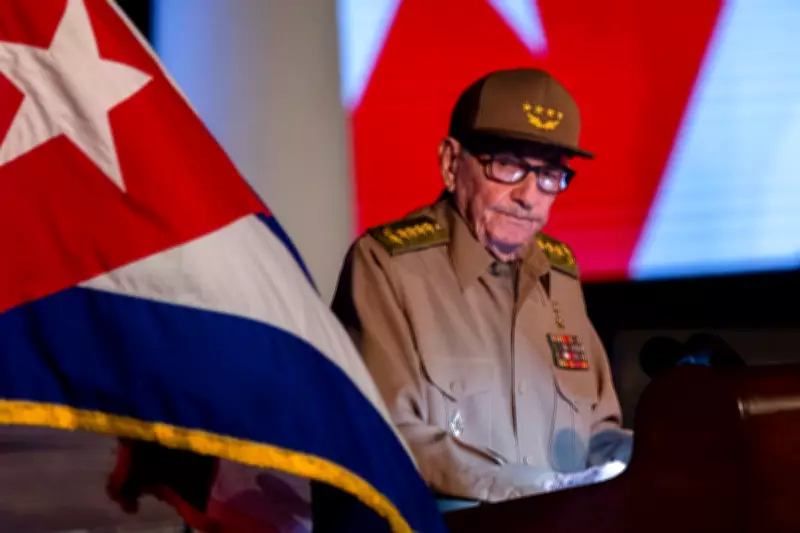
The United States has issued a federal criminal indictment against Raúl Castro, the former president of Cuba, and five others, escalating the Trump administration's campaign against the island's communist regime. The 94-year-old leader faces charges in Miami, Florida, including conspiracy to kill US nationals, four counts of murder, and two counts of destruction of aircraft.
Details of the Indictment
The charges stem from a 1996 incident in which four men were killed when their aircraft were shot down by the Cuban military during a humanitarian mission in the Florida Straits. Raúl Castro, who served as Cuba's defense minister at the time, is alleged to have ordered the attack. Other defendants include a fighter pilot initially charged in connection with the incident.
Political Context
The indictment comes amid heightened tensions between the US and Cuba. President Donald Trump has threatened military action, and an energy crisis exacerbated by the US oil embargo has led to rolling blackouts and protests in Havana. Speaking after the indictment, Trump downplayed the possibility of escalation, stating, "The place is falling apart."

The US military confirmed the aircraft carrier USS Nimitz and its escort warships entered the southern Caribbean Sea, with the US Southern Command highlighting the fleet's readiness. The indictment was announced at Miami's Freedom Tower, a symbolic site for Cuban refugees, on Cuba's national day.
Reactions
Acting Attorney General Todd Blanche declared, "For the first time in nearly 70 years, senior leadership of the Cuban regime has been charged... Nations cannot be permitted to target Americans and not face accountability." Cuban President Miguel Díaz-Canel condemned the indictment as a political stunt aimed at justifying military aggression, accusing the US of ignoring Cuban warnings about airspace violations.
The charges relate to the shooting down of two planes belonging to Brothers to the Rescue, a Miami-based exile group searching for refugees. Four men—Armando Alejandre Jr., Carlos Costa, Mario de la Peña, and Pablo Morales—died after their Cessnas were hit by missiles from Cuban MiG jets. A third plane escaped.
Raúl Castro stepped down as president in 2018 but remains influential. It is uncertain if he will face a US court; Blanche suggested he might appear voluntarily or be extradited, alluding to the capture of Venezuelan President Nicolás Maduro.
US Secretary of State Marco Rubio addressed the Cuban people, blaming the regime for shortages. Cuban Deputy Foreign Minister Carlos Cossio responded, accusing Rubio of lying. Cuban American lawmakers welcomed the indictment, with Representative Maria Elvira Salazar warning the Castro family that "your days are over."






