

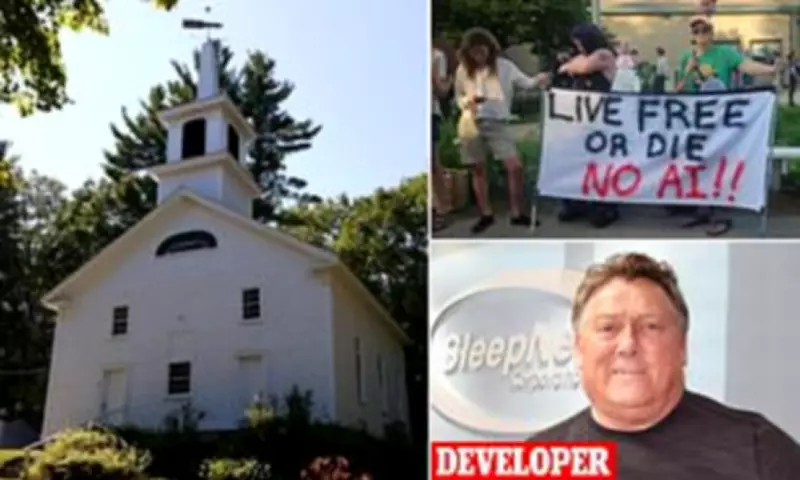
Plans to build a data center in the small New Hampshire town of Nottingham were abruptly withdrawn just hours before a scheduled town hall meeting, following intense local opposition. Developer Thomas Moulton, backing the project through Nottingham Business Park LLC, pulled the proposal after more than 25,000 people signed a Change.org petition citing fears of environmental damage and the destruction of the town's rural character.
Developer's Response
Moulton, a local resident, told Business Insider, 'I'm not some guy from New York trying to do a housing development and do it irresponsibly. I live in the community, I want to do the right thing.' He stated that the company withdrew its conceptual consultation request 'without prejudice' and would further research whether the area is suitable for a data center. Reading from a statement, Moulton acknowledged 'a great deal of public concern' and appreciated the public's engagement, emphasizing the importance of addressing questions 'in a thoughtful and responsible manner.'
Despite the backlash, Moulton noted that much of the opposition was fueled by 'misconception and misinformation,' including claims of a 40-acre building when the actual plan involved a four-acre structure. He highlighted environmental concerns as the primary issue, stating, 'If we assemble truthful and accurate information, and present it fairly and transparently, then let everybody make their mind up - if they don't want it, they don't want it.'

Resident Concerns
Local resident Brad Weit expressed fears about the changing landscape and environmental impacts, particularly regarding water usage in a region already facing severe drought. 'It completely baffled me that of all places I've been reading about these, seeing them pop up, that Nottingham was the next one,' he said. Weit, who grew up hunting and fishing in the area, added, 'I value the beauty of New Hampshire, and I would like to keep it, especially in a small town like Nottingham, where it's not very industrial at all.'
Another resident, Denise, wrote on the petition: 'As a longtime resident of Nottingham and as someone who stayed here because of our access to natural resources including well water, I am deeply concerned about the proposal for a data center that will impact my water access, possible water quality, interrupt the wildlife and environment.' The petition also raised concerns about water usage, chemical runoff, wildlife disturbance, and threats to the local ecosystem, particularly the Lamprey River Watershed, a federally designated Wild and Scenic River system.
Tax Benefits vs. Environmental Risks
Moulton argued that the data center would bring a significant tax windfall to the area, where the commercial tax base is limited, comparing it to 'hitting a lottery ticket.' However, the petition refuted these benefits, calling the development a 'poor trade-off for residents.' It stated, 'Data centers are automated facilities that operate with very few people. Once the out of town construction crews leave, a 40 acre data center typically employs fewer than 10 to 30 permanent staff, and most of those positions are specialized IT engineers hired from outside the community anyways.' The petition also noted that Moulton was exploring the project on speculation, without a tenant lined up, and accused him of risking natural resources to make his land marketable.
Moulton revealed that the uproar included threats on his life, but emphasized that such development is inevitable: 'Someone's going to do this regardless. I'm just trying to plan and look at maybe this might be something for the future for the state and the community.'
Broader Context
The opposition in Nottingham reflects a growing trend of backlash against data center development in small towns across the United States. In Georgia, residents of Fayetteville were outraged after discovering that a data center operated by Quality Technology Services (QTS) had used nearly 30 million gallons of water without paying for it. The company installed two industrial-scale water hookups, one without the water utility's knowledge, and was not billed for months. By May 2024, QTS owed nearly $150,000 for the water, equivalent to 44 Olympic-size swimming pools. The company eventually paid the debt but faced no fines.

Local attorney James Clifton, who obtained the letter through a public records request, expressed frustration: 'We get this notification from Fayette County water system saying you need to stop watering your lawns to help conserve water... when we have QTS, that's just absolutely draining us.' The entire state of Georgia is experiencing moderate to high drought levels, with Governor Brian Kemp declaring a state of emergency due to wildfires. Despite this, QTS continued watering its landscaping, prompting further ire.
Vanessa Tigert, director of the Fayette County water system, defended the lack of penalties, stating, 'They're our largest customer and we have to be partners. It's called customer service.' A QTS spokesperson attributed the high water usage to temporary construction activities, such as laying concrete and dust control, as the company adds 16 more buildings to the site over the next three to five years.





