
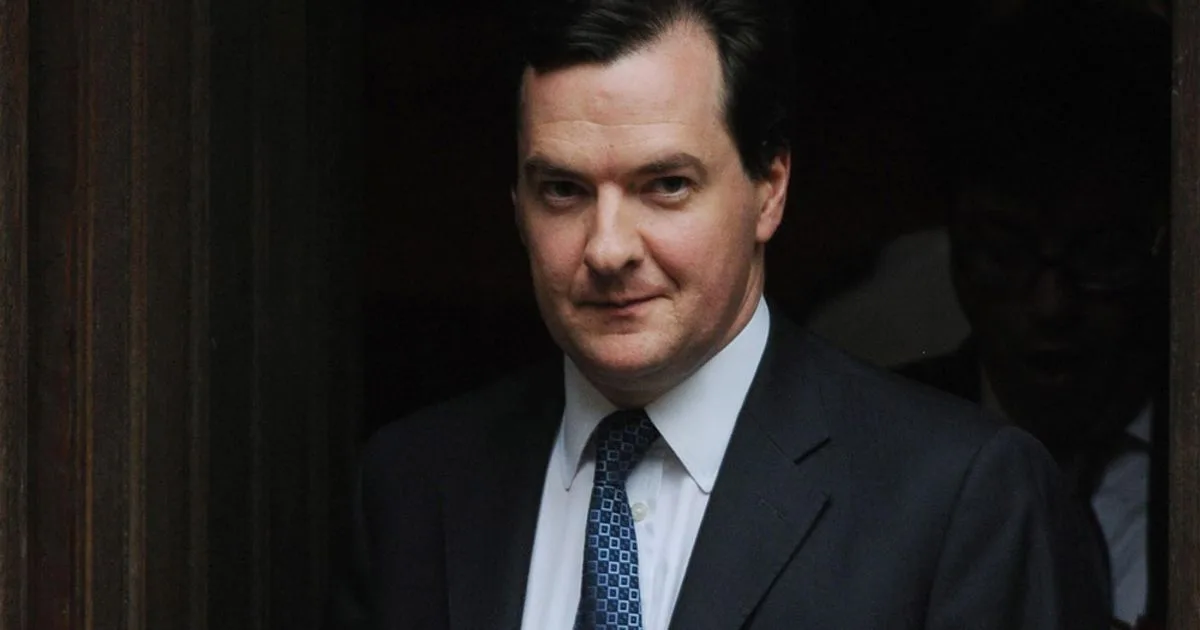
Official figures from the Office for National Statistics (ONS) have revealed that the poorest households in the UK pay a higher proportion of their income in tax than the richest, undermining the Conservative government's mantra that 'we're all in this together'. The data shows that the least well-off households contribute 36.6% of their income to the Treasury, while the top 20% of earners pay a lower effective rate.
The ONS report partly attributes this disparity to the increase in VAT to 20% in January 2011, a policy introduced by then-Chancellor George Osborne. VAT is a regressive tax, meaning it takes a larger percentage of income from low earners than from high earners, as it is applied at the same rate regardless of income. The report states that indirect taxes like VAT 'increase inequality'.
Shadow Treasury Secretary Chris Leslie said the figures were proof that the VAT hike was a tax on the poor. 'What more evidence could anyone need that this Government is piling higher costs on lower and middle-income households while cutting taxes for the wealthy?' he said. Labour had argued at the time of the VAT rise that it would disproportionately affect the poor, a claim now supported by the ONS.
Unions have called for a reduction in VAT rather than further increases in the personal allowance for income tax. TUC General Secretary Frances O'Grady said: 'Low-income families will gain virtually nothing from the increase in the personal allowance, but will continue to lose significantly from the rise in VAT. Contrary to what ministers claim, the Government's tax policies are having a negative impact on the poorest households.'
The ONS figures also show the overall tax burden on different income groups. After all taxes and benefits are accounted for, the top 20% of earners are left with an average of £57,300 per year, while the bottom 20% have just £15,800.




