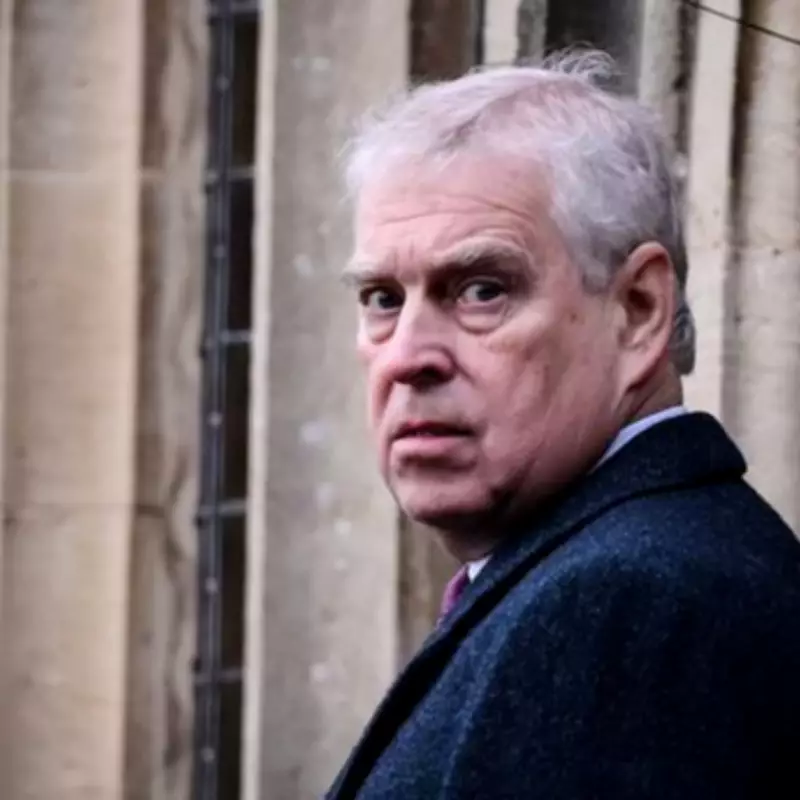
Prince Andrew's Birthday Arrest Highlights Global Epstein Reckoning
Arrested on suspicion of misconduct in a public office on his 66th birthday, Prince Andrew has become the most striking symbol yet of a worldwide reckoning over Jeffrey Epstein's network. The timing was surreal, transforming a day of private reflection into a public spectacle of flashing cameras and police procedure, dragging a royal name formally into the criminal justice system.
A Dramatic Shift in Accountability
For years, the former Duke of York dismissed questions about his ties to Epstein as mere media frenzy. This birthday "surprise"—with police knocking rather than well-wishers calling—marked a dramatic shift. Whatever the eventual outcome, the message is unmistakable: status alone no longer guarantees insulation from criminal investigation. Andrew's arrest should not be seen as an indication of guilt, and no charges have been filed yet, but the tremors extend far beyond royalty.
The Epstein affair was never merely about one disgraced financier who died in custody. It was about an ecosystem of influence—private jets, island retreats, cross-party friendships, and the ease with which wealth seemed to smooth every obstacle. It was about how power protects itself, and Andrew's arrest signals that such protection may be crumbling in some quarters.

Contrasting Responses: UK vs. US
Britain's reckoning may yet prove incomplete, and Europe's investigations might not satisfy every demand for justice. However, arrests have been made, careers have ended, and titles have fallen. In America, by contrast, the silence remains conspicuous. Even with only half of the files—many heavily redacted—now public, the Department of Justice has closed the case.
When challenged about investigating everyone named in the Epstein material, Attorney General Pam Bondi suggested such action could "bring down the government." This was an astonishing warning, not about exonerating the innocent or ensuring due process, but that full accountability might destabilise the political order itself.
If examining credible allegations against powerful individuals risks shaking institutions, then those institutions demand deeper scrutiny, not gentler handling. The rule of law cannot function on the basis that some names are too significant, too connected, or too politically sensitive to examine.
The Stalled Pursuit of Justice in America
Justice cannot stop at one imprisoned accomplice while others retreat behind legal teams and influence. It cannot flinch because the truth might prove politically explosive. And it cannot accept that the potential embarrassment of the elite outweighs the public's right to accountability. A birthday arrest on suspicion of misconduct in a public office should not stand alone as a rare spectacle; it should signal something larger: that no title, fortune, or political office is sufficient armour against the law.
Until the United States shows the same willingness to test that principle, the suspicion will linger that, once again, the rich and powerful have been protected in America, and the full truth will always remain out of reach. The global reckoning over Epstein's network continues, but America's stance raises critical questions about equality before the law and institutional integrity.