Parachuting onto Britain's most remote overseas territory to supply medical personnel and oxygen was a 'dream mission', a paratrooper has said. The UK Health Security Agency confirmed on Friday that a British national had disembarked from the cruise ship MV Hondius to the South Atlantic island of Tristan da Cunha, where they live, with a suspected case of hantavirus.
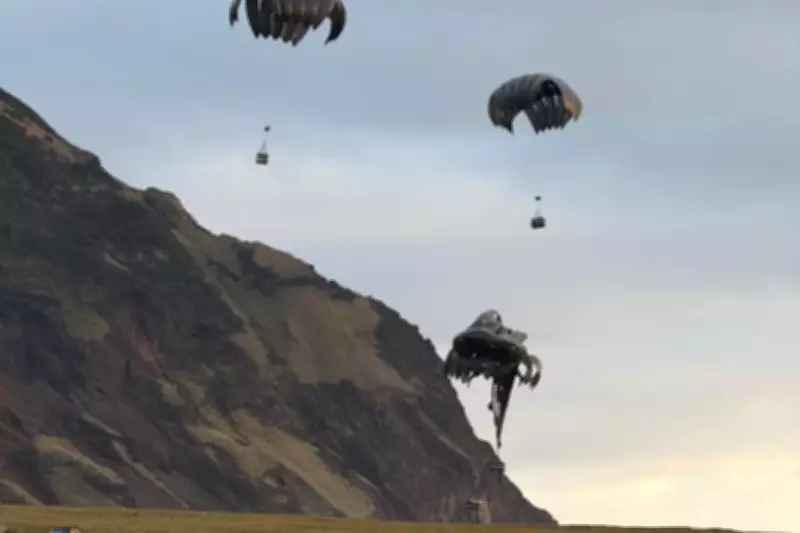
Six paratroopers, an RAF consultant and an Army nurse from 16 Air Assault Brigade parachuted to the island, which is normally only accessible by boat, while oxygen supplies and medical aid were also dropped. Captain George Lacey, second in command of the British Army's Pathfinders, said it was a 'really long distance to get here from Colchester where we're based'.
Speaking from Tristan da Cunha, he told Sky News: 'We donned our parachutes and exited the aircraft into some relatively tricky conditions, I have to admit. But we are trained for that sort of mission. The guys have got hundreds of jumps and we train all year round ready for exactly this sort of situation, and for us, this is our bread and butter. The guys are highly trained and for us, this is a dream mission.'

He added: 'The islanders were obviously very happy to see us. They've welcomed us with open arms and looked after us.' An RAF A400M transport aircraft flew from RAF Brize Norton to Ascension Island, supported by an RAF Voyager, before heading to Tristan da Cunha.
Tristan da Cunha, in a group of volcanic islands in the South Atlantic, is Britain's most remote inhabited overseas territory. It has no air strip and a population of 221. Brigadier Ed Cartwright, the commander of 16 Air Assault Brigade, said there was '7,000 miles and about 56 hours' between help being requested and 'having those parachutists and those medical stores on the ground'.
He told Sky News: 'No air strip, high winds, very difficult to reach, and over a week for a boat, and the patient, as I understand, was on oxygen, and that oxygen supply was running out – so we had very few options. I think the soldiers will have had a great time, but it's pretty risky. Parachuting has some inherent dangers. The winds were reasonably high. The parachuters – I've spoken to them – they described it to me as a 'pretty tasty jump'. They would have got out of the aircraft, had to turn straight into wind to avoid being pushed past the island and into the Atlantic, and then had a very difficult descent down through the cloud and then on to the drop zone, which was a golf course covered in rocks.'
The Army commander said there is a 'plan to get them back'. He added: 'There are some ships being moved and some further medical support being prepared, so we'll be able to extract them safely in due course.' The Ministry of Defence said it was the first time medical personnel had been parachuted in to provide humanitarian support. Foreign Secretary Yvette Cooper said the safety of 'all members of the British family' is the top priority. She said: 'We will continue to work closely with international authorities and the Tristan da Cunha administration, keeping those affected informed and ensuring the right support is in place in the UK and across the overseas territories.'