Modeling Industry Activist Demands Congressional Probe into Epstein Connections
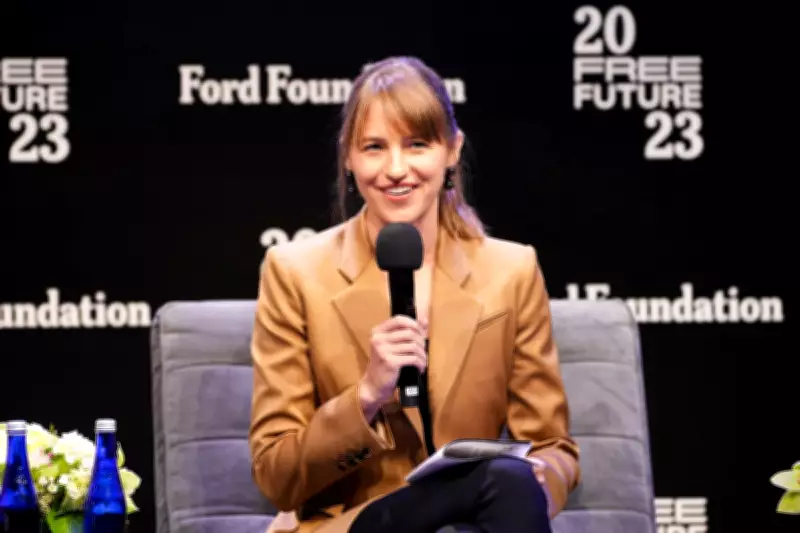
Sara Ziff, the founder of the Model Alliance, has issued a forceful call for business leaders in the modeling industry to be summoned before the House oversight committee in Washington. This demand aims to investigate the potential role modeling agencies played in the Jeffrey Epstein sex-trafficking scandal, highlighting systemic issues within the fashion world.
Survivors and Advocates Push for Accountability
Ziff, a former model and head of the non-profit advocacy group Model Alliance, emphasized the need for a thorough investigation. "I’d like to see a proper investigation into how modeling agencies facilitated Epstein’s abuse," she stated in an interview, adding that it is "totally appropriate" to bring company executives before lawmakers. She and over 40 Epstein survivors have signed a letter addressed to New York attorney general Letitia James and congressmen Ro Khanna and Thomas Massie, urging an inquiry.
The letter argues that the involvement of numerous individuals from the modeling business—including agents, owners, and scouts—in Epstein-related documents and testimonies suggests a broader pattern of exploitation. It describes the industry's power structure as creating "a pipeline through which vulnerable teenagers were regularly delivered to powerful predators," with Epstein seen not as an isolated figure but as a beneficiary of this system.

Evidence and Key Figures Under Scrutiny
Citing public records, survivor accounts, investigative journalism, and U.S. Department of Justice files, the letter asserts that Epstein's trafficking operation directly intersected with modeling agencies. These entities allegedly introduced him to young women and girls, facilitating access to potential victims. Specific industry figures named for investigation include:
- Faith Kates, who ran Next Management and represented Ziff.
- The late Jean-Luc Brunel, an Epstein associate and model management owner who died by suicide in jail while under investigation for rape and trafficking of minors.
- Gérald Marie, head of Elite Model Management's European division, accused of rape by more than 15 former models.
Ziff stressed the importance of scrutiny, saying, "It’s essential that attorney general James and representatives Massie and Khanna [examine] whether and how modeling agencies and agents facilitated Epstein’s abuse. This deserves further scrutiny." While James and Massie have not yet responded, Khanna confirmed he would take the information to the oversight committee and push for subpoenas.
Background and Legislative Context
This call for investigation follows the recent passage of the New York Fashion Workers Act (FWA), which Ziff helped advocate for. The law aims to address power imbalances in the industry by granting models protections such as:
- Reclaiming power of attorney from agents.
- Safeguards against harassment and retaliation.
- Guaranteed overtime and lunch breaks.
- Liability for agencies sending models to known abusers.
However, the FWA only applies in New York, and industry agents note it is too early to assess its full impact, though awareness has improved. Ziff acknowledged that more work is needed, stating, "Is it a silver bullet? No. There is more work that needs to be done, but it is one step toward prevention." She highlighted how the law limits fees that previously trapped models in debt, forcing them into risky situations like dinners with businessmen.
Personal Journey and Broader Implications
Ziff's activism stems from her own experiences in the modeling industry. In 2011, she released the documentary Picture Me, which exposed the dark realities behind the glamour, describing it as a system that "routinely put teenagers into dangerous and exploitative situations." She reflected on the industry's aspirational nature, which can mask abuse, saying, "We’re not talking about a niche group of wealthy and powerful supermodels; we’re talking about a large group who aspire to gain entry to a business that can be incredibly abusive."

Her transition from model to activist came at a personal cost, with her earnings plummeting after the documentary's release. Despite this, she remains committed, noting, "This work has been far more meaningful. So I certainly don’t regret it." Ziff emphasized that the issue extends beyond modeling, urging broader concern for workers' and women's rights.