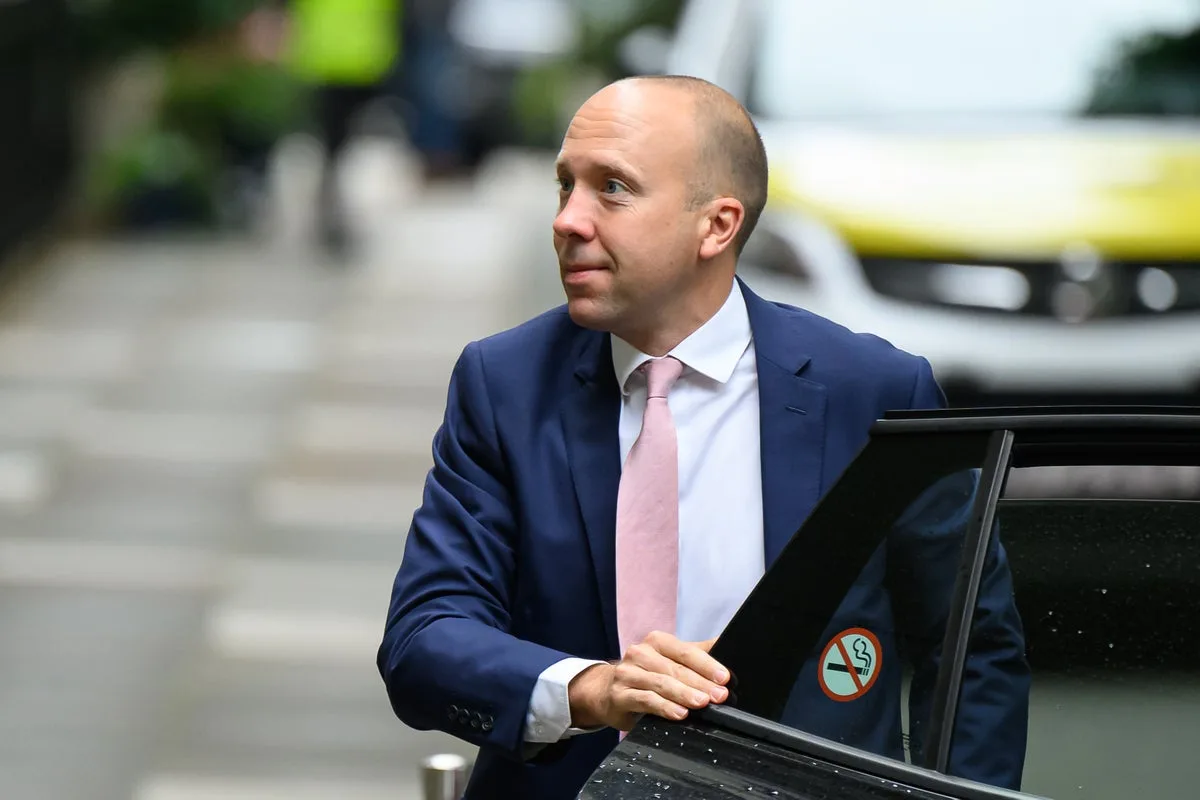
Matt Hancock has told the Court of Appeal that a libel claim brought against him by former MP Andrew Bridgen “should never have been brought”. The case concerns a social media post on X (formerly Twitter) from January 2023.
The former Conservative health secretary is appealing a High Court ruling from last April, which allowed Mr Bridgen’s claim to proceed to trial. Mr Hancock had previously sought to have the case dismissed.
Representing Mr Hancock, Aidan Eardley KC argued that the opinion expressed in the post was his honest opinion. He also expressed concern that the case could be used to attack the Covid-19 vaccination scheme, noting that a public inquiry is ongoing.

The post in question came after Mr Bridgen shared an article about deaths and adverse reactions linked to Covid vaccines, comparing the situation to “the biggest crime against humanity since the Holocaust”. Hours later, Mr Hancock shared a video of himself in the House of Commons, captioning it: “The disgusting and dangerous antisemitic, anti-vax, anti-scientific conspiracy theories spouted by a sitting MP this morning are unacceptable.”
Christopher Newman, representing Mr Bridgen, argued that the tweet was not antisemitic on its face, given the use of the word “since”. He added that Mr Hancock was “simply wrong” in his contentions about uncertainty over the definition of antisemitism.
The appeal before Lady Justice King, Lord Justice Warby and Lady Justice Whipple is due to conclude on Wednesday.