Congressman Threatens to Name Six More Men in Epstein Files Under Privilege
Massie May Name Six More Men in Epstein Files Under Privilege

Congressman Threatens to Disclose Six More Names from Epstein Files

Republican Congressman Thomas Massie has declared he possesses knowledge of six additional men who are "likely incriminated" through their inclusion in the Jeffrey Epstein documents. Massie made this statement following his review of an unredacted version of the files at the Department of Justice headquarters in Washington DC on Monday, 9 February 2026.

Potential Revelation Under Congressional Immunity

The Kentucky representative indicated he might publicly disclose the identities of these individuals utilizing congressional privilege if the Justice Department persists in concealing their names within publicly accessible copies of the documents. Massie emphasized that the legislation governing the release does not permit the redaction of such names.

"What I saw that bothered me were the names of at least six men that have been redacted that are likely incriminated by their inclusion in these files," Massie told reporters outside the DoJ building. He described the group as including at least one US citizen, a high-ranking foreign government official, another foreign national, and three or four others whose nationalities were not immediately clear.

Accusations of Unnecessary Redactions and Cover-Up

Massie, the lead sponsor of the Epstein Files Transparency Act which compelled the Trump administration to release the documents, spent approximately two hours examining the files alongside Democratic Congressman Ro Khanna of California. The pair reported having to conduct "some digging" to locate the new names.

A small contingent of Democrats who also viewed the papers on Monday accused the Justice Department of engaging in a cover-up due to what they termed "mysterious redactions." House judiciary ranking Democratic member Jamie Raskin asserted he observed "tons of completely unnecessary redactions" beyond those intended to protect victims' identities.

Raskin has previously criticized the DoJ for withholding approximately three million documents from the Epstein files, despite departmental claims that its review of the case has concluded and White House efforts to "move on" from the scandal.

Broader Political Repercussions and Calls for Accountability

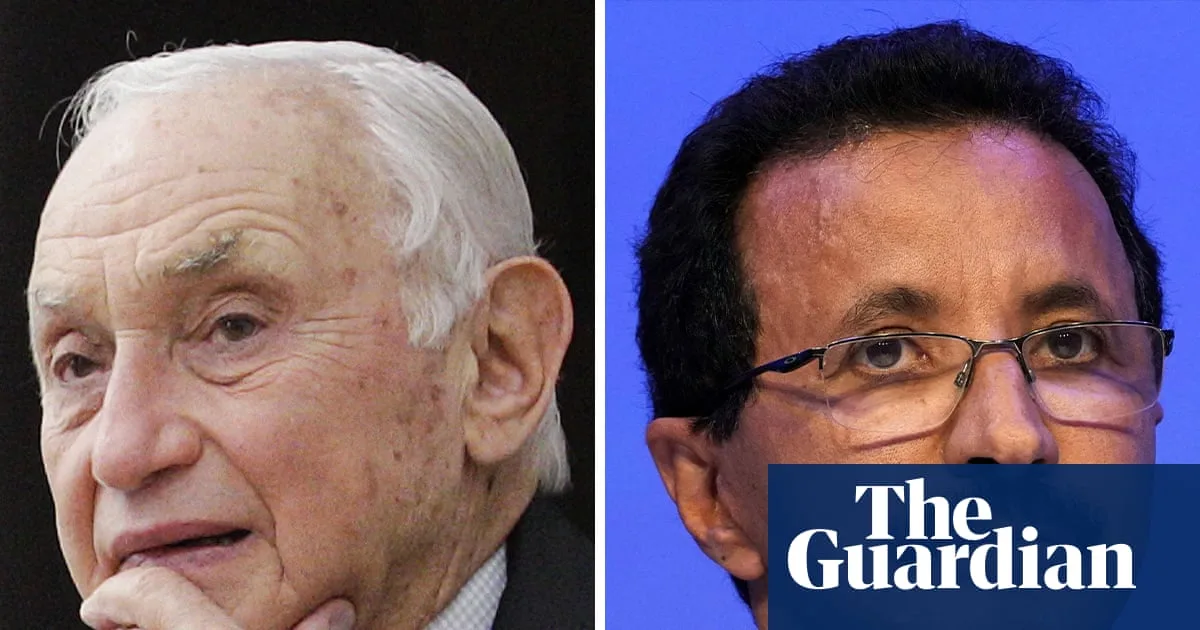
The Epstein scandal continues to cast a long shadow over political figures on both sides of the Atlantic. Separately, US Commerce Secretary Howard Lutnick faces mounting bipartisan demands for his resignation following revelations of extensive correspondence with Epstein in 2012, including arrangements to visit the financier's private Caribbean island.

Massie stated that Lutnick "has a lot to answer for" and must step down, while Khanna echoed this sentiment, noting that the scandal has already disrupted the UK government under Prime Minister Keir Starmer, leading to at least two resignations.

"Based on the evidence, [Lutnick] should be out of the cabinet," Khanna told Politico Playbook, drawing parallels to accountability measures taken in Britain.

Maxwell's Refusal to Testify and Contradictory Claims

In another development, Ghislaine Maxwell, Epstein's convicted co-conspirator, refused to testify before the House oversight committee investigating the case, invoking her constitutional right against self-incrimination. Khanna noted her prior willingness to speak with Trump's deputy attorney general last summer, shortly before her transfer to a low-security prison.

Meanwhile, a 2019 FBI interview with former Palm Beach police chief Michael Reiter revealed that Trump had contacted him in 2006 to warn that Maxwell was Epstein's operative and was "evil." This account contradicts Trump's subsequent assertions that he had no knowledge of Epstein and Maxwell's activities.

Massie concluded his remarks by stating he would prefer to allow the Justice Department an opportunity to acknowledge over-redaction and voluntarily release the names, but he remains prepared to act under congressional privilege if necessary.