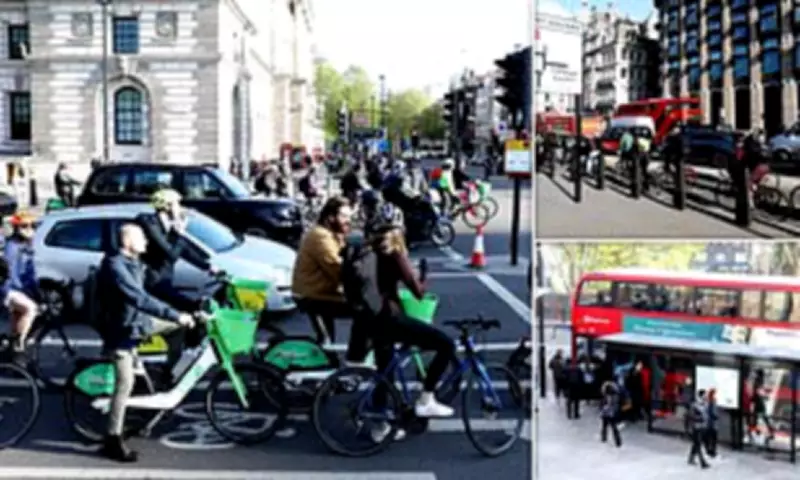
A 24-hour strike on the London Underground has once again thrown commuters into disarray across the capital, with further disruption expected to follow. Members of the RMT union walked out at midday yesterday, claiming Transport for London (TfL) is attempting to impose a 'fake' four-day working week that workers do not want.
Service Disruption
Several Tube lines have been suspended entirely, while others continue to operate with severe delays. Commuters have been warned they may need to wait for multiple trains before being able to board. The strike has forced City firms that usually require office attendance to permit working from home.
Deprived of their usual Tube services, many commuters have taken to the roads. Live cycle data from Camden Council indicates that over 10,000 people cycled through Bloomsbury Way in the West End yesterday, a 75% increase on the daily average. Buses, unaffected by the strike, have seen heavy crowding.

Other TfL services, including the Elizabeth Line, London Overground, and the DLR, are running normally but are expected to be busier than usual. The chaos is set to continue from tomorrow, with RMT workers walking out again for another 24 hours starting at midday on Thursday.
Impact on Businesses
Workers at top City firms have been told to negotiate working from home during the strikes. According to the Financial Times, Amazon employees who normally commute to the City have worked from home, while JP Morgan bankers have been advised to discuss shift arrangements with managers.
The Dispute Explained
The row stems from TfL's proposal to introduce a voluntary four-day week. Currently, Tube drivers work a minimum of 35 hours over five days, with unpaid lunch breaks. Under the new plan, drivers could compress those hours into four days, with paid lunch breaks and three days off. However, the RMT argues this could lead to driver fatigue due to longer shifts exceeding eight hours.
The union also fears that TfL will eventually make the four-day week compulsory, a claim TfL denies. The RMT wants to reduce weekly hours from 35 to 32 without a pay cut. A Tube driver's base salary is around £71,170 per year, with total earnings often reaching £75,000 to £80,000 including overtime and allowances. Drivers also receive benefits such as free TfL travel and a generous pension scheme.
RMT official Jared Wood stated, 'There is absolute unanimity among our members that we have to fight these proposals.' However, rival union Aslef, which also represents Tube drivers, supports TfL's plan.
TfL's chief operating officer, Claire Mann, said: 'We have set out proposals to the RMT for a four-day working week. This allows us to offer train operators an additional day off, whilst bringing London Underground in line with other train operating companies, improving reliability and flexibility at no additional cost. The changes would be voluntary, and those who wish to continue a five-day week can do so.'
Further Strikes Threatened
Four additional strikes have been threatened in May and June if negotiations fail. Additionally, seven bus services operated by Stagecoach will be affected by industrial action later this week. Drivers affiliated with Unite will strike from 5am on Friday April 24 to 5am on Saturday April 25, impacting routes including the 8, 25, 205, 425, N8, N25, and N205.