
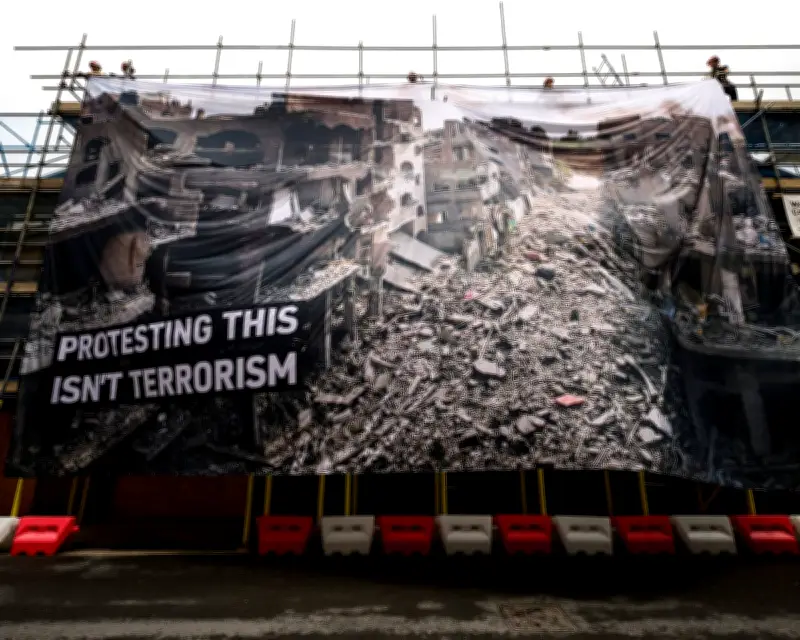
One of the UK's leading human rights lawyers has warned that the potential sentencing of four Palestine Action protesters as terrorists, despite the jury not convicting them of a terrorism offence, violates fundamental legal principles and represents a constitutional threat.
Background of the Case
Last month, Charlotte Head, 29, Samuel Corner, 23, Leona Kamio, 30, and Fatema Rajwani, 21 were found guilty of criminal damage for breaking into an Israeli arms manufacturer's UK site in 2024. On Friday, trial judge Mr Justice Johnson will decide whether there was a terrorism connection to their offence, which could lead to harsher sentences, even though the jury was never informed of this possibility.
Legal Expert Warnings
Michael Mansfield KC, known for his work on landmark cases such as the Grenfell Tower fire, Stephen Lawrence, and the Birmingham Six, is the highest-profile signatory of an open letter signed by over 50 lawyers and legal experts. The letter warns that such a finding would be 'wrong in principle'.
'It's a recategorising of the offence without a trial,' Mansfield said. 'It's particularly insidious because they weren't allowed to explain their motivation to a jury – that was denied them. And yet the state says we're actually going to elevate what the offences are when a jury might well not have convicted had they known they were going to be treated as terrorists.'
He added: 'The fundamental principle is you should not be convicted on any statutory offence for which you have not been charged.'
Potential Consequences
If Johnson finds a terrorist connection, the four individuals, who smashed drones and other equipment at the Elbit Systems UK factory near Bristol, would face harsher sentences, serve a greater proportion of their sentence in prison, and be required to notify police for life about certain changes in their personal circumstances.
Historical Context
The open letter highlights examples from the suffragettes and the women of Greenham Common to Extinction Rebellion and the Trident Ploughshares movement, stating: 'Blurring the distinction between principled direct action and terrorism is the hallmark of authoritarian regimes.'
Penny Green, professor of law and globalisation at Queen Mary University of London and another signatory, said: 'It is beyond shocking that acts of criminal damage, designed to prevent the mass killing of Palestinians by Israel, are treated by the British state as acts of terror. The question we now have to ask is why British justice has been so demeaned and distorted as to stand in defence of the perpetrators of genocide.'
Judicial Response
A judicial spokesperson said: 'Judicial independence and impartiality are fundamental to the rule of law. Upon taking office, judges take the judicial oath where they swear to act without fear or favour, affection or ill will. In each case, judges make decisions based on the evidence and arguments presented to them and apply the law as it stands. Judges and magistrates sentence according to the law set by parliament and the sentencing guidelines set by the independent Sentencing Council, as well as the facts of each case which may have aggravating or mitigating factors.'




