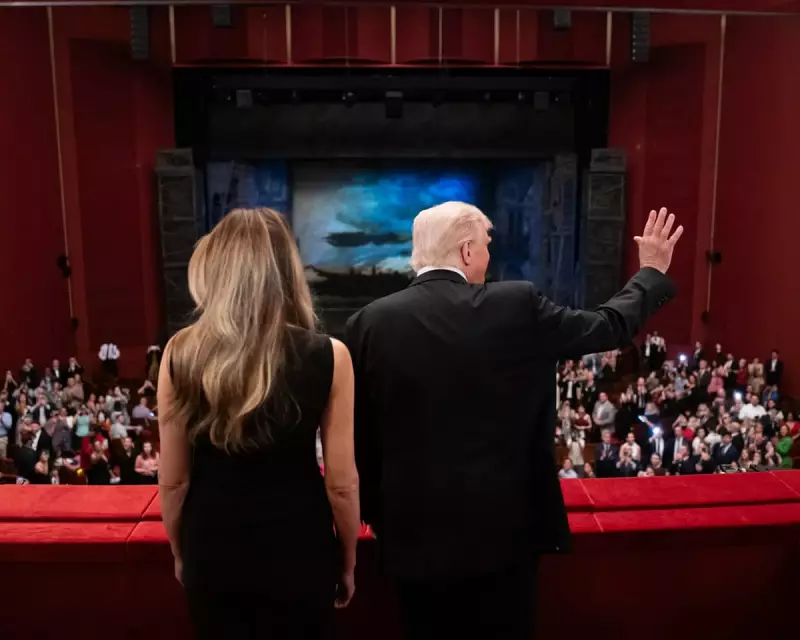
A controversial decision to add Donald Trump's name to Washington's prestigious Kennedy Center was reportedly preceded by a significant change to the institution's voting rules, a move that has ignited a fierce political and cultural backlash.
Rule Change Limits Voting Power
According to a report by the Washington Post, the Kennedy Center for the Performing Arts revised its bylaws in May of this year. The new rules stipulated that board members appointed by Congress, known as ex-officio members, could not vote or be counted towards a quorum. This change effectively limited voting power to trustees appointed by the president.
This revised rule was in place when the board convened on 18 December and voted unanimously to rebrand the building as the Donald J Trump and the John F Kennedy Memorial Center for the Performing Arts. The move has been widely interpreted as revealing a long-held plan to install the former president's name on the national monument.

Legal Challenges and Public Outcry
The name change has provoked immediate and significant opposition. Several artists have cancelled upcoming bookings at the venue in protest. In Congress, lawmakers have vowed to overturn the decision, with Democratic Representative Joyce Beatty of Ohio filing a lawsuit. Beatty argues that altering the centre's name requires an act of Congress, not just a board vote.
Legal scholar Ellen Aprill of UCLA told the Post that the voting restriction appears to breach the centre's founding charter. "Clearly the intent of the charter provisions was to entrust Kennedy Center guidance to a broad group, not just those appointed by the president," she stated.
The centre's leadership, however, defends the bylaw amendment. Roma Daravi, Vice-President for Public Relations, said the change merely reflected a "longstanding precedent" that ex-officio members did not vote, and that the revisions passed unanimously without objection.
Trump's Influence and Declining Audience
The controversy unfolds against a backdrop of increasing influence by Trump allies within the institution. Trump himself took over as chair of the board in February, promptly replacing sitting members with his supporters. A key appointment was Ric Grenell, Trump's longtime foreign policy adviser, who was installed as president of the centre. Grenell is a vocal proponent of Trump's ideology and has a history of confrontational diplomatic postings.
The naming row coincides with new figures showing a sharp decline in television ratings for the centre's flagship event. The Kennedy Center Honors awards, hosted by Trump this year, drew a record low audience of 3.01 million viewers on CBS—a 25% drop from the previous broadcast.
Meanwhile, Trump used his Truth Social platform to criticise the Kennedy family's support for the centre. These posts came mere hours after the family announced the death from leukaemia of JFK's granddaughter, Tatiana Schlossberg, aged 35.
The confluence of a disputed rule change, a unilateral name decision, and growing public and artistic dissent marks a profound moment of contention for one of America's most iconic cultural institutions.