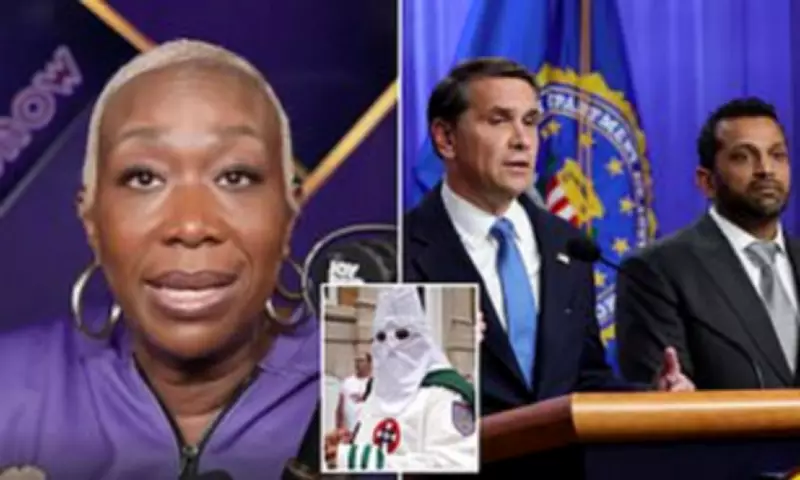
Joy Reid blasted President Donald Trump's Justice Department as 'absolutely insane' after it brought a sweeping federal indictment against the Southern Poverty Law Center. The DOJ accused the group of secretly funneling millions of dollars to extremist organizations including the Ku Klux Klan, while the SPLC said the payments were to informants embedded with those groups.
Reid's Reaction
Former MSNBC star Reid used her show to sharply criticize the case unveiled by Acting Attorney General Todd Blanche, which alleges the civil rights nonprofit defrauded donors by paying informants. 'This is absolutely insane,' Reid said on The Joy Reid Show. 'What they're trying to do is criminalize the very work of identifying extremism.'
The Indictment
At the center of the storm is an 11-count federal indictment announced by Blanche, accusing the SPLC of orchestrating a years-long scheme to secretly funnel more than $3 million to individuals tied to extremist organizations, including the Ku Klux Klan. Prosecutors allege the nonprofit defrauded donors by claiming funds would be used to combat hate groups, while allegedly using some of that money to pay informants embedded within those same organizations.

According to court filings, the payments made between 2014 and 2023 were routed through accounts set up under fictitious names, with at least nine informants allegedly compensated, including individuals connected to groups such as the Aryan Nations and the National Socialist Party of America.
DOJ's Stance
Blanche did not mince words when announcing the charges, accusing the organization of deception at a fundamental level. 'The SPLC was not dismantling these groups. It was instead manufacturing the extremism it purports to oppose,' he said.
SPLC's Defense
The SPLC has flatly denied wrongdoing, insisting the payments were part of legitimate intelligence-gathering efforts aimed at preventing violence. Its chief executive Bryan Fair said the organization worked with confidential informants to monitor threats and regularly shared information with law enforcement. 'We are outraged by the false allegations levied against SPLC,' Fair said in a statement, adding that the work 'saved lives.'
The organization, founded in 1971 in the aftermath of Jim Crow-era segregation, has built its reputation tracking hate groups and pursuing civil litigation against white supremacist organizations. Its widely cited 'hate map' has long made it a lightning rod for criticism from conservatives.
Political Context
On her show, Reid argued the SPLC's focus on white supremacist extremism has made it a target, particularly among Republicans who view the group as partisan. 'We don't look at it left, right. They look at who's the danger. And it is racially motivated, violent extremists of the white supremacist variety,' Reid said, referencing remarks from former FBI Director Christopher Wray.
Wray had previously stated: 'Racially motivated violent extremists over recent years have been responsible for the most lethal activity in the US.' Reid emphasized that assessment, arguing it aligns with the SPLC's work and helps explain the backlash. 'And now you've got the Southern Poverty Law Center, which has also really p****d off the right by focusing on exactly the kinds of extremism that the groups affiliated with them and therefore with Republicans engage in,' she said. 'They need those far right wingers in their voting base and they don't want to alienate them and they're p****d off when they get called out.'
FBI Severance
Months before the indictment, FBI Director Kash Patel announced the bureau would sever ties with the SPLC, calling it a 'partisan smear machine.' That break marked a dramatic shift in a relationship that had historically seen the SPLC provide research and intelligence on hate groups to federal authorities. Patel has since backed the prosecution, accusing the organization of operating 'a massive fraud operation to deceive their donors.'
Legal Concerns
Even as the DOJ presses forward, some legal analysts have raised concerns about the unusual nature of the charges. Phil Hackney, a law professor at the University of Pittsburgh, said the case represents a novel, and potentially risky, legal theory. 'That's a new way of going after a charity - I'm somewhat surprised,' he said.

Traditionally, fraud cases involving nonprofits center on personal enrichment, not operational decisions about how funds are used. Here, prosecutors are targeting the SPLC's methods, specifically its use of confidential informants. Defense attorney Abbe Lowell, who is representing the SPLC, is expected to challenge that framing as the case unfolds.
Broader Implications
The indictment lands amid an already charged political climate, where debates over extremism, free speech and law enforcement have become deeply polarized. Conservatives have long accused the SPLC of unfairly labeling right-leaning groups as extremist, while the organization argues its work is rooted in documenting real threats. The case also follows heightened scrutiny after the 2025 assassination of conservative activist Charlie Kirk, which reignited debate over the SPLC's classifications and influence after it put his organization Turning Point USA on its hate map.