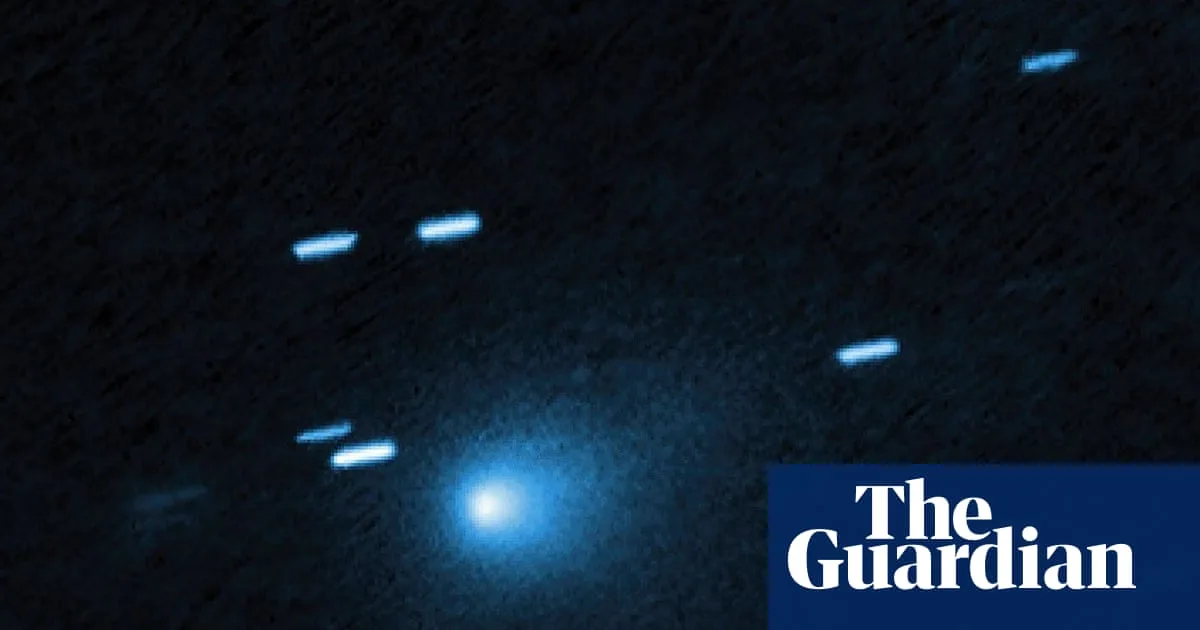
An interstellar comet that passed through the solar system last year could be nearly three times older than the Sun and planets, according to a new study. The comet, designated 3I/Atlas, is only the third known visitor from beyond our solar system, and its unusual brightness has allowed scientists to study it in unprecedented detail.
Observations using the James Webb Space Telescope and the Alma observatory in Chile revealed that the comet has a chemical composition unlike any object found in our solar system. It contains ten times more deuterium, a heavy form of hydrogen, than typical solar system comets. This suggests it formed in an extremely cold environment, possibly as low as -243°C.
Lead author Martin Cordiner of NASA's Goddard Space Flight Center said the comet may be up to 12 billion years old, making it potentially the oldest object ever observed in our solar system. The findings were published in the journal Nature.

The comet likely spent billions of years wandering the galaxy after being ejected from its original star system during planet formation. Its lack of chemical enrichment suggests it formed relatively close to newborn stars, and it could be a relic from an era of intense star formation called 'cosmic noon' about 10 billion years ago.
Despite earlier speculation from Harvard professor Avi Loeb that the comet might be an alien spacecraft, NASA and the SETI Institute found no evidence of extraterrestrial technology. The comet is now leaving the solar system forever, but astronomers expect to discover many more such objects with new observatories like the Vera C Rubin Observatory in Chile.