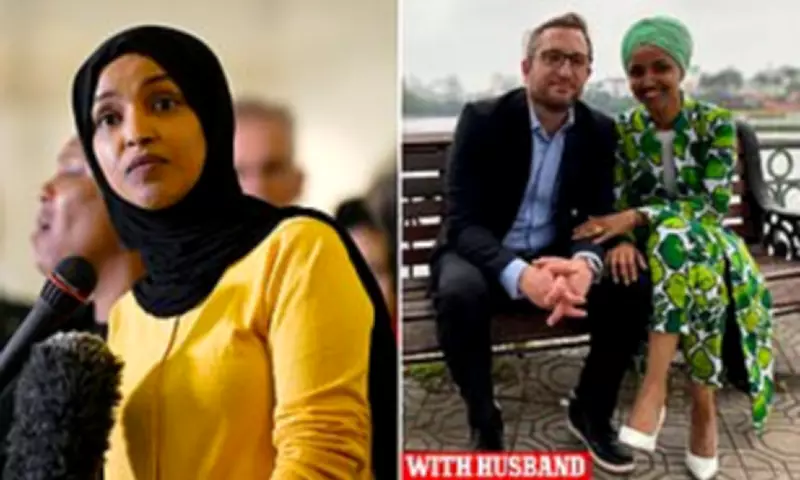
Representative Ilhan Omar is confronting escalating scrutiny regarding her financial affairs following a significant revision to a congressional disclosure that initially suggested millions in assets. The Minnesota Democrat maintains that she is not a multimillionaire, attributing the discrepancy to accounting errors, as former President Donald Trump advocates for a fraud investigation.
Dramatic Shift in Reported Assets
Omar, a frequent target of Trump and Republican critics, had previously submitted a disclosure indicating that she and her husband held assets valued between $6 million and $30 million. This figure sparked concern on Capitol Hill and led to demands for closer examination. However, an amended filing reviewed by The Wall Street Journal now presents a starkly different scenario: Omar and her husband's assets are listed at just $18,004 to $95,000, a mere fraction of the earlier reported amounts.
Office Response and Political Tensions
Her office has clarified that the initial figures were inaccurate. 'The amended disclosure confirms what we've said all along: The congresswoman is not a millionaire,' stated Jacklyn Rogers, a spokeswoman for Omar. 'The congresswoman amended her disclosures voluntarily as soon as the discrepancy was identified.' This shift from tens of millions of dollars to under six figures represents a dramatic reversal that has intensified political friction in Washington.

Details of the Discrepancy
The original filing attributed substantial value to business interests associated with Omar's husband, Tim Mynett, a former political consultant involved in ventures such as a Washington-based venture-capital management firm and a winery in Santa Rosa, California. In the amended disclosure, these same businesses are now listed as having no value after accounting for liabilities.
Because congressional financial disclosures mandate reporting in broad ranges rather than precise figures, the original filing's wide valuation band—up to $30 million—garnered particular attention. The revised filing sharply contradicts that narrative, with Omar's team blaming the discrepancy on reliance on financial professionals for the initial assessment.
The situation underscores ongoing debates over transparency and accountability in political finances, as critics question the integrity of the disclosure process while supporters emphasize the voluntary correction as evidence of good faith.