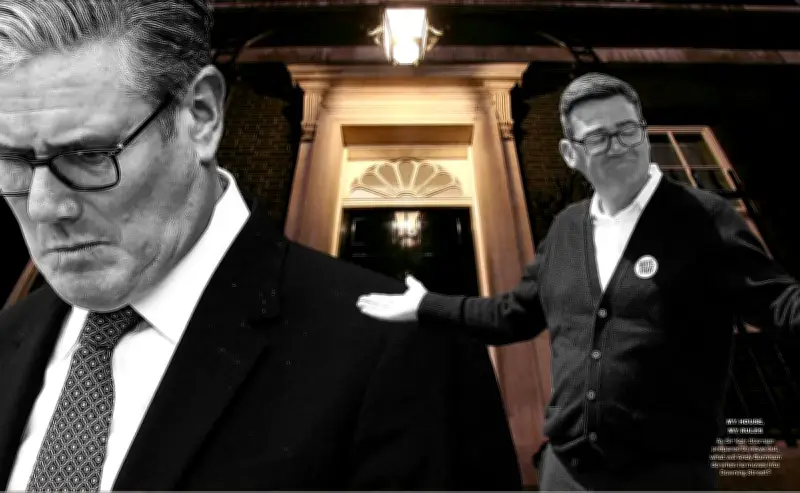
Sir Keir Starmer's resignation speech on Monday was a list of declared successes, with all the signs of being hurriedly written in a bad mood — staccato sentences and a stiff list of boasts of everything that had gone right — just as it had all gone so spectacularly wrong. "Welcome to the Job Centre, Keir" was the heartless poster waved by a protester outside the No 10 gates as the PM bowed out after less than two years in the job. He has, as an old friend from his legal days put it, "Just completely blown it. He is a smart guy and an honest man, and I still do not entirely understand why he could not grip the job."
Starmer's Legacy Claims
Starmer sees this very differently. He highlighted supporting Ukraine, raising defence spending, ensuring renters' and workers' rights, tackling immigration numbers and "lifting half a million children out of poverty" by removing the two-child benefit cap as his legacy. He had, he insisted, turned around a Labour Party he inherited in 2020, as "politically, financially and morally bankrupt", and taken it to power with a huge majority.
With heavy reluctance, Starmer acknowledged that his own party as well as many of the most senior colleagues he placed in his Cabinet concluded this was not enough. Even if the "optics" looked OK on TV, this was a poorly attended affair — most of the Cabinet were not asked or did not attend. The gaggle was the remains of the loyalists — the deputy PM David Lammy and Housing Secretary Steve Reed and Starmer's closest ally, Darren Jones. Many of them were also watching their cabinet careers looking dicey. Special advisers around Whitehall are looking anxiously at their mortgage payments.

Burnham's Rise
There was no mention of Andy Burnham, who had emerged from the Makerfield by-election the previous Thursday not only as the "Reform-slayer" for trouncing Nigel Farage's party to secure his primrose path back to the Commons, but as the figure who has abruptly ousted him from Downing Street in a putsch.
Watching from the sweltering press pit opposite, I could also make out the lanky figure of Starmer's son, sombre-faced and remarkably like the picture of the young Keir in his late teens. Victoria Starmer, who had in the past encouraged her husband to defy critics, was beside him to watch his voice break as he thanked her and his family, and hastened back indoors.
Only a week before, it had all looked like the fight was still on. Starmer attended the G7 summit on the French-Swiss border — and gained the not-bad result with his French and German allies in the E3 of a grudging pledge from Donald Trump to continue support for Ukraine. On the eve of it he met his Tokyo counterpart in London to ink an £18 billion investment deal for offshore wind and nuclear energy co-operation.
Cabinet Revolt
Back home however, the Cabinet and senior MPs were preparing to wield the knife. When Starmer insisted he intended to fight any contest, the mood darkened further. John Healey, the aquiline defence secretary, threw a hand grenade at the PM when he quit on June 11, accusing Starmer of grandstanding at events like the Munich Security Conference — but being unable for months to pull a credible, costed plan together to raise Nato contributions in the Defence Investment Plan.
The Government had long been in a half-life. I was conducting interviews with figures like Jones, talking about remaking the civil service, while the PM had abruptly sacked Olly Robbins, the chief mandarin at the Foreign Office, for failing to warn him about vetting details of Peter Mandelson's dealings with Jeffrey Epstein. The facts that mattered however had been available to Starmer at the time. Blame-shifting and a mood one Cabinet minister described as "just generally avoidant" were the default settings.
Breaking Point
Makerfield's by-election, engineered to give Burnham a route back to Westminster, was the breaking point. Starmer spent evenings sitting, often alone, in his No 10 study poring over papers, which his allies portrayed as industrious, but also left him looking aloof and remote. "I honestly do not think he knows my name," said one North-East MP when he began hosting evening drinks for groups of MPs by geography. "He is a very London figure. The thought of having a northern leader in Burnham has perked us up, to be honest."

Once his Cabinet had signalled at the weekend that they had no appetite for him to fight on — and even Morgan McSweeney, his ex-chief of staff who was in touch with him, giving advice on how to fight back, had accepted the inevitable — he simply "stopped communicating" according to one senior front bencher. That has left many plans in limbo: crucially, the UK-EU summit which was scheduled to be the pièce de résistance of Britain's reconnection with Europe, 10 years after Brexit. That has now been postponed, with a Cabinet official saying that after two years work to get a deal outlined and a summit date, it's all off. "It is constitutionally tricky for both sides, to have a new PM agree to negotiations that finished a week before under the previous one," they said.
Burnham's Transition
Yet for the new arrival at Euston station on Monday, with a posse of many blonde aides tagging behind him, the collapse of Labour confidence in Starmer sealed the deal. It has also left him with a vast amount of work to do in a hurry. The original plan, drawn up by Kevin Lee, the key strategist in his Manchester mayoralty, was to sit down with Starmer and hammer out a transition. In the event of a contest, that would mean Burnham entering No 10 in early September and figuring out priorities and messaging to announce at Labour Conference.
But enthusiasm for the "battle of ideas" originally espoused by hopefuls like Wes Streeting and Jones has evaporated. The party is too drained and the thought of airing divisions depressing. So, Burnham has spent the past few days frantically inking in the practical details which could enable him to enter Downing Street as soon as July 17, when Parliament ends. "Things are moving incredibly fast," texts one special adviser. "Not even Andy is in control of this anymore."
On Tuesday night, news trickled out that James Purnell, one of the main supporting cast from the Tony Blair years, was heading back to No 10 as Burnham's chief of staff. Burnham has known Purnell since they had nearby seats together as young MPs in the North-West and through Purnell's time in cabinet, first in the culture and media brief, then as welfare and pensions minister. He was — and is — considerably to the Right (in Labour terms) of his boss and once told me he regarded his first go at reforming the benefits system as "unfinished business, sadly". Frustrated by Gordon Brown's more cautious approach, he quit in 2009 with the aim of forcing a leadership contest. The echoes of history in Labour are quite something.
Chancellor's Future
What now becomes of the descendants of the Brown era, including Rachel Reeves, will be hugely influenced by Purnell. The Chancellor, who has never entirely recovered since losing a battle over welfare reform to a backbench uprising last summer, now looks to be on borrowed time. She may also be semi-estranged from Starmer — failing to show up for the goodbye photograph or indeed communicate anything about the Starmer exit landed poorly with remaining allies of the PM. Behind the curtains of No 11 though, Reeves has been battling to keep her job: one major City chairman said that she had "pretty much been seeking endorsements to remain".
Another ally of Burnham said that given Burnham's determination to get the Defence Investment Plan over the line by the Nato Summit on July 7, Reeves is under intense pressure to change her interpretation of the "iron clad" fiscal rules upon which she built her authority in the election campaign. By appointing another well-known finance figure, Jim O'Neill — formerly of Goldmans and the architect of the "Northern Powerhouse" revival plan under the Cameron-Osborne government — as a key economic advisor, Burnham is signalling that he wants a fresh start. And that most likely means a change of chancellor.
Miliband's Ambition
As London baked this week and tensions in Labour moved to a meltdown, another key character, Ed Miliband, was stumping for his role as energy secretary and defender of the push for net-zero. He told London Climate Action Week that the UK economy can grow and re-industrialise without reliance on fossil fuels. Sadiq Khan backed up that message at a party at the V&A on Monday night.
Many Labour allies were alas, as one texted, "just too drained to do anything but watch the football". Starmer's friends, including Nick Thomas-Symonds, the Europe minister, have taken to texting him banter regularly about the World Cup to keep up his spirits. Miliband would like to stay in the fight for the chancellor's job. Business is generally sceptical of the idea of Miliband in No 11 — not least because he once divided entrepreneurs into "predators and producers". "My non-dom investors are half out of the door," the city chairman fumed when that idea arose. "If Ed moves to CX [chancellor] the other half will follow."
That may well prompt Burnham to make a more reassuring choice as chancellor — Pat McFadden or indeed Healey are floated as successors. The big question for Burnham is how to bring more of London's growth sparkle to the rest of the country — and take the battle to Farage's Reform. Talking to Robert Jenrick in an interview this week, it's evident the fightback from the Farage army is already afoot. "He's basically Keir Starmer in a dodgy polo shirt, and he stands for exactly the same kind of politics," Jenrick said, adding, "It's just vibes, isn't it?"
Burnham, he predicted, would be "given a chance" by a public disillusioned by Starmer — and then "it'll be basically the same politics that has failed this country". Disproving a rival party's grim prognosis that he is just more of the same wrong is the first order of business. The second is mending fences with an embittered prime minister, now deeply unhappy in the departure lounge of Downing Street. And that might turn out to be uphill work.