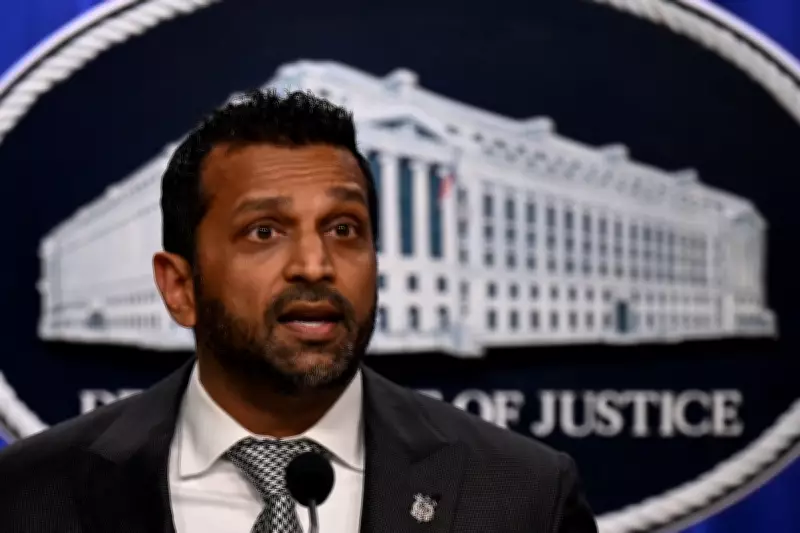
FBI Director's Defamation Lawsuit Sparks Intense Scrutiny of Alleged Conduct
FBI Director Kash Patel's $250 million defamation lawsuit against The Atlantic has spectacularly backfired, serving instead to broadcast and amplify the very allegations he sought to suppress. The legal action, filed in U.S. District Court in Washington, D.C., has transformed a detailed investigative report into a widely circulated digest of claims about Patel's behavior, including serious accusations of excessive alcohol consumption and professional unreliability.
Lawsuit Provides Concise Summary of Damning Allegations
Patel's federal court filing, which contained several notable typographical errors, effectively distilled The Atlantic's 2,200-word article into 17 stark sentences. These summarized allegations from more than two dozen anonymous sources, including current and former FBI officials and staff from law-enforcement and intelligence agencies.
The claims outlined include that Patel "is known to drink to the point of obvious intoxication, in many cases at the private club Ned's in Washington, D.C., while in the presence of White House and other administration staff" and that he "frequently spends parts of his weekends" drinking excessively at the Poodle Room in Las Vegas. Perhaps most damaging are assertions that "members of his security detail had difficulty waking Patel because he was seemingly intoxicated" on multiple occasions over the past year.

Technical Incident and Security Concerns Detailed
The lawsuit inadvertently confirmed a key anecdote from The Atlantic's reporting regarding an incident on April 10, 2026. While Patel's filing described "a routine technical problem logging into a government system, which was quickly fixed," the original article portrayed the director as panicking over potentially being locked out and "frantically calling aides and allies to announce that he had been fired." Two sources characterized this reaction as a "freak-out."
Additional concerning details emerged through the legal documents, including that a SWAT team was once requested "because Patel had been unreachable behind locked doors" and that the FBI director had expressed frustration that FBI merchandise "isn't intimidating enough." The lawsuit also referenced reporting that his alleged alcohol abuse "has become a threat to public safety" and presents a national security liability.
Political Reactions and Legal Analysis
Democratic lawmakers have been particularly vocal in their criticism. U.S. Representative Dave Min of California described Patel as "trying to act like a little Mini-Me version of Trump" and called the complaint a "bulls--t lawsuit." Min referenced Patel's "well-earned reputation for wasting taxpayer money, for being completely irresponsible on the job, for being AWOL on the job and for being drunk in public."
Senator Sheldon Whitehouse of Rhode Island questioned whether Patel understood the implications of litigation, asking on social media: "Does Bozo Patel know he is subject to deposition, answering questions, under oath, asked by real lawyers? Bring popcorn." Representative Ted Lieu of California predicted Patel would "drop the lawsuit before he gets deposed" despite initially calling the potential deposition "awesome."
First Amendment Concerns and Legal Precedents
The Foundation for Individual Rights and Expression released a statement suggesting Patel's lawsuit appeared to be part of a pattern of legal actions by Trump administration figures aimed at punishing critics "by driving up the cost of speaking." FIRE Senior Attorney Adam Steinbaugh emphasized that unless Patel can meet the First Amendment's high standard for defamation, "debate on important issues must remain — as the Supreme Court said — 'uninhibited, robust, and wide-open.'"
The timing of Patel's lawsuit is notable, coming just one week after a federal judge in Florida dismissed President Donald Trump's $10 billion defamation case against the Wall Street Journal and Rupert Murdoch. Trump has vowed to file an amended version of his lawsuit, creating parallel legal battles involving high-profile figures and media organizations.

Documentary Evidence and Public Perception
Public discussion of Patel's behavior has been fueled by viral video clips, including one showing the FBI director guzzling beer, pumping his fist, and jumping wildly during a locker-room celebration after the U.S. men's hockey team won gold at the 2026 Winter Olympics. While Patel has denied The Atlantic's central allegations as "categorically false" and challenged the magazine to "bring your checkbook," the lawsuit has ensured these claims receive far broader circulation than the original article alone would have achieved.
Legal analyst Joyce Vance, a former U.S. attorney and University of Alabama law professor, noted the irony that Patel's complaint begins by touting his professional accomplishments, including overseeing the capture of eight of the FBI's Ten Most Wanted fugitives and more than 40,000 violent crime arrests. She questioned why similar investigative rigor hadn't been applied to outstanding leads in the Jeffrey Epstein matter.
Even the presentation of the lawsuit has drawn scrutiny, with Newsweek highlighting spelling errors including "feable" instead of "feeble," "politices" instead of "policies," and "dicussed" instead of "discussed." While these errors don't undermine legal claims, they stand out in a high-profile filing typically reviewed by multiple attorneys before submission.
As Minneapolis talk radio host Jason DeRusha noted on social media regarding the lawsuit's unintended consequence: "If the goal of Kash Patel's lawsuit was to get me to read (author Sarah Fitzpatrick's) story about him, mission accomplished." The case continues to generate discussion about accountability, transparency, and the appropriate boundaries between public officials and press scrutiny.