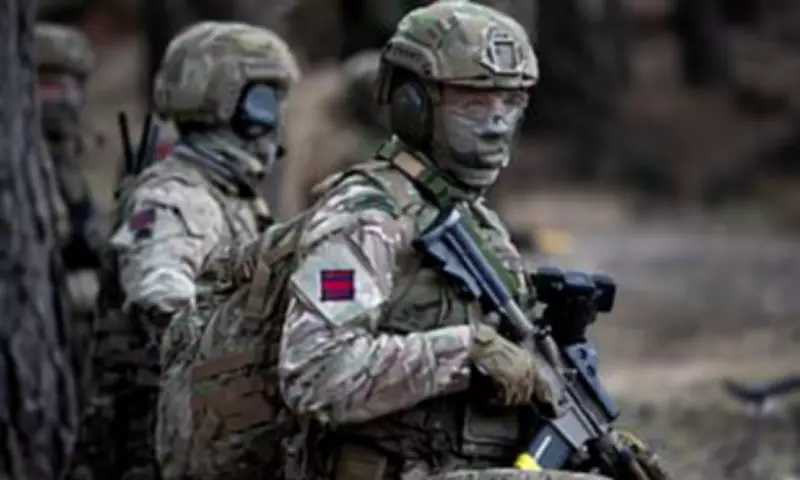
Two former servicemen who sued the Ministry of Defence (MoD) for hearing loss suffered during their military careers have been awarded tens of thousands of pounds in damages by a High Court judge.
Landmark Ruling on Compensation
Mr Justice Garnham's ruling on Friday also laid the foundations for how to assess how much compensation thousands more could receive in their legal claims against the MoD for noise-induced hearing loss (NIHL). At a 28-day trial last year, two 'test cases' were used to set guidelines on diagnosing NIHL and valuing future loss of earnings.
Ex-Royal Marine Christopher Lambie had claimed more than £400,000 in damages, while former Army infantryman Jack Craggs claimed around £61,000. In his 199-page judgment on Friday, Mr Justice Garnham awarded Mr Lambie around £118,000 and Mr Craggs around £14,500, before interest.

Reductions and Matrix Agreement
The figures followed a reduction of 10% in Mr Lambie's case, and 25% in Mr Craggs' case, as a result of a 'matrix' agreement between the MoD and law firm Hugh James, which represents around 8,000 of the 10,000 former personnel suing the department. The agreement means those represented by the firm only need to prove they suffered hearing loss during service before the assessment of damages, which are subject to a reduction based on when someone left the military. In return, the MoD will not fight these claims on the basis that they are being brought to court too late, or the level of noise they were exposed to.
The judge also said there was an 'absence of any 'gold standard' diagnostic measure' for NIHL, and added that individual claims were 'highly fact sensitive'.
Details of the Cases
Mr Lambie's claim included around £307,000 in future earnings that his barrister said would be lost due to his NIHL. The MoD accepted 'primary causation' in his case, but disputed how much he should receive, adding the sums claimed were 'wholly unrealistic'. In his evidence, Mr Lambie, who joined the Royal Marines in 1998 and was discharged in 2021, said he was diagnosed with NIHL in 2002 but 'nothing was put in place' to protect him from loud noise.
He also said he once cheated on a military hearing test so he could be deployed to Afghanistan in 2011, which military medics were 'completely aware' of and were 'happy for me to do this'. He said: 'We all knew that the emphasis on the staff was to ensure that Marines passed all the tests they needed to pass for deployment, as the MoD needed as many people as possible to deploy. This is why the medics helped us pass our medicals. Many members of my unit joked about how they were cheating the hearing tests to ensure they passed them and how they could go on deployment.'
David Platt KC, for the department, said in written submissions that Mr Lambie's 'instance of faking' the hearing test was an 'undoubtedly regrettable' but 'apparently isolated instance of cheating'. In his ruling, Mr Justice Garnham accepted Mr Lambie had cheated on the test, but said: 'The arrangements operated by the MoD are designed to give a good degree of oversight over the hearing capacity of members of the armed forces. The majority of such audiograms are conducted properly and in good faith.'
The judge also said that to award Mr Lambie the sums claimed for would be 'unconscionable', adding: 'His hearing loss is serious and progressive with age but, as things currently stand, he is not suffering any loss of earnings, nor will he if, as seems likely, he remains in his current employment until retirement.'
MoD's Duty of Care and Next Steps
At a hearing last July, lawyers for the MoD accepted it had a 'duty of care' towards personnel amid legal claims brought by former members of the armed forces who suffered hearing loss, having disputed this in earlier legal action. While the MoD accepted noise exposure during service caused hearing loss among former personnel, it may dispute the extent to which this happened in individual cases.

Following Friday's ruling, Simon Ellis, a partner at Hugh James, called on the department to establish a compensation scheme before a deadline in July, adding: 'Time is now running short.' Mr Ellis said the ruling was a 'landmark moment', adding: 'The court has now provided clear guidance on how these claims should be assessed, which will have a significant impact for thousands of service personnel. The Ministry of Defence has already acknowledged that it owes a duty of care to service personnel, and many of those with hearing loss have already waited years for answers. Now is the time for them to come to the table and work out a scheme to agree compensation and avoid a further lengthy and expensive legal dispute.'
An MoD spokesperson said: 'The court has provided important clarity on the way military noise-induced hearing loss claims are assessed, including rejecting speculative and unproven approaches. We are carefully considering the judgment and next steps, and we will not comment further on the detail while that process is ongoing. The health and wellbeing of our personnel is our utmost priority. Extensive measures are in place to help prevent injury among those who are necessarily exposed to higher risks through their duties and we continually review and improve our policies to ensure they remain effective. The Armed Forces Compensation Scheme, and the War Pension scheme, prior to April 6 2005, provides no-fault compensation to service personnel and veterans for injuries, illness and death caused by service.'