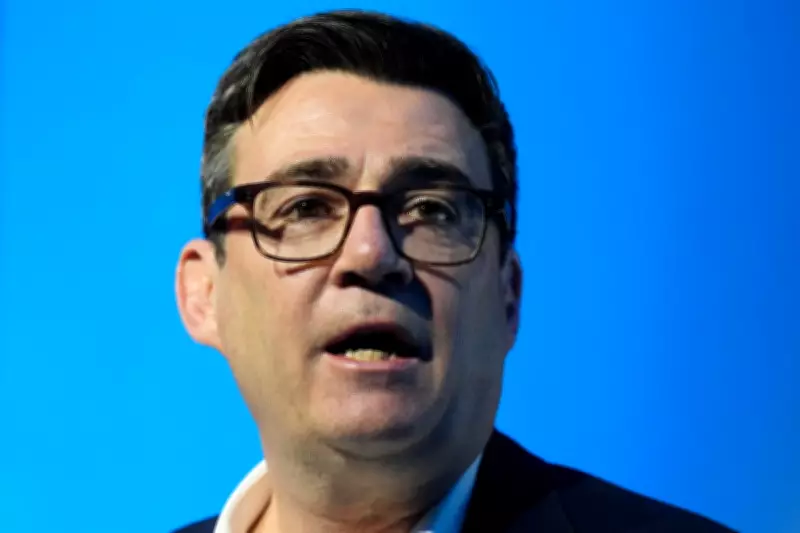
Andy Burnham has criticised the Government for “drawing new dividing lines between people” over compensation for the infected blood scandal. The Greater Manchester Mayor accused ministers of employing “divide and rule sort of tactics” in the way they have structured payouts to victims and their families.
Memorial service at St Paul’s Cathedral
A memorial service for those affected by the scandal was held at St Paul’s Cathedral in London on Tuesday, with Prime Minister Sir Keir Starmer and former prime minister Theresa May in attendance. The service included symbolic empty chairs to represent those who died, and singer Michael Ball performed Empty Chairs At Empty Tables. Paper petals were dropped from the cathedral’s dome in memory of lives lost.
Compensation dispute
The Cabinet Office announced last month that bereaved parents whose infected child died under the age of 18 would receive a 50% uplifted injury award to “recognise the profound impact of this loss”. However, bereaved parents whose children were over 18 at the time of their death are excluded from the uplift. In an interview with The i Paper, Mr Burnham said the compensation rules involved “divide and rule sort of tactics”. He added: “I know that new injustices have crept in over the last two years, and the fight needs to be for ever. They (the Government) should just be making full amends to everybody, not drawing new dividing lines between people, between parents whose children died under 18 and those over.”

Burnham’s by-election candidacy
The Greater Manchester mayor, who was on Tuesday announced as Labour’s candidate for the Makerfield by-election, said he was “gutted” not to attend the memorial service. Mr Burnham told The i Paper he was committed to the Hillsborough Law, which is designed to legally compel public servants to act with transparency, “in its entirety”.
Background of the scandal
The memorial service took place two years after the Infected Blood Inquiry published its main report. The inquiry concluded the scandal “could largely have been avoided” and there was a “pervasive” cover-up to hide the truth. More than 30,000 people in the UK were infected with HIV and hepatitis C after they were given contaminated blood and blood products between the 1970s and early 1990s. More than 3,000 people have died as a result, while survivors are living with lifelong health implications.
Government response
A Government spokesperson said: “This Government understands no amount of money will make up for the suffering endured by the infected blood community. The compensation scheme consists of several awards that recognise the different ways in which people were impacted by this scandal. The decision to provide a 50% uplift to the injury award for the parents of children who sadly passed away whilst under 18 was directly informed by responses to the Government’s recent consultation. During this consultation, many respondents expressed the view that some specific groups of affected people should receive more compensation as a result of the significant harm and loss they suffered. This included bereaved parents whose child tragically died of infected blood under the age of 18.”
Sir Brian Langstaff’s address
Sir Brian Langstaff, chairman of the Infected Blood Inquiry, said the scandal “was not an accident” and “what caused it was human failure set upon human failure”. Giving an address at the service, Sir Brian said: “Many knew instinctively that it could have been avoided. But most of those in authority would not accept there had been any such disaster, let alone inquire why it had happened.” He added: “In remembering, we must not forget that what happened medically was compounded by intransigence, defensiveness and untruths peddled by many in authority for far too long. The horrifying scale of what happened is also why it is so important that as a nation we always remember, and that those who continue to suffer, continue to grieve, know that they are not alone.”

Dean of St Paul’s remarks
The Very Reverend Andrew Tremlett, Dean of St Paul’s, said the service was to “publicly recognise and remember the devastation wrought on thousands of lives and the untimely deaths of loved ones”. He added: “This tragedy alone would be catastrophic enough. However, it has been exacerbated by the lack of public recognition and acknowledgment. For too long, the administration of life-changing and deadly viruses through contaminated blood and contaminated blood products has been hidden from public view. It has touched all corners of our United Kingdom and continues to take lives in the most cruel and harrowing ways.”
Victim’s partner speaks out
The partner of a man who died after being infected with hepatitis C said those who lost their lives as a result of the scandal have been “put at the bottom of the queue”. Paula Butterworth’s partner John Louis Daly, who was a haemophiliac, died in September 2007 aged 42 after being infected with hepatitis C at the Royal Liverpool Hospital. Speaking outside St Paul’s Cathedral ahead of the service, Ms Butterworth, 52, said: “He left a 10-year-old daughter who’s now nearly 30, and you just can’t explain the impact it’s had on our life.”
Calls for faster compensation
The Hepatitis C Trust and the Haemophilia Society have called on the Government to speed up compensation payments for victims of the scandal. More than £2 billion has been paid in compensation so far and the chairman of the compensation authority has said “there is still a long way to go”. Some £11.8 billion has been allocated to compensate victims, administered by the Infected Blood Compensation Authority (IBCA). Figures from the IBCA show that up to May 7, some 3,232 people have had their compensation paid, with the combined payments totalling more than £2.1 billion. Health Secretary James Murray and the Duke of Gloucester were among the other notable names in attendance at the memorial service. The Cabinet Office has been approached for comment.