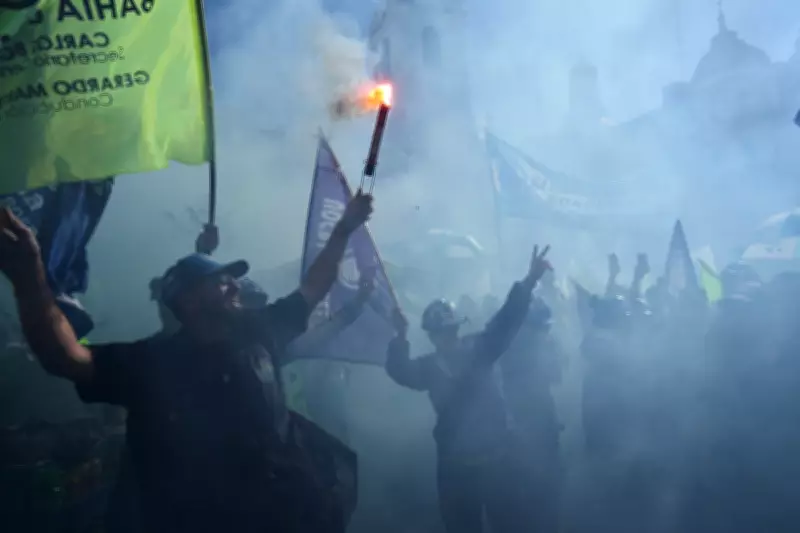
On Thursday, Argentine workers took to the streets of Buenos Aires for annual May Day demonstrations, channeling their anger at President Javier Milei's recent overhaul of the nation's long-standing labor protections. The protests, organized by the General Confederation of Labor (CGT), Argentina's largest union group, aimed to "defend decent employment" against changes to a labor code that had guaranteed robust worker rights since 1974.
Labor Law Changes Spark Outrage
The new legislation, pushed through by Milei in February despite weeks of protests and a nationwide strike, allows companies to increase workdays from eight to twelve hours, extend probation periods, and make dismissals easier. It also curtails the right to strike and limits courts' discretion on severance payouts, which critics argue had previously ensnared employers in costly lawsuits and discouraged formal hiring. Nearly half of all Argentines currently work off the books.
Past presidents for decades attempted to liberalize the labor market but failed against fierce resistance from powerful unions. Milei's victory marks a significant milestone for his free-market agenda, but opponents are challenging the law's constitutionality through an appeal process. Union leaders plan to file a further petition after a court last week overturned an injunction that had temporarily suspended the law's implementation.

Economic Context and Growing Discontent
The labor overhaul has struck a deep nerve in a nation where unions helped found the left-leaning Peronist movement that has dominated politics since the 1940s. The protests come as Milei's flagship anti-inflation drive stalls and unemployment ticks upward. "Social discontent is being felt everywhere, and not only due to the drop in consumption," said Jorge Sola, a CGT leader, ahead of the march. "It is due to family debt, job losses and worse working conditions than what we had before."
The case is expected to reach the Supreme Court, while union leaders prepare to escalate their legal battle. The demonstrations highlight the deepening divide between Milei's reformist agenda and the traditional labor protections that have shaped Argentina's social fabric for decades.