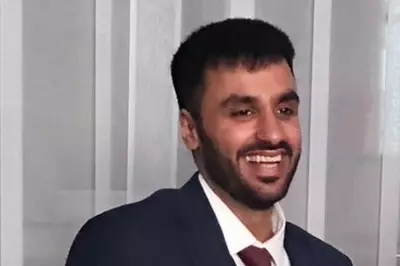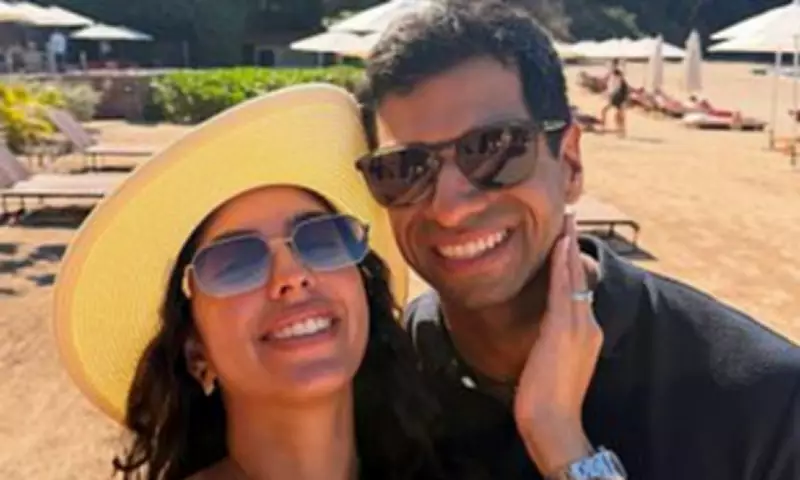
It said much about the reserved nature of Aaron Rai that there were no plans for a flashy celebration when he crowned a lifetime of graft by winning the PGA Championship.
'He'll probably have Chipotle,' his wife, Gaurika Bishnoi, told a few of us as the evening shadows stretched across the hills of Aronimink Golf Club on Sunday.
By then, Bishnoi, herself a golf pro, had already offered Daily Mail Sport other insights into the first English winner of this major title since 1919.

'We both don't drink, we both don't smoke, we both don't really party,' she said, with our conversation occurring on the 18th green, near the very spot where her husband had just completed a quite magnificent story.
'We're very low-key people,' she added, and that was an understatement about an underdog. Chances of anything changing in a showier direction are less likely than Rai missing a fairway.
It is natural in the aftermath of a startling victory to eulogise about the champion; to accentuate the positives in their nature. But no one in the travelling circus of elite golf has a bad word about the 150-1 shot who emerged from the most stacked leaderboard in the recent history of major championships to leave the rest in his wake.
By now, you will have heard a few of the stories, or at the very least noticed the quirks, such as wearing two gloves – Rai, 31, has done that since his childhood as a working-class lad contesting the cold winters in Wolverhampton.
Ditto the business with the iron covers, which is no less alien among professionals but Rai has retained them as a mark of respect to his father, a community worker born in England to immigrants from India.
The tale there is that Rai's dad once spent a small fortune on a set of Titleist 690MBs for his boy and the idea of scratching them would have been mortifying. After career earnings in excess of £12 million, including £2.7 million from this win, Rai has kept the same attitude.
Truth is, many of his peers don't know him well on a personal level – Rai isn't a talker or a holder of courts. He also doesn't use social media or employ an agent.
When asked about sponsors on Sunday evening, Rai cited a couple of small brands who have been with him since his teen years, back when he rewatched VHS tapes of Tiger Woods three times a week, and also singled out the financial help from the owner of his local golf club, Shabir Randeree.
'He's almost been like a second father to me,' Rai said. 'He gave me so many opportunities that I never would have had otherwise.'
There is a shyness to Rai. Michael Kim said the depth of their conversations is usually no greater than a 'Hello Michael' in a 'cool British accent', but added he is 'such a nice guy and a hard worker'.
Jon Rahm, speaking in the moments after Rai ended his challenge with that imperious back nine of 31, added to the theme: 'I haven't spent a lot of time with him. But I have heard consistently there's very few people that are kinder human beings than Aaron.'
That Rai has grinded his way to this moment in the sun is nothing new. Golf is a hard game won by hard yards – Rai cried numerous times in the years after turning pro aged 17 and finding the life 'lonely'. But his work rate is astonishing even in the eyes of his rivals.
Xander Schauffele, a double major champion and a contender here, shared a snippet from the Scottish Open three years ago: 'Rarely do you feel like people work way harder than you. Aaron is always there. He's always in the gym. He's always on the range.'
'At the Scottish, Aaron was finishing his putting session at 9pm and then going to the gym at 9.45pm. I think that's what it's about to be a major champion. You put the work in when nobody's looking.'
For Rai, the associated reward of his win is a leap from 44th to 15th in the world rankings. Having narrowly missed out on last year's Ryder Cup team, he will also surely be part of Luke Donald's planning for 2027. Other alterations will be microscopic.
As his wife put it: 'Aaron's never been drawn (to the idea) that he could potentially market himself a certain way, get more sponsors. He's the most content man. Nothing's going to change.'

'He still drives a Honda Integra, and I think it's one of the cars that was in the first Fast and the Furious. It's a sports car he purchased in England, got it imported to America, and it's a right-hand drive. He loves it. It's his most prized possession. But he won't get a new one.'
There is something charmingly ironic about the speed junky who took a slower route to the top of his sport, a climb built on some of the shortest driving statistics on the PGA Tour and the very best for accuracy.
Those traits makes him an outlier in today's game, which has been characterised by big hitters and huge greed. For a number of reasons, Rai's win was perhaps what golf needed most.