
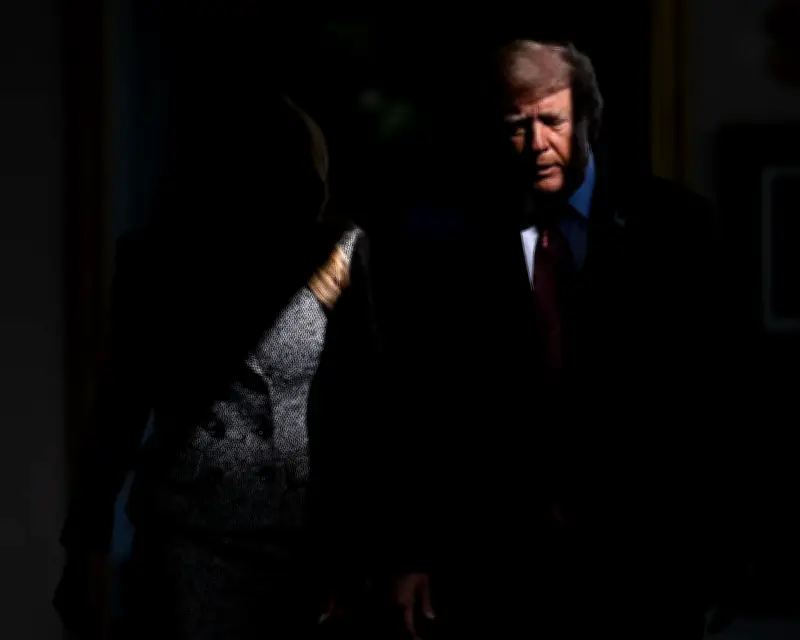
Donald Trump's approval rating has dropped to 36% just two weeks before the midterm elections, the lowest figure recorded in a New York Times/Siena College poll, with most respondents expressing frustration over his handling of the US economy, cost of living, and the Iran war.
Disapproval Across Key Issues
In an October survey of approximately 3,494 likely voters, 59% said they disapproved of Trump's handling of his job, and 52% said they planned to vote for the Democratic candidate in the upcoming election.
Much of the disapproval toward the US president was linked to frustrations over his handling of economic and cost-of-living issues. On gas prices, 73% of registered voters said they disapproved; on the cost of living, 69% said they disapproved, and on the economy, 64% said they disapproved.
Iran War and Economic Pressures
Approximately 65% said they disapproved of Trump's handling of the Iran war, which has dragged on for nearly eight months and pushed gas and oil prices up.
The new polling numbers paint a gloomy picture for Trump and Republicans, who face an uphill battle to defeat Democrats in the upcoming midterms to maintain their majority control in Congress.
Campaign Trail and Voter Sentiment
Trump, whose name recognition has largely helped Republican candidates in past elections, has been on the road campaigning for MAGA-aligned candidates. However, some candidates have sought to distance themselves from the president, who has become increasingly unpopular over his economic policies.
In 2024, Trump promised to lower everyday costs for Americans, keep inflation low, and keep the US from starting more wars abroad. But as of 21 October, gas prices were more than $4.25 a gallon, inflation increased to 3.7% last month, and the president's war with Iran remained steady.
Democrats Seize on Cost-of-Living Issues
Between September and October, the US president's approval rating decreased by two percentage points in the New York Times/Siena College polls.
Democratic candidates have seized on cost-of-living issues to appeal to independents and undecided voters, promising to rein in the president's policies that have pushed costs up, such as tariffs.
While polling from the New York Times/Siena College indicates Democrats have the upper hand headed into next month's election, the party is still fighting against a massive financial war chest in competitive races in Texas, Ohio, New York, Alaska, and Iowa. The Guardian has asked the White House for comment.




