Polling Data Reveals Unprecedented Three-Way Political Deadlock
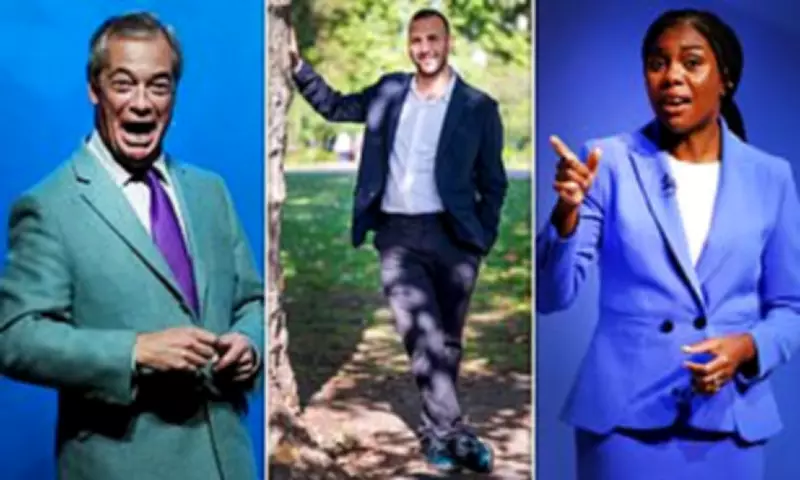
My most recent polling exercise has uncovered something truly extraordinary within the British political landscape – an unprecedented three-way statistical tie between Reform UK, the Conservative Party, and the Green Party. This remarkable finding emerges despite the absence of an imminent general election, a context in which voting intention polls should always be interpreted with considerable caution.
It is important to note that my methodology for assessing party support differs from that employed by most conventional pollsters. Instead of forcing respondents to make a definitive choice about a hypothetical election tomorrow, I ask individuals to rate, on a scale from zero to one hundred, how likely they believe they are to ultimately vote for each political party. I then include in my analysis those who assign a probability above fifty percent to supporting a particular party.
Shifting Sands of Voter Sentiment
While my approach is distinctive, other polling organisations have also detected a narrowing of the gaps between parties in recent weeks. Beyond the headline numbers, we can identify several potential reasons for this convergence. By his own rather subdued standards, Prime Minister Keir Starmer has not endured a particularly difficult fortnight. Whether driven by genuine conviction, characteristic indecision, or the influence of Attorney General Lord Hermer, a significant portion of the electorate believes the Prime Minister has successfully navigated the complexities of the Iran conflict, landing on a stance that is generally viewed as appropriate.

Unfortunately for the Labour leader, this perceived competence on a foreign policy issue has not translated into a boost for his party's overall support. Some voters may be less critical of Starmer personally than usual, but his government's broader record means the public is hardly enthusiastic about rushing to the polls to endorse him.
The Rise of the Greens and Reform's Plateau
Simultaneously, as this polling snapshot captures, the Green Party is experiencing a notable surge in visibility. Under the leadership of eco-populist figure Zack Polanski, the party is championing highly controversial policies, including the decriminalisation and rigorous oversight of all narcotics, extending even to Class A substances like heroin and cocaine.
My survey indicates their platform is a potent cocktail of superficially appealing and wildly unpopular ideas. I found substantial majorities in favour of policies such as a wealth tax, increased levies on energy companies, and a £15-per-hour minimum wage. Conversely, the public was heavily opposed to allowing more asylum seekers to settle in Britain, scrapping the UK's nuclear deterrent, and decriminalising all drugs for personal use.
Polanski himself remains a polarising figure. Nearly a third of voters reported feeling less favourable towards him upon learning that during his past career as a hypnotherapist, he once claimed he could increase women's breast size through hypnosis—a controversy he claims to have apologised for and moved beyond.
Meanwhile, Reform UK's once-substantial lead has contracted since the beginning of the year. It would be premature to declare their bubble burst; rather, their seemingly inexorable ascent appears to have reached a temporary plateau. Global events, particularly over the last month, may be a contributing factor, and not solely due to Nigel Farage's association with former President Donald Trump.
Leadership Dynamics and Policy Realities
Somewhat mirroring the Prime Minister's situation, Kemi Badenoch has consolidated her personal approval ratings without catalysing a major advance for the Conservative Party. She has captured public interest and demonstrated an ability to challenge Starmer effectively in the Commons, but these are merely initial steps in what would be a broader Tory revival.
As one former Conservative supporter remarked, 'I do think she talks a lot more sense, but when they were in, they didn't change things.' The prevailing perception remains that the party is largely unchanged from when it was decisively voted out, a view Badenoch must work to alter.

Starmer, for his part, is left grappling with the daily challenges of governance. Public opinion is divided on how to address rising energy prices, with a majority wanting state intervention, though Tory supporters notably dissent, arguing against endless bailouts. Voters are also split on whether aid should be universal or targeted towards existing benefit claimants.
In a more generous assessment, the public might acknowledge that politicians have limited power over global price spirals driven by distant conflicts. However, they demand that ministers avoid actively exacerbating the situation. Reflecting concerns over energy security, more voters now believe the government should lift its ban on new oil and gas exploration in the North Sea than support maintaining it, suggesting household bills and supply security often outweigh net zero targets for worried families.
The Allure of Idealism Versus Governing Realities
For now, figures like Zack Polanski and the Green Party remain unencumbered by the harsh realities of implementation. Their appeal is often based on sentiment and idealism rather than detailed policy. As one young man expressed last week, 'I like how hopeful all of their ideals sound. With the state of the world as it is, I just feel like it's a good idea to go for someone whose purpose is to just try and make everything better.'
This three-way tie, therefore, reflects a complex political moment where traditional party loyalties are fluid, leadership is scrutinised, and the electorate oscillates between pragmatic concerns and the allure of transformative, if untested, ideas.