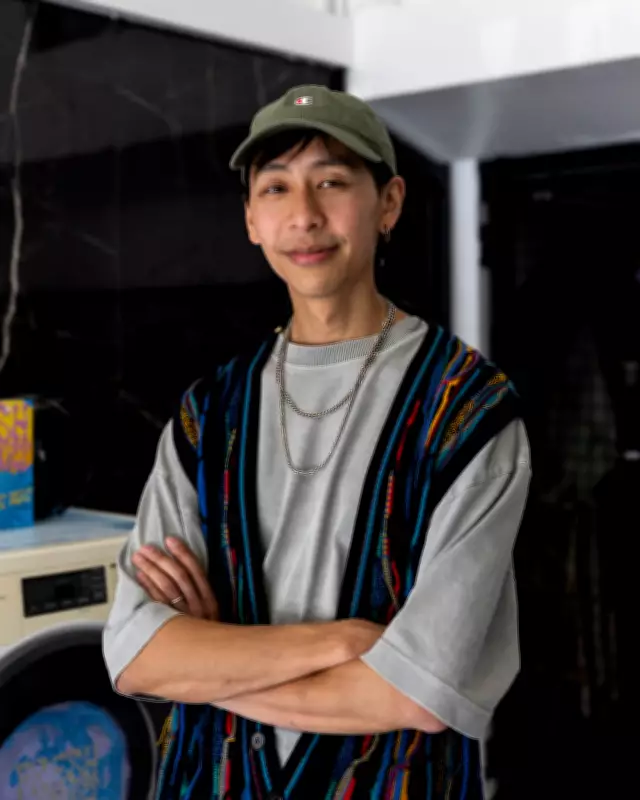
A laundromat doubling as a music installation on Auckland's Karangahape Road offers customers tunes while they wash clothes, created by musician Jefferson Chen, 34, and artist Quentin Lind, 32. The pair chose this setting to bring together people from different walks of life, countering the loss of public spaces and online isolation.
Fractured Society
A report by the Helen Clark Foundation released in May 2025 reveals that social cohesion in New Zealand is fraying across key measures. Financial stress, falling trust in government, and rising isolation are driving disconnection among the 5.3 million population. Co-author economist Shamubeel Eaqub warns the country is becoming 'fractured', making it hard to meet across differences and make lasting decisions.
The report tracked attitudes in 2025 compared to 2024, with stark regional differences. Key issues include cost of living, falling trust in government, isolation, and rising anti-immigrant attitudes. However, younger New Zealanders aged 18-35 feel far more optimistic about social cohesion than older generations.

Regional Disparities
Northland, at the top of the North Island, is hardest hit by cost of living. 39% of respondents experience food insecurity (national average 24%), and over half are financially dissatisfied. Liz Cassidy-Canning, CEO of Whare Āwhina, notes that 180 people attend a free community cafe weekly in Whangārei, reflecting hardship. Despite crumbling infrastructure and housing costs, the region prides itself on generosity and low anti-migrant sentiment.
In Wellington, trust in government institutions dropped from 42% in 2024 to 39% in 2025. Only 12% of New Zealanders believe the system of government is working fine, down 4%. In the capital, 22% are satisfied with democracy. Business owner Lucy Kebbell criticises leaders for not prioritising public interest, noting that proportional representation has not fostered collaboration.
Otago-Southland is most content with government but faces thinning social connections: 20% feel isolated, nearly half disconnected. Former dairy farmer Jason Herrick, running for New Zealand First, highlights rural isolation after his 2018 mental health crisis. Sports clubs and services are diminishing, pushing people to isolate on farms.
National attitudes towards immigration are worsening. Multiculturalism is viewed positively by 67%, the lowest since 2011, while 31% believe immigrants take jobs. Waikato and Bay of Plenty report higher scepticism and distrust in institutions.
Hawke's Bay-Gisborne has the largest 'ambivalent middle'—people content but not engaged. Canterbury, the fastest-growing region, is a 'quiet achiever' with higher connection and trust.
Hope Amid Struggle
In Auckland, Chen and Lind acknowledge dire circumstances—fewer jobs, rising costs, isolation—but see these driving community unity. Lind warns against rising authoritarianism, stressing the importance of claiming public spaces. Eaqub concludes that social cohesion is vital for resilience and long-term decision-making.