As New Zealand's November election approaches, polls indicate that 5-8% of voters plan to support the Opportunity party, a relative newcomer that has never held a parliamentary seat. This shift is cutting into the combined support for the Labour and National parties, which is at its lowest in 30 years.
Mattie Wall, a 76-year-old former diplomat and project manager from the South Island, has voted mainly for Labour for decades. This year, she plans to vote for the Opportunity party, citing frustration with the major parties. "In the past, I didn't feel the frustration I do now with politics," she said. "I'm so hacked off with both parties, with all parties really. We've got Trump 2.0, AI's sudden [surge], increasing climate change impact – what are we waiting for, revolution or societal collapse? Clinging to the old ways ain't gonna cut it."
Opportunity party's rise
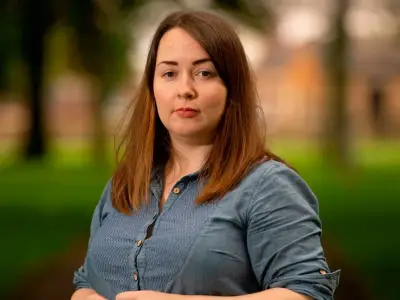
The Opportunity party, a self-described centrist group started three elections ago by economist and philanthropist Gareth Morgan, is led by Qiulae Wong, a 38-year-old sustainability consultant and mother-of-two from Auckland. Wong returned to New Zealand in 2022 after nearly a decade in London. She described the party as looking to "market-driven solutions" while committed to a low-emission future and evidence-based policy.

Wall is impressed by Wong's leadership. "She's intelligent, thoughtful, moderate, unpretentious, she speaks lay language and she's a realist," she said.
Polls suggest Opportunity could win more than the 5% threshold of seats needed to enter parliament under New Zealand's mixed member proportional (MMP) system. This could give the party the power to choose who governs. National leader and prime minister Christopher Luxon has ruled out working with Opportunity.
Voter discontent with major parties
According to The Post newspaper, Opportunity looks set to take votes from both the right and left. Of those planning to vote Opportunity, 20% voted National at the last election, 17% Labour, 12% the Greens, and 8% NZ First. Massey University political scientist Richard Shaw attributes this to a mainstream malaise. "Voters are less attached to parties than they used to be, and they're more likely to shop around during elections," he said. "They're peeling off from everywhere; people's attachment to parties is more elastic and the deep tribalism has gone."
Wellingtonian Gemma, 41, a former Green voter, will vote Opportunity for the first time. "I don't understand how a lot of people are surviving right now and that's what drives my vote," she said. "Things can't keep going in this direction."
Opportunity's policies and challenges
Wong told the Guardian that polling was better than hoped but the party took nothing for granted. People told her they were fed up with "pendulum politics" – different governments undoing the work of the last government at great cost. "They're looking for something different because they're frustrated, particularly with Labour and National for not having any big ideas or stable leadership to tackle some of the biggest challenges that we're facing as a country," she said.
Wong said Opportunity would work with either party, emphasising the need for stability in climate legislation, healthcare funding models, and the education curriculum. "It's that back and forth which seems to be really holding us back in all aspects of New Zealand society … the solution is often somewhere in the middle," she said.
Responding to criticism of Opportunity's land tax proposal, which former Labour leader Helen Clark calls "fantasy posing as policy," Wong said the economy had to change and 70% of New Zealanders would be better off under the plan. The proposal would introduce a tax of 1.75% on urban and 0.5% on rural land, modelled to pull in NZ$24bn for a 'citizen's income,' and is designed to drive house prices down by 10-15%. Wong acknowledged it would not happen immediately. "I'm realistic that as a new party coming into parliament demanding tax reform overnight is pretty unlikely," she said.

Impact on major parties
Shaw said the halcyon days for major parties had passed, and both Luxon and Labour leader Chris Hipkins would be feeling the pressure of declining support. "They're not the most successful any more, partly because of MMP but just because people shop around way more and the base vote for National and Labour is never going to be at 40% ever again," he said. Smaller parties were eating into major party territory, with the Act party, led by David Seymour, polling at 9% and receiving $1.8m in donations this year.
Despite the trend, some voters remain loyal to the major parties. Christine Hands, 77, who voted Labour in her first election in 1972 and for Jacinda Ardern twice, would never vote for a minority party. "I've never been a splinter party person. I'll vote for National or Labour, depending on which is best for the country," she said. This time, that's National, a "safe pair of hands" who "haven't mucked things up too much". As for Opportunity, she said, "I can see they're quite charming, and people are thinking 'a plague on both parties', but their policies are as mad as a meat axe. Then again, we survive everything. We always have."