

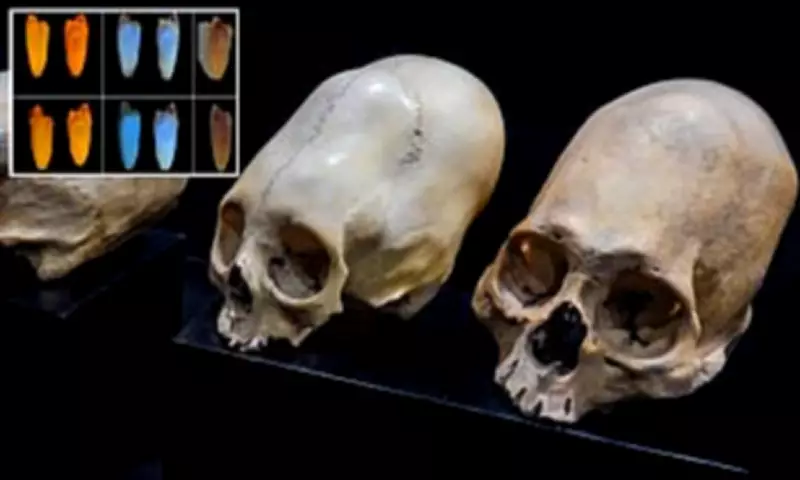
A fresh DNA examination of the mysterious 'conehead' mummies from Peru has not conclusively resolved their origins, keeping alive long-standing speculation about extraterrestrial connections. Researchers from Liberty University in Virginia analyzed teeth from the Paracas skulls, a collection of over 300 ancient remains unearthed by archaeologists in Peru during the 1920s.
Background on the Paracas Skulls
Earlier studies had concluded that the cone-shaped skulls were likely intentionally deformed by a human civilization that lived more than 2,000 years ago, between 800 BC and 100 BC. However, those assessments were based primarily on visual observations. Several prior DNA analyses aimed at uncovering the mummies' origins yielded inconclusive results, prompting the new investigation using powdered material extracted from the teeth to build a genetic profile.
Wild theories have persisted for decades that the mummies are the remains of alien lifeforms carrying non-human DNA, although those claims have never been verified. Researcher Abigail McDowell stated: 'Some archaeologists and geneticists attributed the deformation to the cultural practice of cranial binding, which uses pressure to morph the skull – often a societal symbol of wealth or importance. Others believed the Conehead mummies were proof of extraterrestrial visitors, claiming the mummies were descendants from non-humanoid species or actual aliens themselves.'

DNA Extraction Methods
The researchers set out to use teeth as a source of DNA because teeth are extremely hard and resistant to decay over centuries, making them natural 'safes' for genetic material. The Liberty University team tested two methods: a gentle approach that removed small bits of powder from inside the tooth root, and a stronger method that ground the entire tooth into fine powder using a coffee grinder.
After completing both methods, the researchers used a specialized measuring machine to determine the amount of DNA retrieved from each tooth. Although the grinding method recovered over five times more DNA, both amounts were still too low to obtain a clear genetic picture of the Coneheads.
Quantitative Results
The gentle method yielded 2.3 nanograms per microliter of DNA. A nanogram is one billionth of a gram and corresponds to roughly 150 to 170 human cells. A microliter is approximately one-twentieth of a single drop from an eyedropper. Thus, 2.3 units equate to only 300 to 400 human cells. The grinding method produced 14.1 units, or about 2,100 to 2,400 cells. However, scientists note that laboratories typically require at least 20 units of DNA for genetic testing machines to yield clear results.
Since all test checks functioned properly, the researchers believe the mummy's DNA simply had too little genetic material or was too degraded from age. The team now plans to continue their efforts until they obtain better results and solve the mystery of the Paracas skulls.
Future Research Directions
Their next step involves trying a new grinding method called demineralization, which may extract more and higher-quality DNA. Once they obtain better DNA from the teeth, they will compare it to DNA previously taken from the mummies' hair to learn the Conehead people's true genetic origins.
Previous Studies on Cranial Modification
In 2022, scientists from South America examined 159 skulls from the Paracas Cavernas archaeological site and found that 98 percent showed signs of 'intentional cranial modification.' This practice is believed to have been an important marker of social identity in the Andes region, including among cultures in modern-day Peru, Bolivia, and Ecuador. Researchers propose that ancient humans gently wrapped a baby's soft skull with cloth or boards for several months to permanently shape the head into a long, cone-like form as a cultural tradition.
Alternative Theories
David Childress, a star of the History Channel show Ancient Aliens, has argued that head binding attempted to imitate the look of humanity's 'highly advanced ancestors.' In the book The Enigma of Cranial Deformation, Childress and author Brien Foerster wrote: 'The puzzle of why diverse ancient people—even on remote Pacific Islands—would use head-binding to create elongated heads is mystifying. Where did they even get this idea?'

Lloyd Pye, a well-known paranormal researcher, gained fame for promoting a strangely shaped child's skull found in Mexico in the 1930s, known as the 'Starchild skull,' as an alien-human hybrid. Foerster worked with Pye on Paracas skull samples and publicly stated in a 2014 interview that Pye strongly believed the Paracas skulls were 'not human beings' and exhibited non-human traits.





