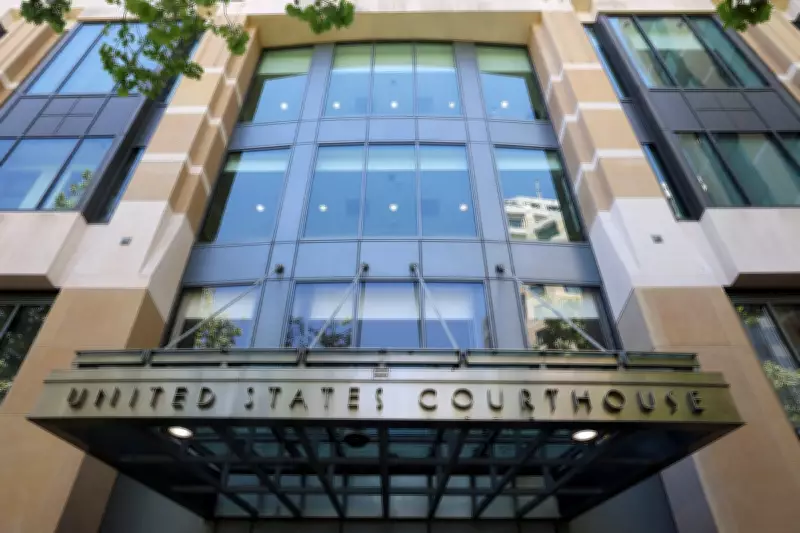
A federal judge in Minnesota has delivered a landmark ruling, determining that military lawyers are legally permitted to prosecute civilians for offenses unrelated to the military. The decision, issued on Friday by U.S. Magistrate Judge Shannon Elkins in Minneapolis, rejected arguments that such assignments violate federal law and cannot be blocked by a court.
Background of the Case
The case centers on Paul Johnson, a Minnesota resident charged with assaulting a Customs and Border Protection agent. The incident occurred in January during the Trump administration's intensified immigration enforcement operations in the state. In response to the surge, the Defense Department deployed lawyers from the Judge Advocate General's Corps (JAG) to assist the U.S. Attorney's Office in Minnesota, mirroring similar deployments in Washington, D.C., and Tennessee.
Legal Challenges
Johnson's legal team argued that using JAG attorneys to prosecute civilians in cases lacking a military connection violated the Posse Comitatus Act of 1878, which generally prohibits military involvement in civilian law enforcement, as well as Department of Defense regulations. They sought to remove the military lawyer from the case, a move that garnered national attention and support from 11 former JAG lawyers, who warned that the government had crossed a dangerous line.

However, Judge Elkins sided with the government, finding that Congress had created exceptions to the Posse Comitatus Act through two other laws. These statutes grant the U.S. attorney general the authority to appoint JAG lawyers as special assistant U.S. attorneys (SAUSAs) to prosecute civilians. In her ruling, Elkins stated: "If Congress passes statutes giving the Department of Justice the authority to appoint active military personnel as SAUSAs to prosecute civilians, that is the law."
Regulatory Violations
While Elkins acknowledged that the appointment of a JAG lawyer in Johnson's case violated binding Department of Defense regulations—which stipulate that such attorneys should only prosecute cases in which the Army has an interest—she concluded that these regulations did not empower her to disqualify the military lawyer from the case.
Kevin Riach, Johnson's attorney, announced plans to appeal the ruling. The U.S. Attorney's Office in Minnesota did not respond to requests for comment.