Ukrainian Skeleton Athlete Defies IOC with Banned Helmet at Milan Cortina Games
Ukrainian skeleton athlete Vladyslav Heraskevych has once again trained in his banned helmet at the Milan Cortina Games, directly challenging an International Olympic Committee ruling. This defiance comes just one day before the start of his race, with the IOC urging him to express his grief through alternative means.
Helmet Honors Fallen Ukrainians Amid Ongoing Conflict
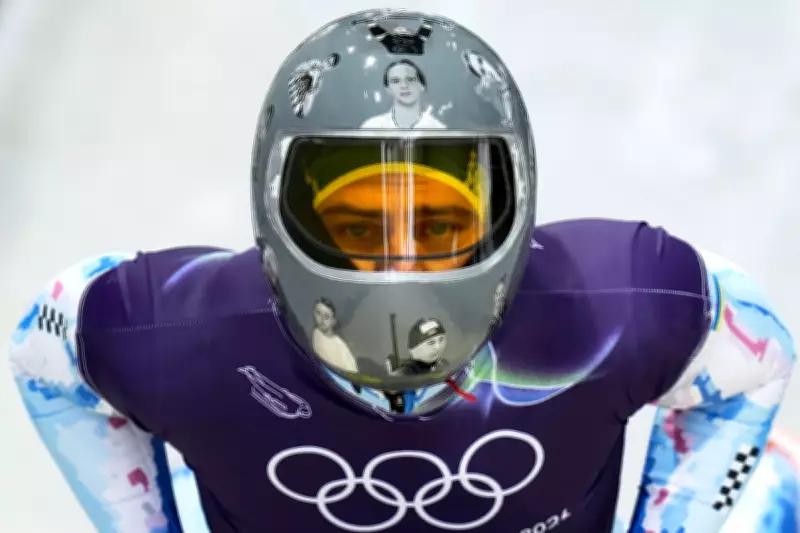
Heraskevych arrived at the Olympics with a customised helmet displaying the faces of over 20 Ukrainian athletes and coaches who lost their lives during the war with Russia. This conflict began shortly after the conclusion of the 2022 Beijing Games, adding a poignant layer to his protest. However, the IOC declared on Monday night that the helmet would not be permitted in competition, citing strict rules against political statements on the Olympic field of play.
Despite this prohibition, Heraskevych wore the helmet during training sessions on both Tuesday and Wednesday, fully aware that the IOC could ultimately bar him from participating in the Olympic race. The athlete's actions highlight a deep-seated commitment to memorialising his countrymen, even at the risk of his own Olympic moment.

IOC Seeks Compromise Through Dialogue
IOC spokesman Mark Adams announced plans to speak with Heraskevych again on Wednesday to clarify what would be allowed. Adams made these remarks approximately an hour before Heraskevych's first training run of the day, leaving the timing and outcome of the conversation uncertain. "We will reiterate the many, many opportunities that he has to express his grief," Adams stated. "As we discussed before, he can do so on social media and press conferences in the mixed zone. So, we will try to talk to him about that and try to convince him."
The IOC has proposed a compromise, offering Heraskevych the chance to wear a black armband during competition as a symbol of mourning—a gesture typically not permitted. Adams described this as a significant concession, but Heraskevych has expressed disinterest in this alternative. "I think the way that we hope that we can deal with this is on a human level. ... We will have conversations with him to try to explain that actually it’s in everybody’s interest for him to compete and for him also to be able to say what he wants to say," Adams added. "So, I’m not saying that we have a solution, a ready solution, for this. But I think here, it’s better for people to talk to people and for human interaction, hopefully, to win the day."
Balancing Competition and Expression
Adams emphasised the IOC's desire for Heraskevych to compete, underscoring the importance of a fair and level playing field for all athletes. "We want him to compete. We really, really want him to have his moment. That’s very, very important. We want all athletes to have their moment and that’s the point. We want all our athletes to have a fair and level playing field." This stance reflects the ongoing tension between upholding Olympic regulations and respecting athletes' personal expressions of grief and solidarity.
As the situation unfolds, Heraskevych's actions continue to draw attention to the broader issues of political statements in sports and the human cost of conflict. The outcome of this dispute may set a precedent for how similar cases are handled in future Olympic events.