Chancellor John Healey is set to confirm a tax exemption that will allow some state pensioners to receive up to £13,036 a year tax-free, carrying forward a policy first announced by former Chancellor Rachel Reeves.
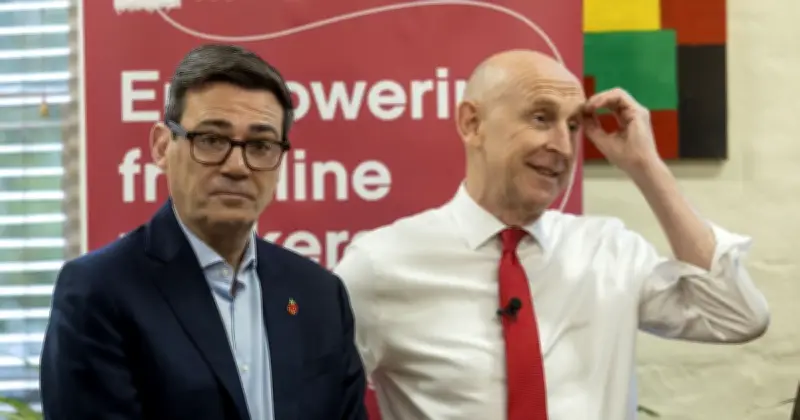
The exemption, confirmed by Andy Burnham and John Healey, applies to pensioners wholly dependent on the new state pension or the old basic pension without increments. It will be detailed as part of the Budget on Wednesday, October 28, alongside the latest triple lock figures.
Triple lock uplift confirmed
The triple lock is set to be axed, but not until 2030. Next April, the state pension will rise in line with inflation, wages, or 2.5% – whichever is higher, as normal.
The Office for National Statistics (ONS) reported that Consumer Prices Index (CPI) inflation was 3.5% in September, accelerating from 3.1% in August. This does not beat the 3.9% wage growth figure already published, confirming the triple lock calculations and uplift figures.
Someone on the full new state pension, for those who reached state pension age after April 2016, would receive £250.70 per week from next April – up from £241.30 per week currently – if they have a full National Insurance record, or £13,036 per year.
Personal allowance freeze and exemptions
With the personal tax allowance frozen at £12,570 until 2031 unless the freeze is dropped sooner, some pensioners were heading towards being caught in the tax net. The Government has announced that state pensioners wholly dependent on DWP new state pension payments – with no private pension – or the old basic pension, with no increments, will not have to pay tax even if they break the threshold.
Many state pensioners will not qualify for this exemption and will remain liable to pay tax on their state pension, as they always have, particularly those with a private pension or savings. The state pension has always been taxable, and households still working would lose some DWP state pension payments to tax once earnings and state pension exceeded the £12,570 threshold.
This will continue in April, but it will mark the first time that state pension payments themselves already break the threshold, at £13,036.
Details and older pensioners
Further details are anticipated in the Budget this Wednesday as to who will lose the exemption and the loopholes that will allow a pensioner to keep it. Older state pensioners who receive state pension increments such as Additional Pension (AP) payments, or Second State Pension, will not be allowed to claim the tax exemption.
Many older state pensioners already pay tax on payments from the DWP, even though they have no other income, because AP payments can be up to £230.54 per week, on top of their £184.90 standard state pension payment. HM Treasury has confirmed to the Express that for older basic state pensioners, this exemption will only apply to those who don't have any increments, such as the additional pension schemes.
An HM Treasury spokesperson said: “Anyone whose only income is the full new or basic state pension without any increments will not pay income tax and we are committed to that over this Parliament. By keeping the triple lock, 12 million pensioners will see their income rise by up to £470 this year, and they continue to benefit from the highest Personal Allowance in the G7.”