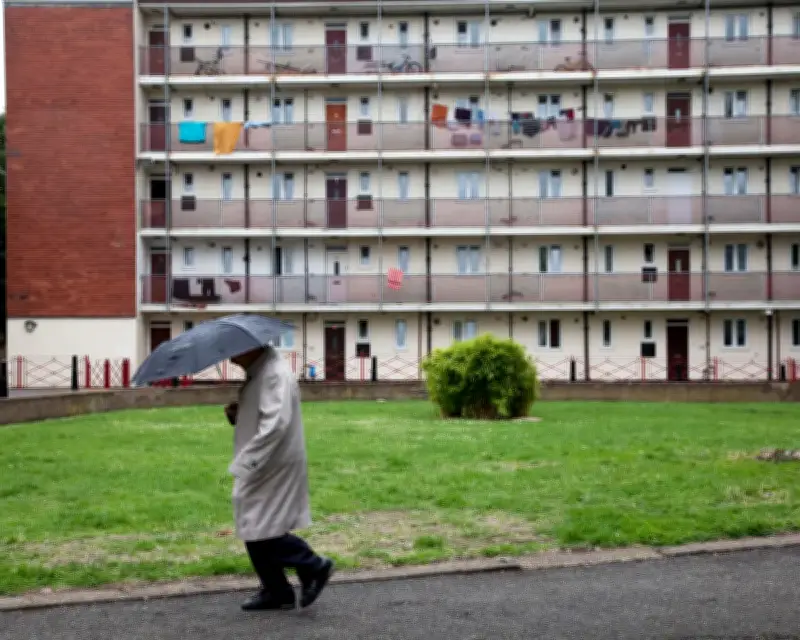
Reform UK will announce proposals on Monday to give British citizens born in the UK priority for social housing, meaning those born abroad would face longer waits. The policy, to be outlined by Nigel Farage's party at a press conference in London, also prioritises young married couples with children.
The party has previously said it would ban foreign nationals from social housing, so the new policy specifically prioritises Britons born in the UK over those born overseas.
Party's Stance and Exemptions
Richard Tice, the party's deputy leader, said in a statement: "There are now 1.3 million people waiting for social housing in Britain. The vast majority of them do not have jobs. In terms of the social houses we have, less than half of households are in work and over half a million social homes are currently occupied by foreign nationals."

"Meanwhile, young British men and women, who are working hard, can't afford to move out of their family home, and when they do often find themself sharing a house with strangers, with no realistic prospect of forming a family or getting on. It is time for us to prioritise young British workers, and that is what our policy is about."
The party said some foreign-born Britons would be exempted, including those born while their British parents were temporarily overseas. Officials said the new rules would require legislation to avoid breaking existing laws.
Details of the Proposal
Under the terms of a previous announcement by Farage, foreign nationals would be barred from social housing, with those already in homes given three months to find private accommodation or face deportation. The new policy would give priority access to British-born people in employment and married couples under 35 with children.
The party said veterans would also be given preferential treatment, though soldiers, veterans and their families are already given priority under existing government policy.
Reactions and Criticism
Experts have said that prioritising people based on nationality, age and family status could punish some of the most vulnerable in society. Sarah Elliott, the chief executive of the charity Shelter, said: "Designed to stoke division, these plans will only serve to disrupt the lives of thousands of families, tear communities apart, and put even more people at risk of homelessness."
"Putting nationality and employment ahead of housing need, and moving away from a system designed to prioritise people who are homeless or at urgent risk of homelessness, could leave even more families trapped in awful temporary accommodation for years on end. Not to mention putting those escaping domestic abuse and violence at serious risk of harm."
A Labour spokesperson said: "Illegal migrants, asylum seekers and migrants on student or work visas are not eligible for social housing. This policy would go after long-term UK residents that have contributed to our country but are not British citizens, including NHS staff."
Reform has also said it would build 50,000 socially affordable homes a year, a significant uplift on the 18,000 the government has promised to build on average each year for a decade. Labour's plans are being financed by a £39bn affordable housing scheme, 60% of which is due to be allocated to social homes, which are the most heavily subsidised. Reform said its plans would be funded, with no extra borrowing or taxation required to pay for the additional homes. It did not give further details on where the money would come from.