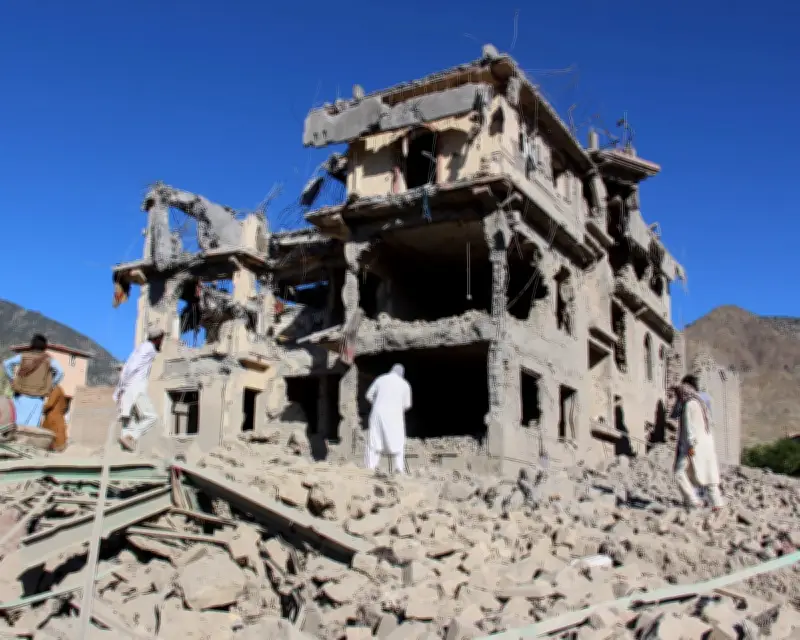
Deadly Airstrikes in Eastern Afghanistan
Pakistani airstrikes in three eastern provinces of Afghanistan killed 36 civilians and wounded 163 others, Afghan officials have confirmed, as cross-border attacks between the two countries continue unabated. The strikes, which occurred on Sunday night, targeted areas in Paktia, Paktika, and Kunar provinces.
Pakistan's Justification
Pakistan's information minister, Attaullah Tarar, stated that the operations were aimed at a terrorist group his country blames for a deadly militant attack in Karachi that killed three security personnel over the weekend. Tarar said Pakistani security forces carried out an "intelligence-based ground operation" followed by airstrikes along the Afghanistan-Pakistan border, targeting terrorist hideouts. He identified the groups as Jamaat-ul-Ahrar and Fitna al-Khawarij, the latter being Pakistan's term for the Pakistani Taliban.
Taliban Response
Hamdullah Fitrat, a spokesperson for Afghanistan's Taliban government, provided details of the civilian casualties. In the Chamkani district of Paktia province, a home was struck, killing an older man and a child and wounding other family members. When residents gathered to rescue people, the area was struck again, killing 28 villagers and wounding 158. In Giyan district, Paktika province, a home was hit, killing six people, mostly women and children. In Kunar province, a civilian home was struck, causing no human casualties but killing 30 livestock.

Another Taliban spokesperson, Zabihullah Mujahid, condemned the military action as a "cowardly act of aggression."
Rising Tensions
The strikes are the latest flare-up of violence between the two countries, whose relationship has been fraught since the Taliban government took power in 2021. On Saturday, militants targeted the regional headquarters of the paramilitary Pakistan Rangers in Karachi, killing three soldiers. Security forces killed three attackers and arrested a wounded assailant, whom the military identified as an Afghan national. Jamaat-ul-Ahrar, a breakaway faction of the Pakistani Taliban, claimed responsibility for the Karachi attack.
Pakistan's Security Concerns
Pakistan has seen a surge in militant attacks targeting police and security forces in recent years, with authorities blaming the Pakistani Taliban (Tehreek-e-Taliban Pakistan, or TTP) and allied militant groups for most of the violence. The TTP is a separate group from the Afghan Taliban, although they are allies. Pakistan's army chief, Field Marshal Asim Munir, stated in early March that peace between the two countries could prevail only if the Taliban regime "renounced their support for terrorism and terrorist organisations."
Failed Ceasefire and Mediation
The countries agreed to a ceasefire in March, but sporadic attacks have continued. Pakistani strikes in June killed 13 people, according to Afghan officials. Mediation from several countries, including China and Saudi Arabia, has failed to produce a lasting resolution. The frontier has been largely closed since cross-border violence in October.
Civilian Toll
Afghan authorities say Pakistani operations have caused a heavy civilian death toll, including a strike at a drug treatment centre in March that the UN said killed hundreds. The conflict has included fierce fighting along the frontier and unprecedented Pakistani airstrikes on Afghan cities, including Kabul and Kandahar, where the Taliban supreme leader is based.